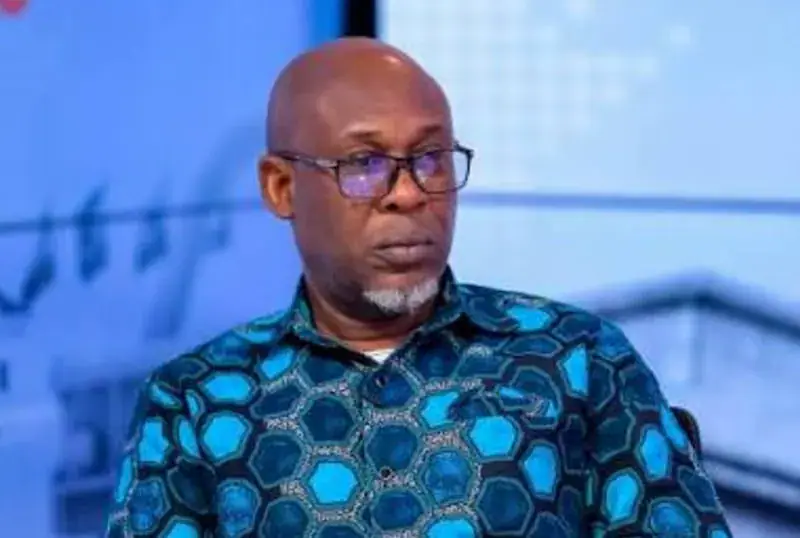
A Senior Vice-President of IMANI Africa, Kofi Bentil, has expressed concerns over the government's handling of the Northern Ashanti Mines dispute, stating that it is making Ghana look like a failed state. He accused state institutions, including the Minerals Commission, the Ministry of Lands and Natural Resources, and security agencies, of disregarding legal procedures in their handling of mining disputes involving local companies. This criticism comes amid a dispute between Northern Ashanti Mines Limited and the Minerals Commission.
The dispute centers on the termination of Northern Ashanti Mines' mining lease by the Minerals Commission, which cited outstanding debts and alleged inactivity in mining operations. However, Kofi Bentil questioned the Commission's justification, arguing that they failed to provide sufficient evidence to support their claims. In contrast, Northern Ashanti Mines presented documents demonstrating its financial commitments and investments in the mine, totaling over $200 million, including the construction of a gold processing plant.
Northern Ashanti Mines Limited disputes the Commission's claim that it owes $8.33 million in outstanding annual mineral right fees and $49,928 for prospecting licences. The company asserts that its outstanding debt is approximately $2.4 million, based on an audit communication received from the Commission in May 2026. Furthermore, the company argues that the $8.3 million figure relates to legacy debt incurred by the previous operator, Owere Mines, before it acquired the concession in 2020.
The Minerals Commission insists that the termination of Northern Ashanti Mines' mineral rights followed due process under the Minerals and Mining Act, 2006 (Act 703), and the Minerals and Mining (Licensing) Regulations, 2012 (L.I. 2176). The Commission claims that the company failed to pay statutory fees despite several notices and opportunities to regularize its position. Additionally, it accuses the company of failing to undertake meaningful mining operations for over two years.
The dispute escalated on October 22 when Minerals Commission officials, accompanied by military personnel, entered the Konongo concession to enforce the termination and reportedly directed workers to vacate the premises. Kofi Bentil expressed concern that the government's approach raises serious questions about the rule of law and the protection of investments in Ghana's mining sector. He emphasized that the situation highlights a disregard for legal procedures and the potential undermining of indigenous mining businesses.
Bentil's criticism of the government's handling of the dispute highlights concerns about the business environment in Ghana. He argued that the actions of state institutions are creating uncertainty and potentially deterring investment in the mining sector. The situation has sparked debate about the role of government institutions in regulating the mining industry and the need for transparent and fair enforcement of regulations.
The controversy surrounding the Northern Ashanti Mine takeover has significant implications for Ghana's mining sector and the country's reputation as an investment destination. The government's handling of the dispute will be closely watched by investors, industry stakeholders, and the general public, as it may set a precedent for future disputes and shape the country's business environment.
Key points
- Kofi Bentil criticizes government's handling of Northern Ashanti Mines dispute, citing disregard for legal procedures.
- Minerals Commission terminates Northern Ashanti Mines' mining lease over outstanding debts and alleged inactivity.
- Dispute highlights concerns about the rule of law and protection of investments in Ghana's mining sector.