A third-year student at the Kwame Nkrumah University of Science and Technology (KNUST), David Osei Agyapong, died after jumping from a 17.6-foot springboard into the university's swimming pool. The pool measured only 17.9 feet deep, leaving a mere three-inch margin between the jump and the water's surface. This incident has raised concerns about safety at KNUST, particularly regarding recreational facilities. A video of the incident has circulated on social media, showing Agyapong making the fatal jump.
The incident occurred on November 8, 2026, and as of publication, KNUST had not issued an official statement addressing the circumstances of Agyapong's death. It is unclear whether a lifeguard or safety personnel were present at the pool during the incident. The university's swimming pool, with its seemingly inadequate depth for a springboard of that height, has become a focal point for questions about safety standards and oversight.
News of Agyapong's death has sparked an outpouring of grief on social media, with tributes from schoolmates at Adisadel College and peers at KNUST. The footage of his final moments has prompted renewed conversations about recreational safety on Ghanaian university campuses. This incident adds to a troubling pattern of non-natural deaths among students at Ghana's public universities.
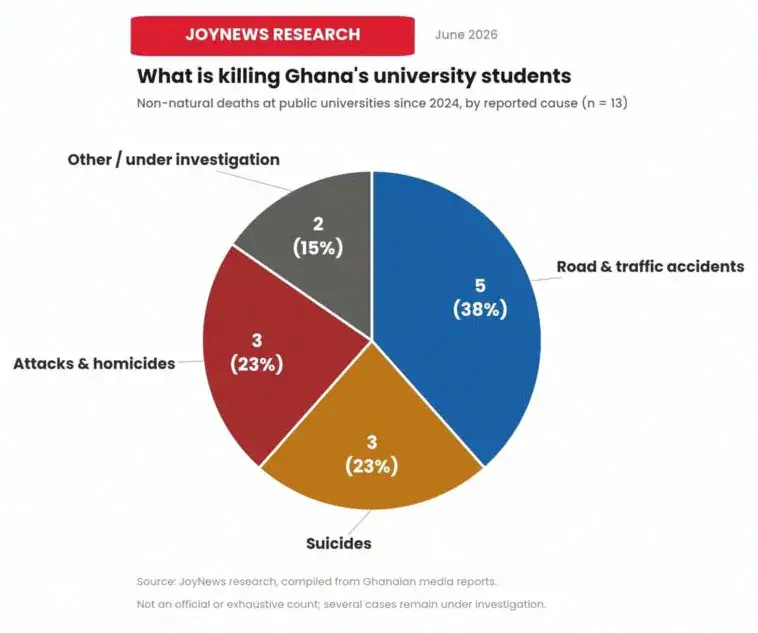
According to a JoyNews Research dataset from June 2026, at least 13 non-natural deaths had occurred among students at Ghana's public universities since 2024. These incidents include drowning and other accident-related fatalities, alongside road accidents and homicides on or near campuses. Agyapong's death has highlighted the need for improved safety measures and supervision at university recreational facilities.
The measurements of the KNUST pool have raised immediate questions about whether the facility met basic safety standards for a springboard of that height. Specifically, it is unclear whether oversight, such as lifeguard supervision, was in place at the time of the incident. Neither KNUST nor any other official body has publicly addressed these questions.
Agyapong, an old student of Adisadel College, was a third-year student at KNUST. His death has sent shockwaves through the academic community, with many calling for improved safety measures at university facilities. The incident has also sparked a wider conversation about the responsibilities of educational institutions in ensuring student safety.
As the investigation into Agyapong's death continues, concerns about recreational safety on Ghanaian university campuses are likely to grow. With many students and parents questioning the adequacy of safety measures at university facilities, institutions may face increasing pressure to review and improve their safety protocols.
Key points
- The incident has raised concerns about safety standards and oversight at KNUST's recreational facilities.
- Agyapong's death adds to a pattern of non-natural deaths among students at Ghana's public universities.
- The university has not issued an official statement addressing the circumstances of the incident.