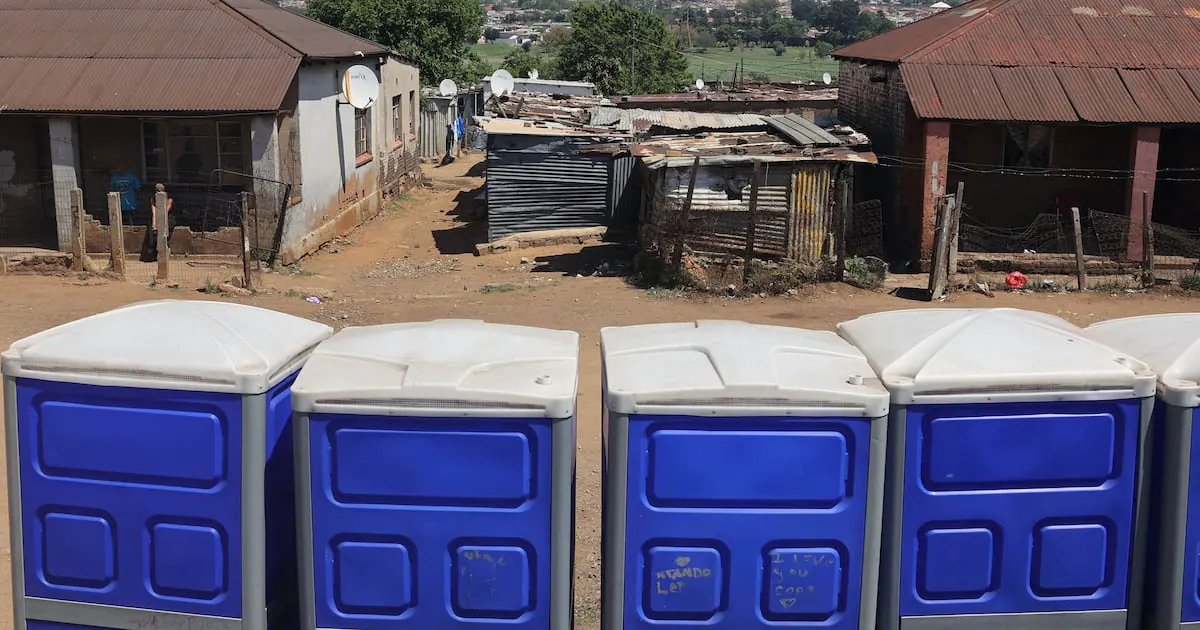
Residents of Kliptown, a Soweto informal settlement, are questioning the effectiveness of voting in the upcoming local government elections on November 4, citing years of unfulfilled promises for basic services. Skhumbuzo Kunene, a 30-year-old resident, expressed his disillusionment, stating he has no motivation to vote. Kliptown lacks electricity, proper sanitation, and running water, with residents relying on communal taps and portable toilets. The area's poor living conditions have led to growing frustration among residents.
The settlement's infrastructure woes are compounded by the state of its roads, which remain unfinished and muddy during rainy weather. Kunene, who voted for the ANC in the 2021 local government elections, feels that his trust has been misplaced. He criticizes older generations for continuing to support the ruling party despite its perceived failures. Kunene's sentiments are echoed by others, who feel that politicians only visit during election periods, making empty promises.
Ronald Mboniswa, a 43-year-old resident, is uncertain about which party to support, citing the government's failure to deliver services. He highlights the prevalence of unemployment, the drug problem, and the impact on children's education. Mboniswa notes that residents were initially hopeful when sewer pipes were installed, but construction appeared to stop soon afterwards. The lack of progress has left residents disgruntled and uncertain about their voting options.
Patricia Maaki Sesana, a 57-year-old resident, has lost confidence in the government, having waited for government housing since 1996. Despite being allocated a house in Pimville Zone 14, another family occupies it. Sesana lives in a two-room shack with her five children, feeling that politicians are unresponsive to their needs. She suggests that residents unite and submit a memorandum of demands instead of voting without guarantees.
Sesana's proposal has resonance with some residents, who feel that a collective approach may be more effective. Jabulani Nzimande, a resident, notes that Kliptown has lagged behind other areas in terms of infrastructure despite its historical significance. He questions whether the City of Johannesburg considers Kliptown a priority, given the lack of progress over the years.
The situation in Kliptown highlights the challenges faced by many informal settlements in South Africa, where service delivery remains a pressing concern. As the local government elections approach, residents are weighing their options, with some considering abstaining from voting. The concerns expressed by Kliptown residents reflect a broader disillusionment with the government's ability to address their needs.
The upcoming elections will be closely watched, as residents and politicians alike grapple with the complexities of service delivery and voter engagement. The City of Johannesburg and other stakeholders will need to address the concerns of residents like those in Kliptown, who feel that their voices are not being heard.
Key points
- Residents of Kliptown informal settlement express frustration with lack of basic services.
- Unfulfilled promises have led to growing disillusionment with the government.
- Some residents consider abstaining from voting in the upcoming local government elections.