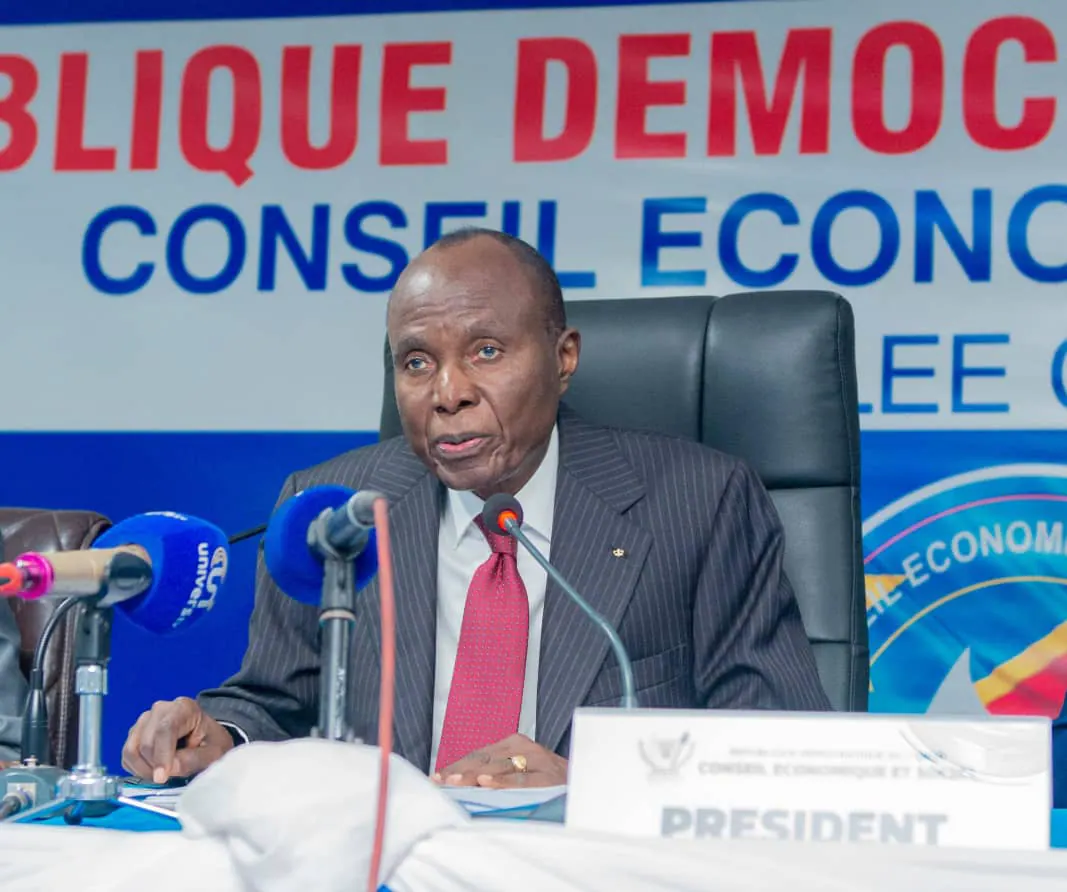
The Economic and Social Council (CES) of the Democratic Republic of Congo (DRC) has commenced its ordinary October session in Kinshasa. At the opening ceremony, CES President Jean-Pierre Kiwakana delivered a speech outlining the significant challenges confronting the DRC. These challenges include employment, education, economic diversification, healthcare, environmental conservation, and disaster prevention. The session began with a moment of silence to honor two deceased colleagues: Bernard Kasusula Djuma Lokali, a former Deputy Prime Minister and Minister of Primary and Secondary Education, and Célestin-Roger Mukendi Membu, a member representing the royal power.
In his address, Jean-Pierre Kiwakana emphasized the importance of addressing economic issues, including fiscal policy, the business climate, and the development of small and medium-sized enterprises. He stressed the need for the DRC to reduce its dependence on mining and promote a more diversified economy. This shift requires better management of public spending and a more favorable environment for private initiative. The goal is to transform economic growth into concrete opportunities for the population, who are facing high social demands and a still-pressured job market.
The education and research sector is another critical area that Kiwakana addressed. He discussed the challenges related to the implementation of the License-Master-Doctorate (LMD) system and called for better organization of the sector and more efficient distribution of academic and scientific personnel. The creation of a competitive national fund for research aims to strengthen support for researchers and promote scientific initiatives that can accompany the country's development ambitions.
On the health front, Kiwakana discussed the situation related to the Ebola epidemic and the persistent weaknesses of the health system. In Kinshasa, the issue of sanitation and waste management remains a significant concern. He called for considering these issues as public health and collective well-being challenges. Environmental conservation also featured prominently in the discussions, with Kiwakana highlighting the potential of carbon markets to enable the DRC to valorize its natural capital while preserving local communities' rights.
With the rainy season approaching, Kiwakana emphasized the need to strengthen mechanisms for anticipating and managing flood risks. He advocated for effective alert systems and protective measures targeting the most exposed populations. This approach aims to shift from reactive disaster management to a proactive risk prevention policy. The CES president also underscored the importance of national cohesion, peace, sovereignty, and territorial integrity.
Kiwakana called on the economic and social advisors to demonstrate rigor, independence in their judgment, and greater involvement in the institution's work. He officially opened the October 2026 ordinary session, reaffirming the principle guiding the CES's action: prioritizing the well-being of the population and the general interest. The session is expected to examine several key dossiers that will shape the DRC's economic and social future.
The CES session will focus on implementing strategies to address the challenges outlined by Kiwakana. The council's efforts will aim to promote sustainable economic growth, improve living conditions, and consolidate institutions. By prioritizing these objectives, the CES seeks to contribute to the country's development and stability. The outcome of this session will be crucial in determining the future trajectory of the DRC.
Key points
- The DRC must reduce its dependence on mining and promote a more diversified economy.
- The education sector faces challenges related to the implementation of the License-Master-Doctorate (LMD) system.
- The country must strengthen its mechanisms for anticipating and managing flood risks.