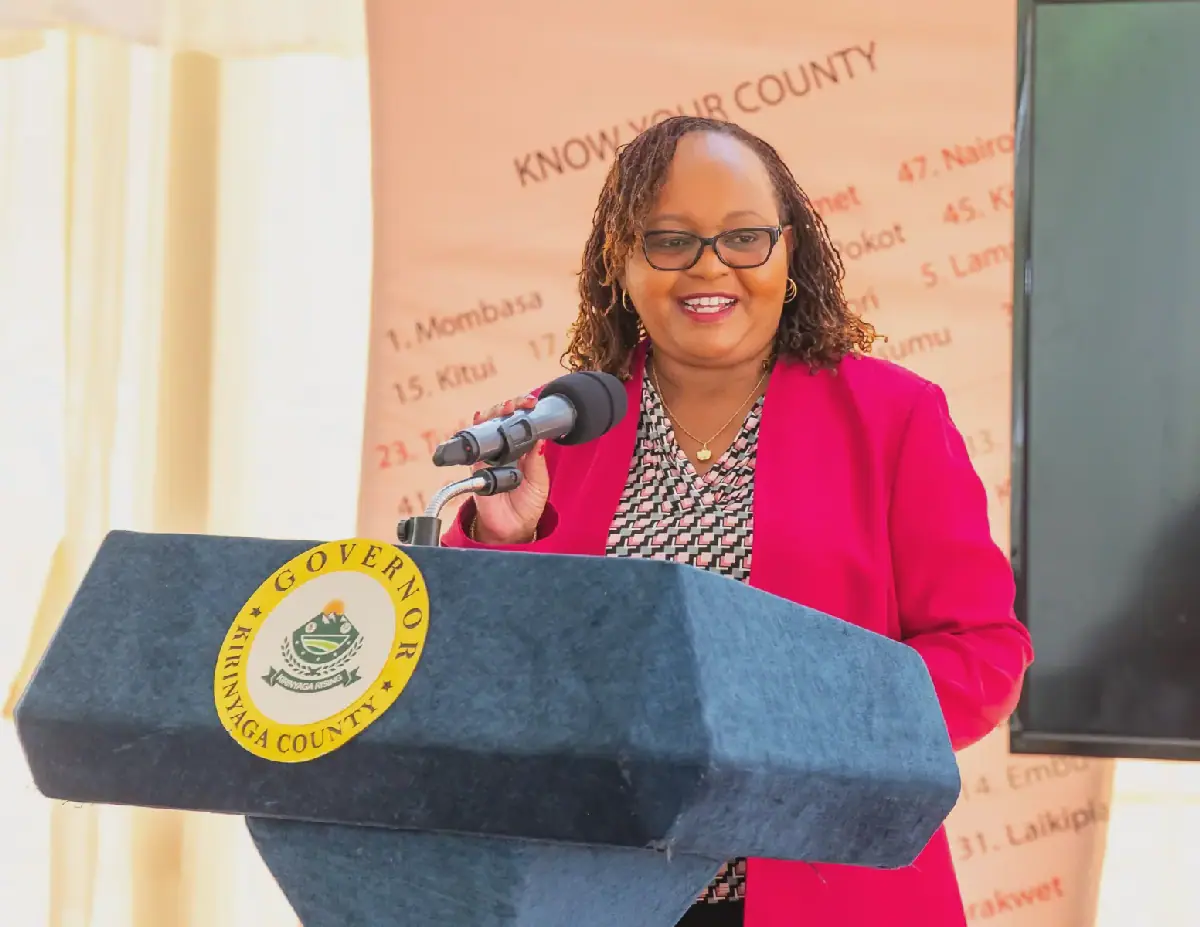
Kirinyaga County Governor Anne Waiguru has urged county governments to protect healthcare gains made under devolution by rejecting unconstitutional directives from the Ministry of Health. Waiguru emphasized that health is a devolved function and therefore the Ministry of Health must involve county governments in making decisions that touch on healthcare. She made these remarks during the Quarterly Consultative Meeting of County Executive Committee Members for Health in Kirinyaga.
The Governor was reacting to a directive issued by Principal Secretary for Medical Services Ouma Oluga, who had directed Social Health Authority compliance officers to remove all payment paybills in government health facilities. Waiguru stated that the Ministry of Health should desist from issuing directives that are unconstitutional and undermine intergovernmental collaboration. She emphasized that counties are autonomous entities with a clear way of working with the national government.
Waiguru called for consultation and cooperation between the two levels of government, particularly in decisions affecting devolved health services. She urged County Executive Committee Members for Health to be steadfast in defending devolution by rejecting directives from Ministry of Health officials that are unconstitutional. The Governor also emphasized that sustaining healthcare investments and programs would require adequate financing, effective coordination between the two levels of government, and accountability in service delivery.
The meeting brought together health sector leaders to assess progress and challenges in implementing Universal Health Coverage within the devolved system. Waiguru said the transition to the Social Health Authority presented an opportunity to expand healthcare access and strengthen financial protection for Kenyans. However, she cautioned that its success would depend on timely reimbursements, efficient claims processing, and predictable financing at the healthcare facility level.
Waiguru also called for clarity, equity, and accountability in resource allocation, noting that counties needed clear information on the flow of funds, how resources would be disbursed, and how they would be accessed. She emphasized that funding decisions must reflect the unique priorities of individual counties. The Governor cited Kirinyaga's irrigation-dependent economy and associated malaria burden as an example of why interventions must address county-specific challenges.
The Governor highlighted the progress made in healthcare under devolution, citing the increase in health centers and dispensaries from 8,466 in 2013 to 14,710 operational health facilities currently. She noted that counties had constructed 1,419 dispensaries and health centers during the first five years of devolution alone. Waiguru also mentioned that County Governments now employ approximately two-thirds of the country's health workforce, while 107,831 Community Health Promoters are taking primary healthcare services to households across all 47 counties.
With the 2027 General Election approaching, Waiguru called for an orderly transition of county administrations to prevent disruptions to ongoing health programs. She urged counties to document achievements and commitments, safeguard existing programs, and strengthen institutions to ensure continuity of healthcare services beyond the current administrations.
Key points
- Waiguru urges counties to reject unconstitutional health directives from the Ministry of Health.
- The Governor emphasizes the need for consultation and cooperation between the two levels of government in decisions affecting devolved health services.
- Waiguru calls for clarity, equity, and accountability in resource allocation to ensure the success of Universal Health Coverage implementation.
Reporting sources
- Reject unconstitutional directives from MoH to protect devolution, Waiguru asks counties · Kenya Broadcasting Corporation