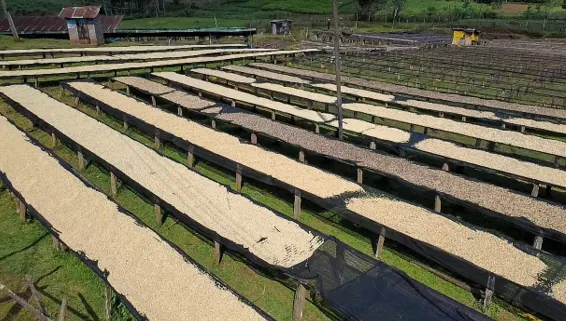
Coffee farmers in Kirinyaga are investing more in their farms following higher payments, leading to increased production. The Baragwi Farmers’ Cooperative Society received 13 million kilogrammes of coffee cherries in the 2025/26 season, up from 10 million kilogrammes in the 2023/24 season and 11 million in 2024/25. The cooperative aims to receive over 16 million kilogrammes this season. Deputy Manager Justus Janja attributes the increase to cooperation between farmers, agronomists, factory staff, and cooperative leaders, as well as greater attention to coffee quality.
Kirinyaga’s coffee production rose from 45,717 metric tonnes in 2024/25 to 49,100 metric tonnes in 2025/26, an increase of about 7 per cent. The Nyanja Factory projects production to reach 1.2 million kilogrammes this season, up from about one million kilogrammes last year. Factory manager Peter Gichovi stated that farmers are receiving training on modern production methods as they invest more in their farms. The factory aims to reach 1.5 million kilogrammes within three to five years as farmers improve crop management and increase investment.
The improved payments are changing the approach of farmers who had reduced their involvement in coffee when returns were low. Farmer Simon Muchira noted that some growers who had cut back on coffee are returning to their farms and spending more on fertiliser, pruning, and crop protection. He recalled periods when coffee prices were so low that farmers had little incentive to invest in their farms. Now, farmers are seeing the benefits of investing in their coffee farms.
Retiree John Ndamberi said coffee income helped him educate his children and support his family after retirement. Farmers in his area now earn between Sh130 and Sh150 per kilogramme, depending on their cooperative arrangements. Ndamberi noted that the increased earnings have made a significant difference in the lives of farmers. The higher payments have also encouraged more farmers to invest in their farms.
The Nyanja Factory paid Sh157.40 per kilogramme in the 2025/26 season, the highest factory rate reported in Kirinyaga. The county average rose to about Sh139 per kilogramme from Sh134 the previous season. Gichovi stated that the factory’s success is attributed to the training provided to farmers on modern production methods. This training has enabled farmers to improve their crop management and increase production.
Despite the increase in production and payments, coffee cooperatives continue to face financial pressures, including historical debts that have affected farmers’ earnings. However, the current trend is expected to continue, with more farmers investing in their farms and increasing production. The cooperative’s target of over 16 million kilogrammes this season is achievable, according to Janja.
The increase in coffee production in Kirinyaga has had a positive impact on the lives of farmers. With 68 growers earning over Sh1 million each last season, the higher payments have made a significant difference in their livelihoods. As farmers continue to invest in their farms and improve production, the future of coffee farming in Kirinyaga looks promising.
Key points
- 68 growers in Kirinyaga earned over Sh1 million each last season.
- Kirinyaga’s coffee production increased from 45,717 metric tonnes in 2024/25 to 49,100 metric tonnes in 2025/26.
- The Nyanja Factory projects production to reach 1.2 million kilogrammes this season, up from about one million kilogrammes last year.