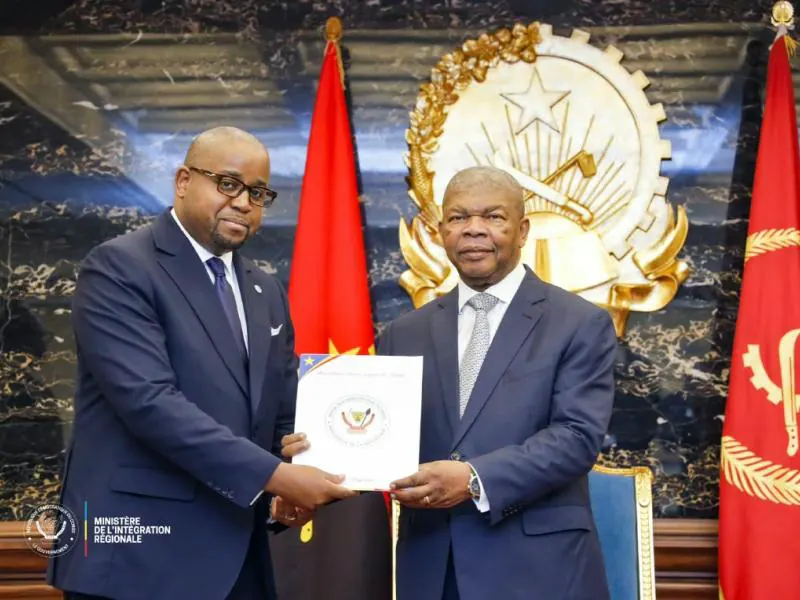
A delegation from the Democratic Republic of the Congo, led by Minister of Regional Integration Floribert Anzuluni, met with Angolan President João Lourenço in Luanda on September 30, 2026. The meeting followed a previous stop in Lomé, Togo, and was part of efforts to update regional partners on the progress of the voluntary surrender process of the Forces démocratiques de libération du Rwanda (FDLR). The Congolese delegation transmitted a "special" message from President Félix-Antoine Tshisekedi to President Lourenço, focusing on the evolution of the peace process in eastern DRC.
The talks centered on the advances made in the FDLR disarmament, demobilization, and cantonment process, as outlined in a protocol signed by the DRC government. Minister Anzuluni emphasized the importance of presenting an update to President Lourenço, given Angola's strategic partnership with the DRC. The protocol aims to neutralize the FDLR, a key issue in the peace agreement signed between the DRC and Rwanda in Washington, under US mediation. The agreement included commitments to disarm and demobilize the FDLR and for Rwanda to withdraw its forces from Congolese territory.
According to Minister Anzuluni, the DRC is committed to respecting its engagements under the Washington peace agreements and is working to update its partners on significant developments since the protocol's publication. The DRC government is counting on regional and international partners to support and accompany this dynamic until its conclusion. The ultimate goal is to restore durable peace, security, and stability in eastern DRC and the Great Lakes region. The FDLR's presence has been a longstanding point of contention between the DRC and Rwanda.
However, Rwanda has expressed reservations about the protocol, arguing that it does not conform to the Washington agreement's provisions. Kigali accuses Kinshasa of not respecting some of its own commitments. The DRC government maintains a different interpretation, asserting that the protocol's implementation will allow for the durable neutralization of the FDLR and undermine Rwanda's justification for maintaining its forces in Congolese territory. The US has also noted difficulties in implementing the agreed-upon commitments.
Over a year after the agreement's signing, significant differences persist between the DRC and Rwanda, particularly regarding the interpretation and application of their respective commitments. Continued violence on the ground, reciprocal accusations of ceasefire violations, and divergent readings of the agreement continue to complicate its implementation and fuel mistrust between Kinshasa and Kigali. The situation remains a pressing concern for regional stability.
The DRC-Rwanda peace agreement was signed to address longstanding security issues, including the presence of armed groups in eastern DRC. The FDLR, a Rwandan rebel group, has been a major point of contention. The voluntary surrender process aims to encourage FDLR fighters to disarm and reintegrate into civilian life. The DRC government's efforts to engage with regional partners and update them on progress are seen as crucial to the process's success.
The meeting between the Congolese delegation and President Lourenço highlights the importance of regional cooperation in addressing security challenges in the Great Lakes region. The DRC's commitment to implementing the FDLR disarmament protocol and updating its partners on progress demonstrates its efforts to move the peace process forward. The outcome of these efforts will have significant implications for regional stability and security.
Key points
- The DRC delegation updated President Lourenço on the progress of the FDLR voluntary surrender process.
- The process aims to neutralize the FDLR and address a key point of contention between the DRC and Rwanda.
- The DRC government is committed to respecting its engagements under the Washington peace agreements.