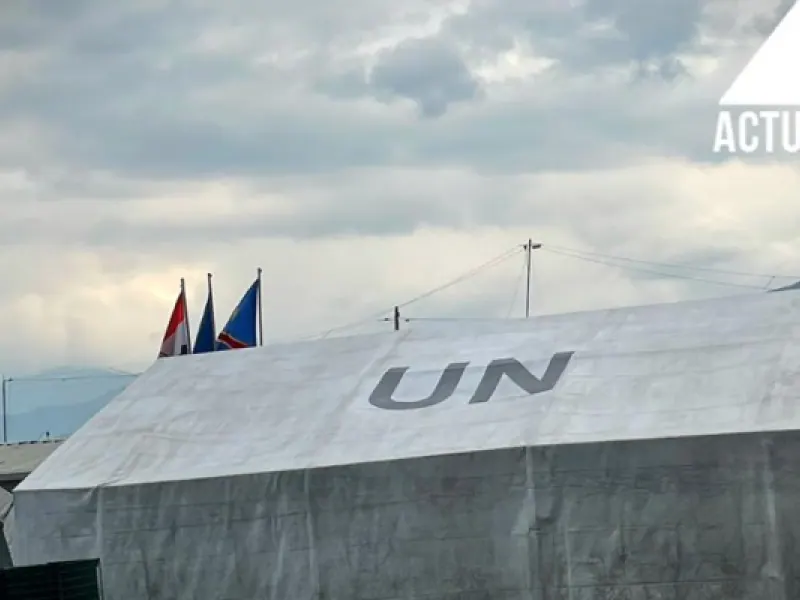
The Democratic Republic of Congo has officially asked the United Nations Secretary-General to recommend that the Security Council grant the MONUSCO mission an explicit role in supervising the disarmament, demobilization, and cantonment of the Forces démocratiques de libération du Rwanda (FDLR) in its next mandate. This request was made by DRC's Ambassador to the UN, Zénon Mukongo Ngay, during a Security Council briefing on the situation in the DRC. The current MONUSCO mandate is set to expire in December 2026.
The Congolese government's request comes as part of its efforts to honor commitments made under the Washington process. On May 30, 2026, Kinshasa signed a protocol for the disarmament, demobilization, and cantonment of FDLR-FOCA. Under this protocol, FDLR fighters are expected to surrender their arms at designated sites, paving the way for their return to Rwanda. Ambassador Ngay highlighted that several FDLR groups have already joined this process, including CNRD, Ubuyunge, FNL, FPP, Abajiaruk Gamba, and Urunana.
The DRC government views the MONUSCO mission as essential in protecting civilians, supporting the peace process, and verifying the ceasefire. Kinshasa wants the mission's new mandate to include explicit support for the disarmament process. Ambassador Ngay emphasized that the DRC is committed to pursuing peace but requires the Security Council to ensure that all parties adhere to their commitments. He called for the translation of diplomatic engagements into concrete actions on the ground.
The FDLR issue has been a point of contention between the DRC and Rwanda, with Kigali citing the group's presence as a justification for its military presence in eastern DRC. The DRC-Rwanda peace agreement, signed in Washington, includes the neutralization of FDLR and the lifting of Rwandan defensive measures. However, Kigali disputes Kinshasa's interpretation of the agreement and has questioned the new disarmament protocol.
Rwanda has described Kinshasa's initiative as a "non-event" and accused the DRC of not respecting its commitments. In contrast, the DRC maintains that the disarmament process is a crucial step towards stabilizing the region. The DRC government believes that MONUSCO's involvement will help build trust and ensure the effective neutralization of FDLR.
The Security Council is expected to renew MONUSCO's mandate in December 2026. The DRC government hopes that the Council will take its request into consideration and grant MONUSCO a stronger role in supporting the disarmament process. Ambassador Ngay urged the Council to ensure that commitments are translated into concrete actions, enabling the DRC to provide its citizens with peace, freedom, and security.
The situation in eastern DRC remains volatile, with ongoing clashes between various armed groups. The DRC government has called for the Council to take a firmer stance in enforcing its resolutions and ensuring that all parties respect their commitments. The outcome of the Security Council's decision on MONUSCO's mandate will be closely watched by stakeholders in the region.
Key points
- DRC requests stronger MONUSCO role in FDLR disarmament process
- Kinshasa signs protocol for FDLR disarmament, demobilization, and cantonment
- Rwanda disputes Kinshasa's disarmament protocol, citing non-compliance with Washington agreement