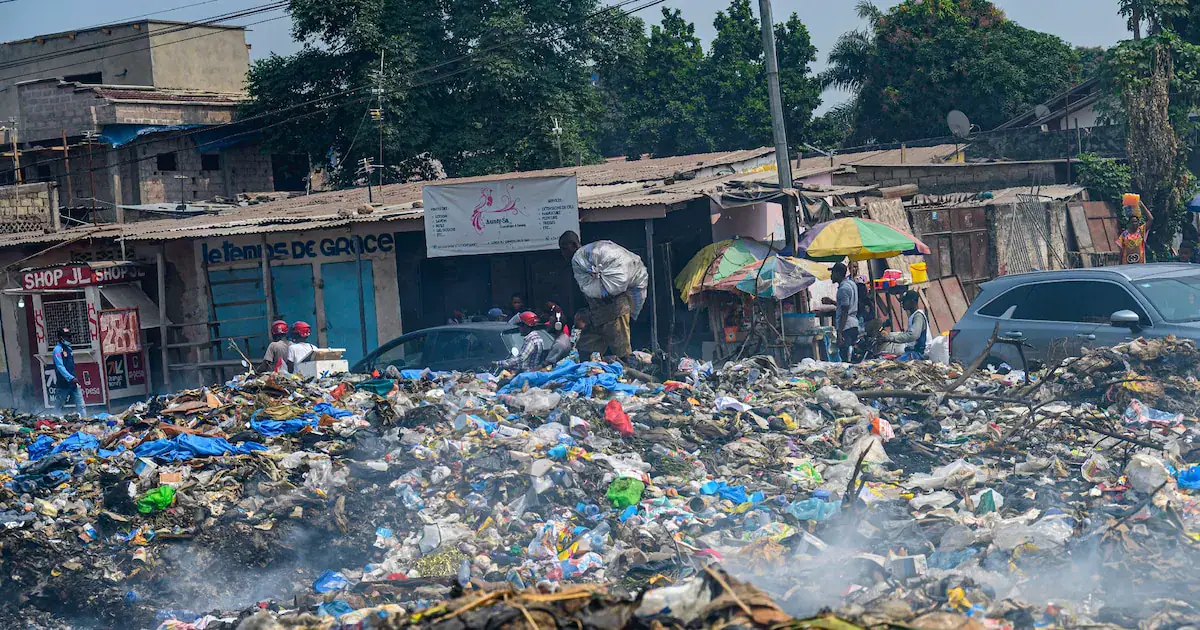
The Democratic Republic of Congo's government has been focusing on criticizing Rwanda's international partnerships, particularly a resettlement project with five European countries, instead of addressing its own domestic challenges. The country's capital, Kinshasa, is struggling with a garbage problem that could be solved by mobilizing the population to keep their neighborhoods tidy, but the government is spending millions on a 'bash-Rwanda' campaign. This campaign is not only exhausting but also raises questions about the regime's priorities and leadership.
The Congolese government's obsession with Rwanda is not yielding any meaningful results for its citizens. Condemning Rwanda's partnership with European countries will not restore security in North Kivu and South Kivu, neutralize armed groups, address the FDLR issue, rebuild public institutions, create jobs, or improve living conditions. The conflicts in eastern DRC require serious political commitment, credible negotiations, and concrete action to address the root causes of instability. Instead, Kinshasa's government seems to be mistaking controversy for leadership.
A country's foreign policy should advance its national interests, strengthen international partnerships, attract investment, and contribute to regional stability. However, Kinshasa's government appears to have no foreign policy objective besides blocking or denouncing whatever Rwanda proposes or achieves on the international stage. This approach is not only ineffective but also detrimental to the Congolese people, who deserve leadership that prioritizes their well-being and uses diplomatic resources to create opportunities for its citizens.
The Tshisekedi regime's diplomacy of lamentation achieves nothing in the long run. Rwanda's partnerships will not disappear simply because Kinshasa disapproves of them, nor will the DRC resolve its internal challenges by constantly pointing fingers at its neighbor. The pressing question for Tshisekedi's administration is not what Rwanda is doing for its people or with its partners, but what Kinshasa itself is doing for the Congolese people.
The DRC is facing significant internal challenges, including persistent insecurity, chronic hunger, and a deadly Ebola epidemic that has claimed over 5,000 lives. The government needs to focus on addressing these challenges instead of engaging in petty diplomatic squabbles with Rwanda. Germany, Austria, Denmark, Greece, and the Netherlands are sovereign countries with their own institutions, national interests, and foreign policy priorities, and they determine their international partnerships through their respective legal and diplomatic frameworks.
Kinshasa's persistent attempts to sabotage virtually every Rwanda-related international engagement raise serious questions about the regime's priorities and leadership. The expression "Rwanda lives rent-free in Kinshasa's foreign policy" comes to mind, highlighting the extent to which the Congolese government is obsessed with keeping tabs on Rwanda and opposing its international engagements. This obsession does nothing meaningful for ordinary Congolese citizens and distracts from the government's responsibility to address the country's internal challenges.
The Congolese people deserve leadership that prioritizes their well-being and uses diplomatic resources to create opportunities for its citizens. A serious state acts, negotiates, builds partnerships, and delivers results. Instead of condemning Rwanda's partnerships, Kinshasa should focus on developing a coherent national vision for the DRC and addressing the country's pressing internal challenges. By doing so, the government can create a better future for its citizens and contribute to regional stability.
Key points
- The DRC government is spending millions on an anti-Rwanda campaign instead of addressing its own domestic challenges.
- Kinshasa's government is mistaking controversy for leadership, and its diplomacy of lamentation achieves nothing in the long run.
- The Congolese people deserve leadership that prioritizes their well-being and uses diplomatic resources to create opportunities for its citizens.