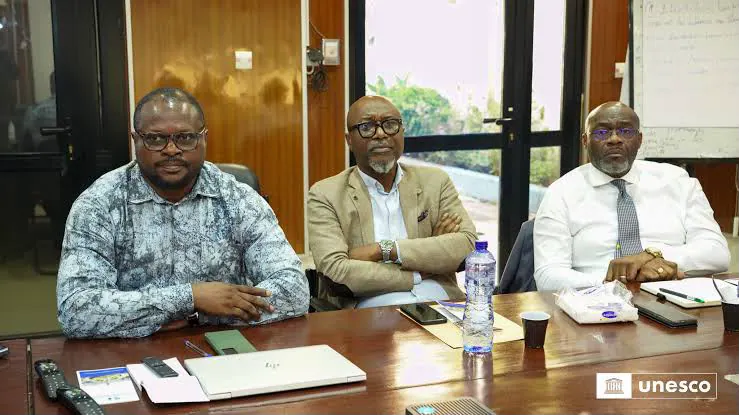
The Congolese government recently organized a workshop in Kinshasa to raise awareness about protecting cultural heritage during armed conflict. The event, which took place on September 30, 2026, brought together officials from the Ministry of Culture, Arts, and Heritage, instructors from the Congolese National Police, and representatives from UNESCO-RDC. The workshop aimed to educate participants on the importance of safeguarding cultural heritage and the role they play in preventing its destruction or looting.
The workshop focused on the 1999 Second Protocol to the 1954 Hague Convention, an international instrument that provides guidelines for protecting cultural heritage during armed conflict. The protocol emphasizes the importance of protecting cultural heritage and introduces individual criminal responsibility and operational precaution mechanisms for armed forces and security personnel. According to the Congolese press agency, the protocol strengthens the 1954 Hague Convention by providing enhanced protection and prevention measures.
The Congolese government recognizes the significance of cultural heritage in shaping the country's identity and collective memory. However, during times of conflict or peace, cultural heritage sites and artifacts are vulnerable to looting, destruction, and illicit trafficking. The workshop aimed to equip security forces and experts with the necessary knowledge to preserve the national heritage and promote the integration of guidelines into law enforcement training modules.
The event also featured the distribution of manuals, including "Good Security Practices," to police officers. These manuals are designed to enhance protection protocols for museums, archives, libraries, monuments, archaeological sites, places of worship, and memorials. By providing security personnel with these guidelines, the government hopes to strengthen the protection of cultural heritage sites and prevent their destruction or looting.
The workshop is part of a broader effort to promote synergy and cooperation among institutions involved in protecting cultural heritage. The initiative aims to contribute to the development of a national strategy to combat illicit trafficking, looting, and vandalism of cultural heritage sites. By working together, the government and its partners hope to ensure the long-term protection and preservation of the country's cultural heritage.
The 1954 Hague Convention is an international instrument dedicated to protecting cultural heritage during armed conflict. The 1999 Second Protocol to the convention provides additional guidelines and measures for safeguarding cultural heritage, including provisions for respect, prevention, and punishment for those who commit acts of destruction or looting. The Congolese government has reaffirmed its commitment to protecting cultural heritage by ratifying the convention and its protocol.
The workshop in Kinshasa demonstrates the Congolese government's commitment to protecting its cultural heritage. By educating security personnel and promoting cooperation among institutions, the government hopes to prevent the destruction or looting of cultural heritage sites and preserve the country's rich cultural legacy for future generations.
Key points
- The workshop in Kinshasa focused on protecting cultural heritage during armed conflict, highlighting the importance of the 1999 Second Protocol to the 1954 Hague Convention.
- The event aimed to educate security personnel and experts on safeguarding cultural heritage and promoting cooperation among institutions.
- The Congolese government distributed manuals, including "Good Security Practices," to police officers to enhance protection protocols for cultural heritage sites.