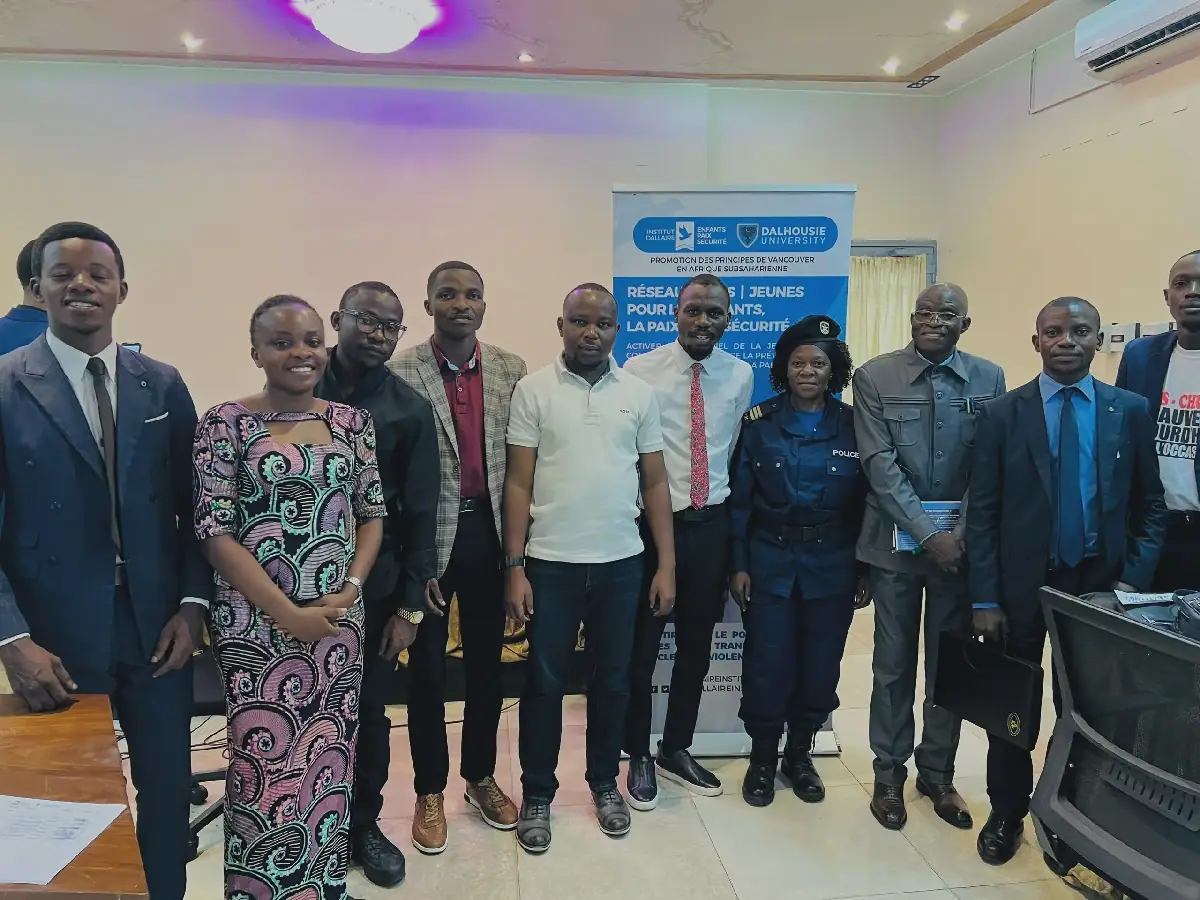
A community dialogue was recently held in Kinshasa, Democratic Republic of the Congo, as part of the PVPSSA project. The meeting aimed to strengthen collaboration between communities, security institutions, and media to establish early warning mechanisms and promote better child protection. According to organizers, the initiative builds on previous capacity-building workshops and provides an inclusive platform for participants to share experiences and identify factors that make children vulnerable.
The dialogue, co-facilitated by representatives of Women for Children, Peace and Security and Youth for Children, Peace and Security networks, brought together human rights activists, women, media professionals, and other actors who had received prior training. Participants discussed child rights, abusive recruitment, child trafficking, and mistreatment, as well as implementing the "Children, Peace, and Security" agenda. They identified priority concerns and explored action plans to improve prevention, risk reporting, and child protection.
Clareine N’lambi, Project Manager at the Dallaire Institute, emphasized the importance of collaboration among stakeholders in combating child recruitment and exploitation. She noted that protecting children requires trust, mutual listening, and genuine collaboration on the ground. N’lambi stressed that children and young people in Kinshasa face multiple challenges, including urban violence, insecurity, and pressure from armed groups.
Maître Diane Tshibola Madia, a facilitator at the meeting, highlighted the need to strengthen the appropriation of child protection instruments, such as the Paris and Vancouver Principles. She emphasized that children must live in a healthy environment, free from maltreatment, and that respecting child rights is crucial for securing the future. The discussions allowed participants to reflect on challenges related to applying these protection instruments.
The meeting, held in plenary sessions and reflection groups, enabled participants to identify community concerns and consider ways to improve prevention, risk reporting, and child protection. Recommendations and commitments from the dialogue will inform a high-level policy roundtable with security sector commanders, provincial authorities, and civil society leaders. The goal is to enhance institutional response to child recruitment and utilization risks.
This initiative seeks to make communities, women, and young people essential actors in preventing, mediating, and protecting childhood in Kinshasa. By engaging various stakeholders, the project aims to promote a culture of collaboration and shared responsibility in safeguarding children's rights. The community dialogue is a critical step toward achieving this objective.
The outcomes of the dialogue will contribute to a high-level policy roundtable, ensuring that grassroots voices are heard in decision-making processes. Organizers are confident that the collaborative efforts will yield concrete, realistic recommendations tailored to the Kinshasa context. By working together, stakeholders can help prevent child recruitment and exploitation, ultimately securing a better future for the city's children.
Key points
- The community dialogue aimed to strengthen collaboration between communities, security institutions, and media to protect children from recruitment and exploitation.