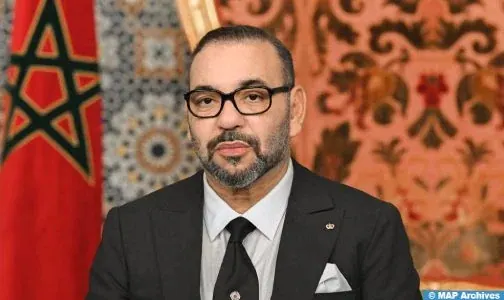
King Mohammed VI of Morocco has set the tone for the new legislative term, emphasizing the need for a decisive turn in the country's development. In his address to the Parliament, the King highlighted several priorities, including economic sovereignty, social justice, youth employment, territorial development, and a revamp of the migration cooperation model. He stressed that Morocco must seize opportunities without delay, requiring more reactivity, coordination, and concrete results.
The King emphasized the importance of accelerating reforms to consolidate Morocco's economic ambitions. He wants the new parliamentary and governmental term to be a turning point for the country, aiming to solidify its status as an emerging economic power and reliable international partner. This ambition must be accompanied by a better balance between economic growth and social and territorial justice. The King also reiterated his attachment to Moroccan national pride, distinguishing it from any form of complacency.
The monarch identified several priority sectors, including water security, energy security, food security, industrial emergence, digital economy, and artificial intelligence. These orientations reflect Morocco's desire to strengthen its ability to anticipate crises, reduce vulnerabilities, and preserve autonomy in essential sectors. The King also stressed the need to accelerate the constitution of strategic reserves and secure the supply of essential products.
King Mohammed VI called on the private sector to play a more significant role in the country's economic transformation. He invited companies to invest more, innovate, develop their export capacities, and create jobs. The private sector should not be a simple beneficiary of development policies but a central actor in their implementation. The King also emphasized the importance of youth employment, requesting that their concerns be placed at the forefront of public policies and governance priorities.
The King insisted on the need for decentralization, denouncing delays and dysfunctions that hinder the implementation of reforms. He demanded the full application of the Charter of administrative deconcentration, with the effective transfer of necessary competencies, human resources, and financial means from the central power to provinces and regions. The King also called for the removal of obstacles limiting the functioning of regional institutions.
King Mohammed VI addressed the issue of migration cooperation with European partners, particularly Spain. He defended the Moroccan approach, presenting it as balanced and having produced positive results. The King emphasized that Morocco's migration policy is guided by a vision of partnership and cooperation, aiming to address the challenges of migration while respecting the country's sovereignty and international commitments.
The King's speech concluded with a clear message: Morocco must move forward with determination and resolve, harnessing its potential and seizing opportunities to achieve its ambitions. The country's development requires a collective effort, with all stakeholders working together to achieve concrete results and improve the living conditions of citizens.
Key points
- The King emphasized the need for Morocco to accelerate reforms, strengthen decentralization, and launch new strategies in key sectors.
- He called on the private sector to play a more significant role in the country's economic transformation, investing more, innovating, and creating jobs.
- The King also stressed the importance of youth employment, requesting that their concerns be placed at the forefront of public policies and governance priorities.