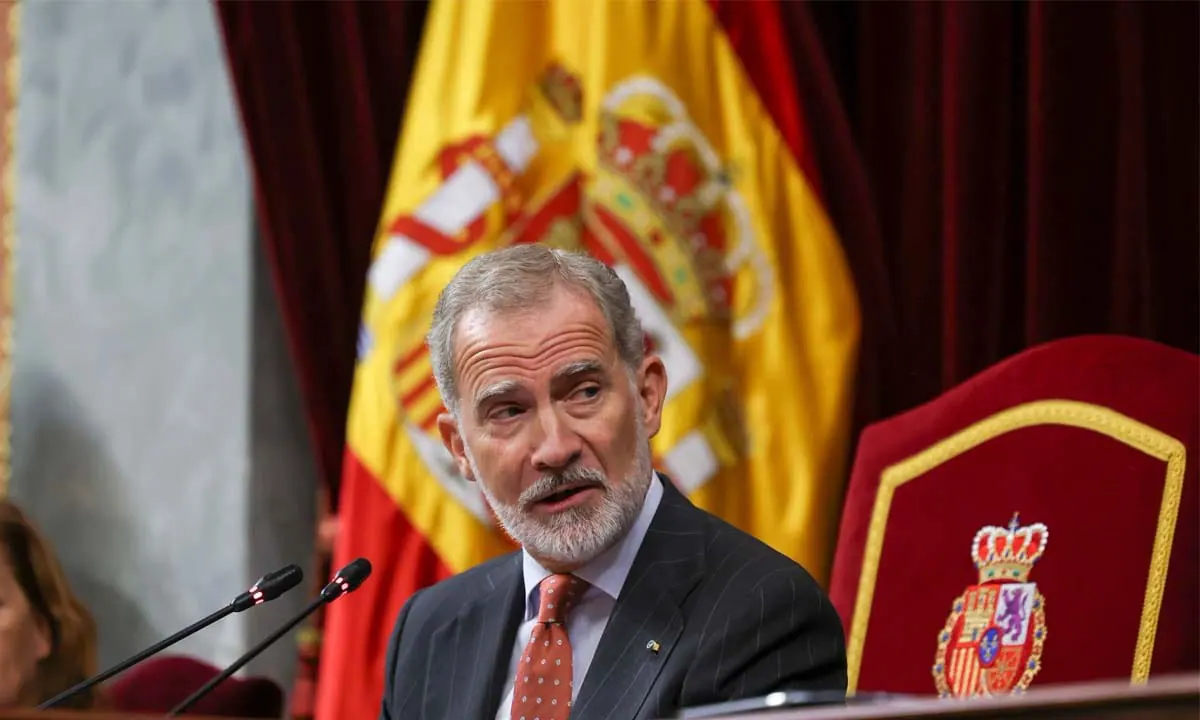
King Felipe VI and Queen Letizia of Spain are set to visit Ceuta and Melilla on October 13-14, their first official visit to the cities since Felipe VI ascended to the throne in 2014. The visit comes at a sensitive time in Morocco-Spain relations, following a migration crisis in Ceuta in July. Both Rabat and Madrid have emphasized the importance of maintaining bilateral cooperation, particularly on migration and security issues.
Experts have varying views on the visit's implications. According to Juan Luis Manfredi, a professor of international studies, the visit should be seen as a normalization of the royal presence in the cities. However, he also believes it carries a deliberate message in external policy, related to control and participation in issues linked to the Strait of Gibraltar. This visit may be more than a routine royal activity, carrying a message with strategic and security implications.
In Morocco, the visit may be exploited politically, not just by the government but also by other parties, given the sensitivity surrounding Ceuta and Melilla. Pablo Sabag, a professor at Complutense University of Madrid, notes that the visit may not be seen as mere support for the Spanish monarchy but rather as an affirmation of Spain's stance on the cities' status. This could have repercussions on bilateral relations, as the issue remains highly sensitive.
The Spanish government asserts that the visit was planned before the July migration crisis and is not a reaction to it. Madrid emphasizes that the royal couple and government had prepared for the visit prior to the crisis, making it a scheduled event. This contrasts with the 2007 visit by King Juan Carlos I and Queen Sofia, which sparked a diplomatic crisis with Morocco.
The 2007 visit by King Juan Carlos I and Queen Sofia was the last royal visit to Ceuta and Melilla. Since then, Morocco-Spain relations have evolved, with increased cooperation on security, migration, and economic exchange. In September, Morocco's Foreign Ministry stated that relations with Spain are based on mutual respect, trust, and ongoing dialogue, emphasizing the need to avoid using Morocco as a pawn in Spanish internal politics.
Morocco has not officially commented on the upcoming visit. According to El País, Morocco has maintained official silence, with media and political figures discussing the implications. The visit may test Rabat and Madrid's ability to manage differences on Ceuta and Melilla while preserving shared interests that have driven cooperation in recent years.
The visit also follows a migration crisis in Ceuta on July 30-31, when thousands entered the city from Morocco. King Felipe VI previously described the incident as a significant security and humanitarian challenge, emphasizing that Ceuta's borders are also European borders. Spain and Morocco have since cooperated to prevent further mass entries.
Key points
- The visit may have implications for Morocco-Spain relations, particularly on the status of Ceuta and Melilla.
- The Spanish government asserts that the visit was planned before the July migration crisis.
- The visit may test Rabat and Madrid's ability to manage differences on Ceuta and Melilla.