Deputy President Kindiki has intensified his tours of the Mt Kenya region, aiming to sell President William Ruto's record while presenting himself as the leader who can protect the region's interests. Kindiki's recent visits to Maragua, Nyeri, and Kiambu included inspections of government projects and calls for residents to reject divisive politics. He emphasized his mission to unite Mt Kenya, deliver development, and secure another term for Ruto before positioning himself for the presidency.
Kindiki's strategy relies on the argument that Mt Kenya has maintained its influence in government, citing the region's representation in Cabinet and other senior positions. He also highlighted his own political record, having served as Tharaka Nithi senator, Interior Cabinet secretary, and now Deputy President. Additionally, Kindiki has secured public backing from over 50 MPs from the region, providing him with a significant network to expand his influence.
The Mt Kenya region holds significant voting power, with 3.11 million registered voters in Mt Kenya West and 1.34 million in Mt Kenya East. Together, they account for over 4.45 million voters, making the region crucial in the upcoming election. Kindiki's campaign is not only about winning votes for Ruto but also about proving that the region can retain influence by remaining at the center of government.
However, political observers argue that government positions and parliamentary support do not automatically translate into votes. They contend that Kindiki must compete with leaders building alternative political bases, including former Deputy President Rigathi Gachagua and Kiharu MP Ndindi Nyoro. Gachagua has continued campaigning against Ruto and Kindiki, presenting himself as a defender of Mt Kenya's interests.
Nyoro presents a different challenge, having taken his People’s Party of Kenya beyond his Kiharu base and embarked on national mobilisation. He has also held discussions with several opposition leaders, building a separate political platform. Kindiki has responded by invoking elders, development, and unity, rather than engaging in a prolonged personal fight.
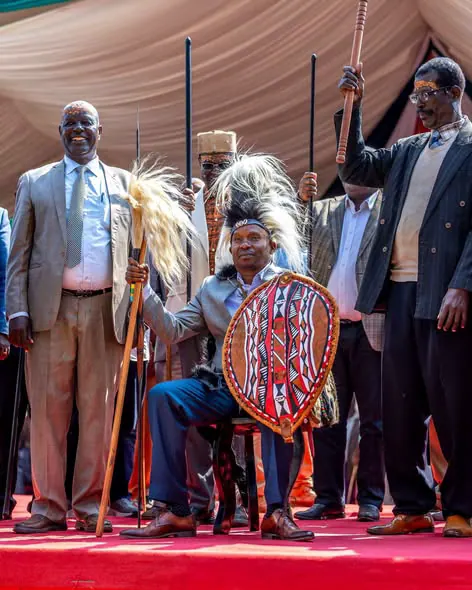
Kindiki recently received an endorsement from Mt Kenya elders, giving him a platform to campaign for unity between Mt Kenya East and West. However, some leaders have questioned whether the elders' meeting can speak for the entire region, arguing that political authority must ultimately be tested by voters. Taveta MP John Bwire and Maragua MP Mary Wamaua have praised Kindiki's leadership qualities, citing his brilliance and unifying factor.
The 2027 succession is also influenced by other factors, including former President Uhuru's continued involvement as a senior adviser. Lawyer Ahmednasir Abdullahi argues that Uhuru's political weight has diminished, while Laikipia East MP Mwangi Kiunjuri emphasizes that the Deputy President's position is not negotiable. Political observers say Kindiki must persuade the region that retaining him is not merely about keeping a government position but about securing a place in the succession after Ruto.
Key points
- Kindiki's campaign in the Mt Kenya region aims to sell President Ruto's record while positioning himself for the 2027 succession.
- The Deputy President faces challenges from leaders like Rigathi Gachagua and Ndindi Nyoro, who are building alternative political bases.
- Kindiki's success will depend on his ability to persuade voters that his presence at the center of government gives the region enough reason to stay with Ruto in 2027.