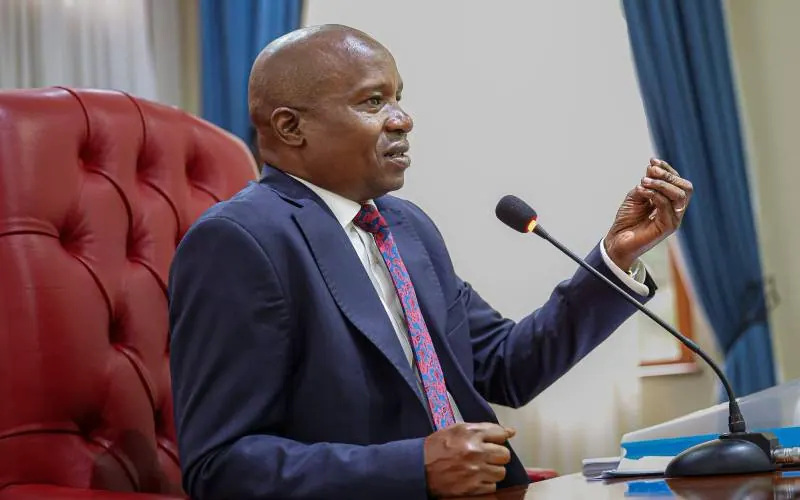
Deputy President Kithure Kindiki has directed the Ministry of Interior and National Administration, along with regulatory and enforcement agencies, to conduct fresh inspections of all alcohol manufacturing premises across Kenya. This move is part of the government's efforts to combat illicit brews, unsafe alcohol, and the social and economic effects of addiction. Kindiki emphasized the need for compliance with standards and regulations.
The directive follows a meeting between Kindiki, Interior Cabinet Secretary Kipchumba Murkomen, Inspector General of Police Douglas Kanja, and heads of regulatory and enforcement agencies. During the meeting, Kindiki received an update on measures already taken and proposals for further action against illicit alcohol cartels. The government has been disrupting these cartels through intelligence-led, multi-agency operations.
The operations have led to the closure of unlicensed manufacturing establishments, with agencies such as the Kenya Bureau of Standards, Kenya Revenue Authority, Anti-Counterfeit Authority, and the National Authority for the Campaign Against Alcohol and Drug Abuse involved in the enforcement effort. Kindiki announced plans to provide additional resources and equipment to security and regulatory agencies to strengthen enforcement.
The government aims to sustain the war against illicit alcohol and drug abuse to protect public health and secure the nation. Kindiki stated that intelligence-led operations are progressively dismantling cartels, disrupting supply chains, and incapacitating unlicensed manufacturer establishments. The government also pointed to stronger community-level enforcement, including monthly stipends for village elders and the establishment of the National Government Administration Unit.
In addition to enforcement, the government plans to establish and operate at least one public rehabilitation centre in every county within the next year. Each facility is estimated to cost about Sh60 million, with the projected cost for 47 counties at approximately Sh2.82 billion. Kindiki directed Murkomen to convene a sector forum on licensing and regulation of the alcohol trade and consumption within 14 days.
The forum will examine cooperation between the national and county governments in establishing and managing rehabilitation services. A Special Intergovernmental Budget and Economic Council meeting is expected within the next month to coordinate further action. Kindiki emphasized that the economic and social consequences of alcohol and drug abuse require a coordinated response involving both levels of government.
Kindiki warned manufacturers, distributors, and sellers of harmful alcoholic drinks that the government will intensify its crackdown on products containing dangerous chemicals and those targeting young people. He stated that authorities would pursue actors across the alcohol supply chain, from manufacturers to transporters and retailers, to protect public health and curb alcohol-related harm.
Key points
- The Kenyan government has ordered fresh inspections of all alcohol manufacturing premises to combat illicit brews and unsafe alcohol.
- The government plans to establish at least one public rehabilitation centre in every county within the next year.
- A sector forum will be convened to discuss licensing and regulation of the alcohol trade and consumption.