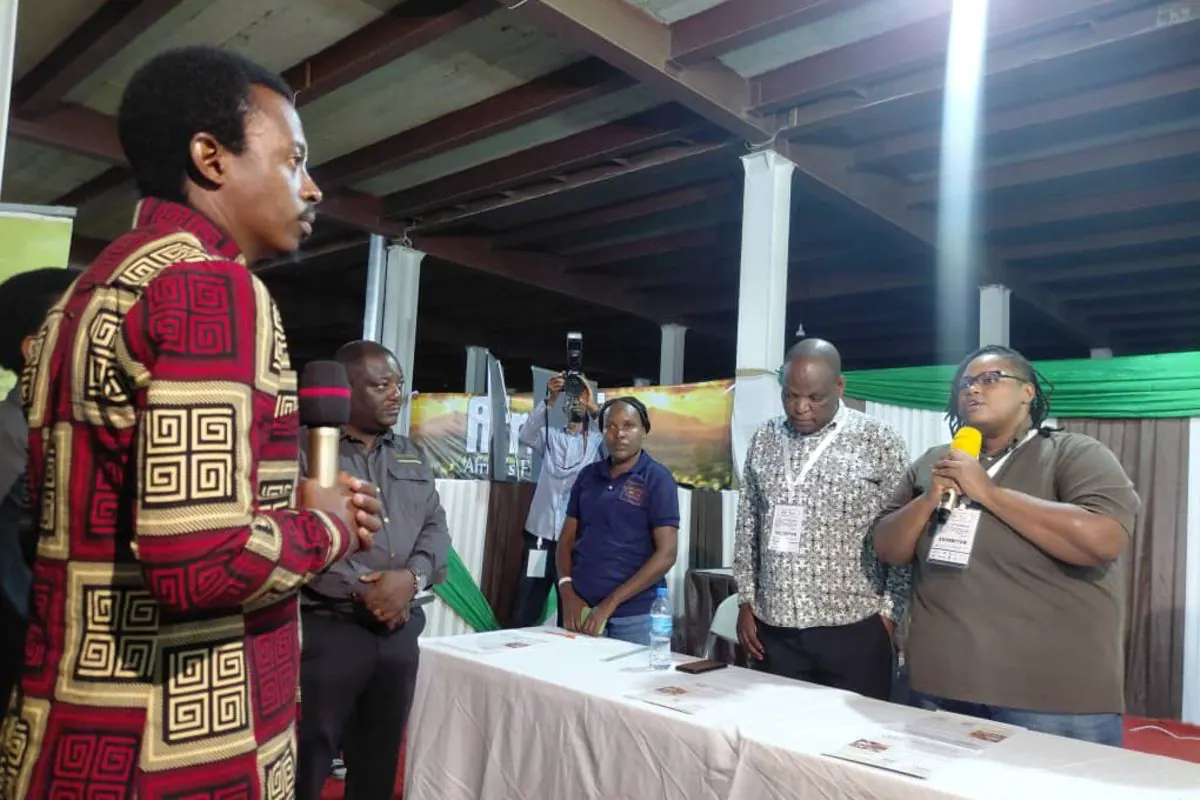
The Kilimanjaro Regional Government has issued a directive to local authorities with large tracts of undeveloped farmland, instructing them to make the land available to coffee farmers. This move aims to boost coffee production and restore the region's historic position as a leading coffee producer. The directive was issued by Mwanga District Commissioner Hassan Bomboko, representing Kilimanjaro Regional Commissioner Nurdin Babu, during the opening of the seventh edition of the Kahawa Festival 2026.
Kilimanjaro has significant potential to increase coffee production and compete with other regions, including Kagera, which currently accounts for 60 percent of Tanzania's coffee output. The region should capitalize on the established Kilimanjaro coffee brand to increase production and add value to its coffee. According to Bomboko, coffee is an important contributor to the national economy, and farmers should take advantage of available opportunities to expand production.
The Kilimanjaro Regional Government aims to restore the region's reputation as a major coffee-growing area. The region lost much of its position in coffee production after politics became entangled with the crop, with some farmers reportedly being encouraged to uproot coffee trees and replace them with other crops. Bomboko acknowledged that mistakes were made in the past but emphasized that it is not too late to start afresh by investing in coffee.
Farmers can obtain coffee seedlings free of charge, while experts from the Tanzania Coffee Research Institute (TaCRI) are available to provide scientific guidance on farm preparation, planting, and crop management. Tanzania is targeting 300,000 tonnes of coffee annually by 2030, with output having increased from 65,000 tonnes to 85,000 tonnes. This increase shows that there is still considerable room to expand production if farmers invest more and adopt available technologies.
Tanzania Coffee Board (TCB) chairperson Prof Aurelia Kamuzora urged stakeholders across the coffee value chain to work diligently and comply with national policies and laws to ensure Tanzanian coffee meets international market requirements. She also called on farmers in Kilimanjaro to increase productive output to help restore the region's reputation as a major coffee-growing area.
The Kahawa Festival 2026, now in its seventh edition, aims to promote the consumption of locally produced coffee, bring together stakeholders across the value chain, and recognize farmers' contributions to the sector. The festival also provides opportunities for young people and investors to learn about the coffee business, locally manufactured coffee products, and the use of digital systems to develop the sector.
The festival's organizing committee chairperson, Denis Mahulu, stated that the exhibition is part of activities marking World Coffee Day, observed on October 1 every year. The event brings together stakeholders to explore ways to develop the coffee sector and increase production. With the right investments and adoption of technologies, Kilimanjaro is poised to regain its position as a leading coffee producer in Tanzania.
Key points
- The Kilimanjaro Regional Government has directed local authorities to allocate unused farmland to coffee farmers to boost production.
- Tanzania aims to produce 300,000 tonnes of coffee annually by 2030.
- The Kahawa Festival 2026 promotes locally produced coffee and recognizes farmers' contributions to the sector.