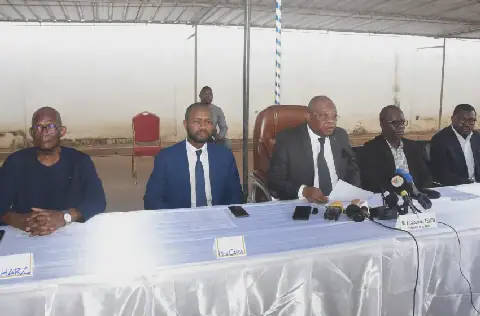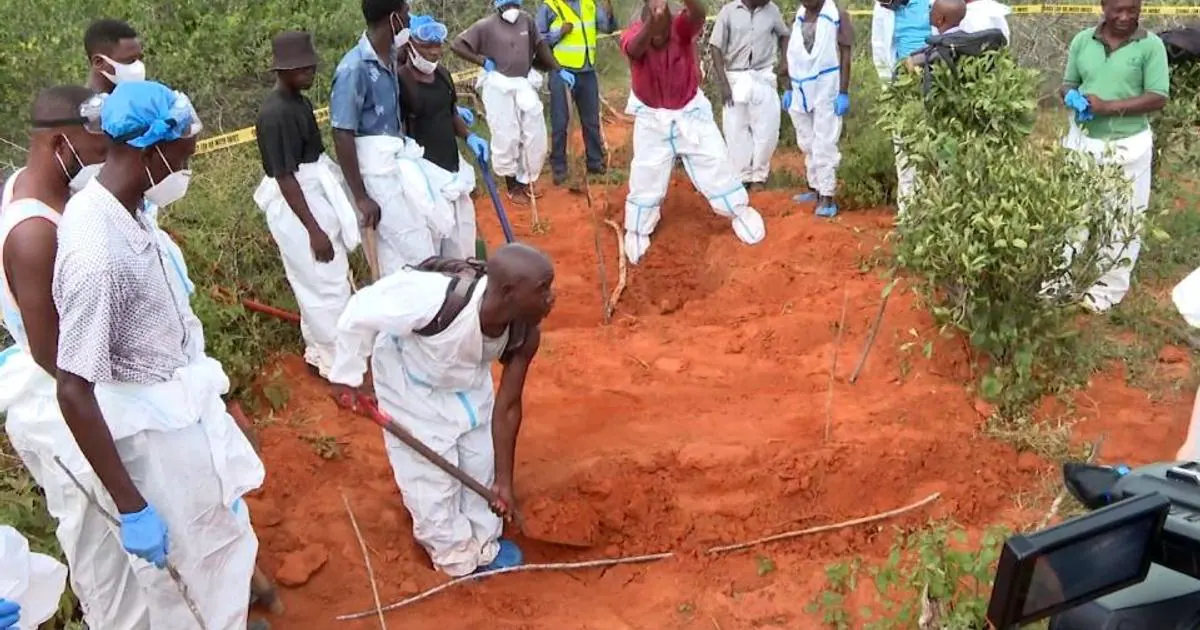
Kilifi County has issued a 21-day notice to families of victims from the Shakahola tragedy, giving them until October 8, 2024, to identify and collect the remains of their loved ones. The county has 443 bodies and 45 body parts at a temporary facility at Malindi Sub-County Hospital, which were recovered from the Shakahola Forest and Kwa Binzaro areas. The remains have been stored at the facility for over three years, with many families still searching for relatives who disappeared into the tragedy.
The Shakahola tragedy, which occurred in 2023, was a cult-related incident involving an apocalyptic Christian group called the Good News International Ministries (GNIM), led by self-proclaimed pastor Paul Nthenge Mackenzie. Mackenzie is currently on trial for murder, radicalization, and terrorism-related charges following the discovery of 429 bodies in the Shakahola Forest. The group was accused of forcing or manipulating its followers into starving themselves and their children to death in order to "meet Jesus" before what they believed was the end of the world.
The identification process has been challenging due to the condition of the remains, with many bodies recovered from shallow graves after significant decomposition. Government pathologists reported that some bodies were so severely decomposed that even determining sex or cause of death was difficult. DNA samples were collected as a more reliable means of establishing identity, but the process has taken years. In March 2025, the Government Chemist said 333 DNA samples had been tested from 453 recovered bodies, but many profiles could not be matched because relatives had not provided comparison samples.
The Senate's 2023 Ad Hoc Committee reported that 428 bodies had been exhumed by October 13, 2023, while the death of one suspect in custody brought the deaths recorded at that point to 429. Subsequent exhumations increased the number of recovered bodies, with public reporting putting the number of bodies recovered at 453 by 2025. However, the current Kilifi notice refers specifically to 443 human bodies and 45 body parts recovered during operations linked to the Shakahola and Kwa Binzaro tragedies.
DNA identification works by comparing a genetic profile from unidentified remains with samples from relatives. However, this requires enough usable DNA from the remains and a suitable reference sample from a biological relative. The Government Chemist said in 2025 that families needed to come forward for cross-matching and that some profiles had remained unmatched. Officials also cited the cost and availability of PCR testing kits as part of the problem.
Kilifi County said that only 14 of the 443 remains currently in its custody had been identified by relatives through DNA matching, while some families who were traced reportedly declined to collect the remains because of the stigma associated with the Shakahola tragedy. The Kenya National Commission on Human Rights has previously described the prolonged wait for identification and burial as a human-rights and cultural concern, noting that families were being denied the opportunity to bury relatives according to their religious and cultural practices.
If the remains are not claimed within the 21-day period, Kilifi County will seek court authority to inter them and has identified land near Shakahola for that purpose. The county also says the remains will be buried in a way that allows them to be identified in future, with forensic records retained for the ongoing legal process. The Public Health (Public Mortuaries) Rules generally restrict storage of bodies in public mortuaries to 10 days, although they provide for longer periods where legal reasons make removal impracticable and the Medical Officer of Health is informed.
Key points
- Kilifi County has given families 21 days to identify and collect 443 bodies and 45 body parts from the Shakahola tragedy.
- The identification process has been challenging due to the condition of the remains and the need for DNA matching.
- If the remains are not claimed, Kilifi County will seek court authority to inter them and bury them in a way that allows for future identification.