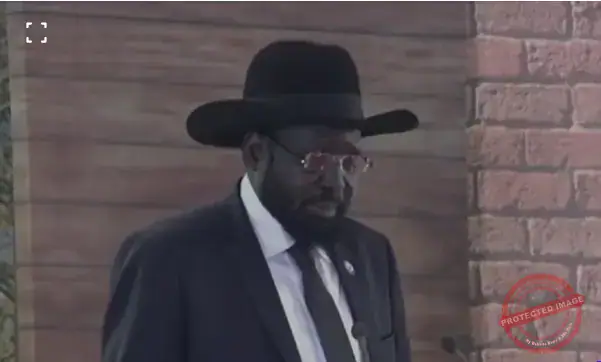
In April 2014, President Salva Kiir Mayardit of South Sudan delivered a speech at the Third Tana High-Level Forum on Security in Africa in Bahir Dar, Ethiopia. He emphasized the need for African countries to take responsibility for addressing the continent's challenges, including corruption, illicit financial flows, and insecurity. Kiir argued that these issues are interconnected and require a comprehensive approach. He noted that the illegal movement of public funds was undermining African economies and contributing to security challenges.
Kiir highlighted the problem of corruption in South Sudan, particularly in the early years following independence. He expressed concern about the disappearance of government revenues, including money received through oil-sharing arrangements with neighboring Sudan. The President alleged that some contractors had taken advance payments for infrastructure projects without completing the promised work. He also claimed that some individuals had accumulated wealth through corruption and subsequently sought political power to protect their interests.
The President described attempts he had made to recover money from individuals suspected of misappropriating public funds. He revealed that he had written letters to those suspected of taking money, offering them the opportunity to return the funds discreetly. Kiir also wrote to international financial institutions and foreign governments seeking assistance in tracing money believed to have been transferred to overseas bank accounts. However, he expressed frustration over the responses he received, with some institutions citing laws that prohibited them from disclosing information about their customers.
Kiir also raised concerns about the management and exploitation of South Sudan's natural resources, including oil, agricultural land, timber, minerals, and water. He argued that competition over these resources could become a source of insecurity, particularly when individuals and external interests sought to benefit from the country's wealth. The President rejected claims that outsiders had brought independence to South Sudan, insisting that the country's struggle for self-determination had a long history.
The President linked the political and security crisis that erupted in South Sudan in December 2013 to struggles over wealth, political power, and control of natural resources. He alleged that some individuals who had accumulated wealth wanted political power to protect their interests and influence decisions concerning the country's resources. Kiir also claimed that agreements had been made outside South Sudan concerning the allocation of oil-field concessions in the event of a change of government.
Kiir called on African countries to take responsibility for addressing corruption, insecurity, and illicit financial flows. He urged the continent to develop homegrown solutions instead of relying entirely on external assistance. The President emphasized that Africans themselves must get solutions for African problems, rather than waiting for external help. He stressed the need for African countries to work together to address these challenges.
In his concluding remarks, Kiir reiterated the relationship between corruption and insecurity. He delivered a memorable line, stating that "once there is corruption, there is insecurity." The President's address highlighted the need for a comprehensive approach to addressing corruption, financial flows, and insecurity in Africa. His speech emphasized the importance of African countries taking ownership of these challenges and working together to find solutions.
Key points
- Kiir linked corruption to insecurity in South Sudan, citing the country's experiences with illicit financial flows and natural resource exploitation.
- The President emphasized the need for African countries to develop homegrown solutions to address corruption, insecurity, and illicit financial flows.
- Kiir described attempts to recover misappropriated public funds, including writing to international financial institutions and foreign governments for assistance.