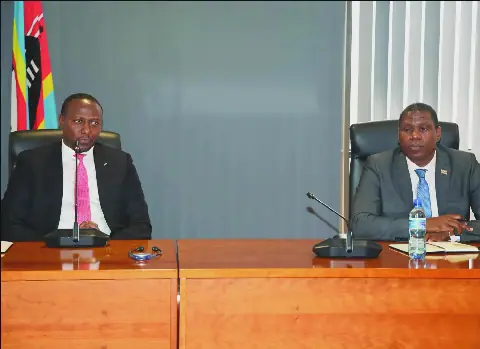
South African Reserve Bank Governor Lesetja Kganyago stated on September 28 that the Bank expects inflation to return to about 3% around the end of 2027. He made these remarks during an address to the Mapungubwe Institute for Strategic Reflection's forum on Africa and geopolitics. Kganyago emphasized that South Africa's weak growth remains a concern. The speech was an assessment of the economic outlook, not a new Monetary Policy Committee rate decision.
Kganyago explained that the Bank had increased its policy rate to prevent the current energy-driven price shock from becoming persistent inflation. He noted that inflation was expected to slow significantly next year. Local inflation had been at target when the energy shock hit but had since spent about six months above it. The governor described a difficult trade-off for policymakers when supply disruptions lift prices and hold back growth at the same time.
The Bank's approach, according to Kganyago, is to look ahead and keep policy restrictive enough to limit longer-lasting inflation. He also mentioned that South Africa's public-debt outlook appeared to be improving. Interest costs were at about 5.3% of gross domestic product, and there was increasing confidence that the debt-to-GDP ratio had already peaked. Kganyago argued that high debt did not remove the need for an independent central bank.
Despite more favourable macroeconomic conditions, Kganyago stated that growth remained the country's weak point. South Africa's economy had grown by an average of about 0.6% a year over the past decade. The governor estimated potential growth at roughly twice that pace, which he still regarded as low. He expressed concern about the country's growth prospects.
Kganyago noted that longer-term South African bond yields had been contained at around 9% this year, and the rand had shown relatively low volatility. However, he contrasted these developments with the country's second-quarter contraction and the continuing drag from higher costs, including electricity prices that were double their 2020 level.
The governor's remarks were part of a wider speech on climate, geopolitical, technology, and debt risks to the world economy. He emphasized that the inflation and growth forecasts are the Bank's current expectations, not guarantees. Kganyago's address highlighted the complexities of the economic landscape and the need for careful policymaking.
In conclusion, Kganyago's statement underscores the challenges facing South Africa's economy, including weak growth and high inflation. The SARB Governor's remarks emphasize the need for a balanced approach to policymaking, taking into account the risks and uncertainties in the global economy. The Bank's commitment to maintaining a restrictive policy stance aims to mitigate the impact of inflation and support sustainable growth.
Key points
- SARB Governor Lesetja Kganyago expects inflation to return to about 3% by end-2027.
- South Africa's weak growth remains a concern, with an average growth rate of 0.6% per year over the past decade.
- The country's public-debt outlook appears to be improving, with interest costs at about 5.3% of gross domestic product.