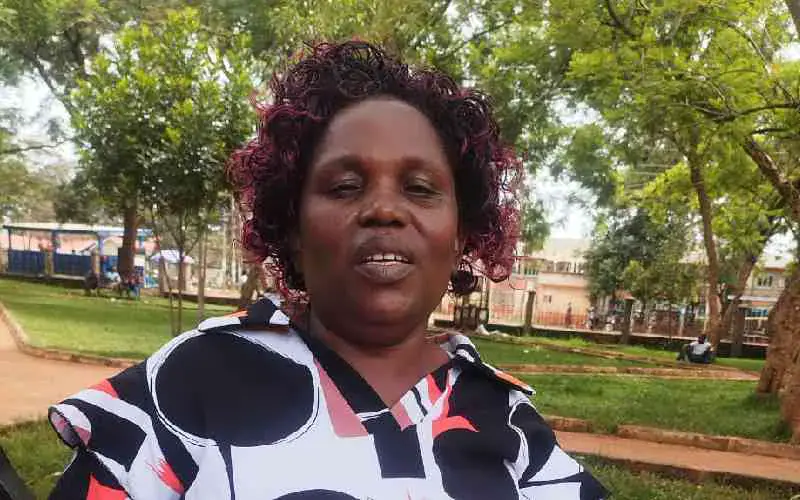
In the early years of the HIV epidemic in Kenya, people living with the virus went to great lengths to conceal their status, even when seeking treatment. They would visit health facilities at 3 am to collect antiretroviral drugs, cover their faces with scarves, or abandon queues for fear of being recognized. Millicent Adhiambo, a 53-year-old woman living with HIV, recalls the secrecy and stigma that surrounded the disease. "Faces remained unknown at the ARV collection centres. Everyone walked into the unit at wee hours of the morning with their faces covered," she says.
The stigma and discrimination were not limited to the public but also extended to people who should have understood the disease. Isaac Rabari, a 50-year-old man living with HIV, organized an outreach at a local church in 2014 to sensitize the community about the virus. However, the event was marred by congregants keeping their distance and some walking out of the church. The church had set aside chairs for people living with HIV in a section referred to as the 'Aids space'. Rabari says the church treated HIV as a moral issue, rather than a virus.
The experience of Rabari and Adhiambo was not unique. Many people living with HIV used numbers instead of their names when collecting medication to protect their identities. HIV was often equated to a curse, and people were buried in body bags, while the sick were isolated for fear of infecting others. However, treatment has changed significantly, with newer regimens, including the Tenofovir disoproxil fumarate (TDF) combination, reducing the number of tablets people need to take to suppress the virus.
According to Rabari, adherence to medication, exercise, healthy eating, and regular health checks can help people living with HIV lead healthy lives. "Don't pity yourself because you are living with HIV. It is just a virus in the body that can be overcome by taking your medication," he says. Douglas Bosire, chief executive officer of the National Syndemic Diseases Control Council (NSDCC), notes that the change is evident when he speaks to young people. "Today when I go to university and talk to young people, they have never seen someone living with Aids. We do not have Aids nowadays. Someone who is living with HIV looks like me and your neighbour," he says.
Bosire recalls that in the 1990s, people living with HIV were sometimes secluded in small huts at the furthest corners of homesteads and left to die. Misinformation and lack of knowledge fueled discrimination in public spaces. "If you went to a restaurant and you found someone in a corner, everyone would leave, because of misinformation and lack of knowledge," he says. Today, scientific knowledge, prevention measures, and advances in treatment have changed the response to HIV.
However, Kenya is confronting a different set of challenges as more people living with HIV survive into older age. The advances in treatment have made it possible for many people living with HIV to remain healthy and live longer. As Kenya joins the global community to commemorate World Aids Day, themed "Ending Aids starts with access", Rabari and Bosire emphasize the importance of continued awareness and education.
The Kenyan government and health organizations are working to address the ongoing challenges faced by people living with HIV/AIDS. The goal is to end stigma and discrimination and provide access to treatment and care for all those affected. Key to achieving this goal is increasing awareness and education about HIV/AIDS, as well as addressing the syndemic conditions that often accompany the disease.
Key points
- Stigma and discrimination still affect Kenyans living with HIV/AIDS despite progress in treatment and awareness.
- Treatment has changed significantly, with newer regimens reducing the number of tablets people need to take to suppress the virus.
- Continued awareness and education are crucial to addressing the ongoing challenges faced by people living with HIV/AIDS in Kenya.