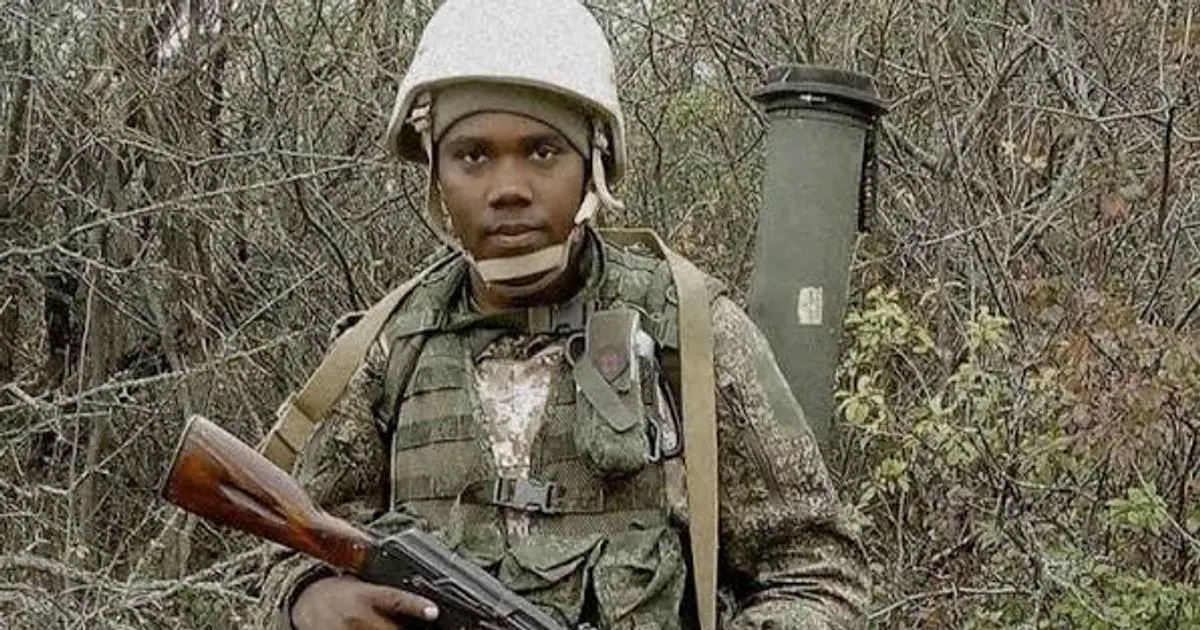
The Kenyan government has officially documented 354 Kenyan nationals caught up in the Russia-Ukraine conflict, according to Prime Cabinet Secretary and Foreign Affairs Cabinet Secretary Musalia Mudavadi. The figure includes people killed or missing in action, men still at the front, and others who have returned home. This comes after a US report alleged that over 1,000 Kenyan men were recruited to fight for Russia after being promised jobs abroad.
The US Department of State report published in October alleges that more than 1,000 Kenyan men were recruited through a network involving recruitment agencies and officials in Kenya and Russia. The report says some men were promised civilian jobs before being pressured into signing contracts with Russia’s Ministry of Defence. However, the Russian Embassy in Nairobi has denied issuing visas to people intending to travel to Russia to fight.
Accounts from Kenyans who returned home describe being offered skilled jobs, travelling to Russia, and then signing contracts written in Russian, with some sent into combat after limited military training. The government has reported 77 Kenyans still on the front lines, 38 in camps, 52 whose locations were unknown or unclassified, 34 hospitalised, and 62 repatriated. It also reported 84 classified as killed or missing in action.
The government is seeking the release of Kenyans held in Ukraine and engaging the two countries over prisoner exchanges and the return or repatriation of remains. Mudavadi said some Kenyans had left without informing their families or the government, complicating efforts to trace them. He also said Kenya lacked the military capacity to conduct rescue operations inside the war zone and had to rely on diplomatic engagement with Russia and Ukraine.
Mudavadi told lawmakers that Russia had stopped enlisting additional Kenyans following Kenya's effort to have its nationals placed on a Russian “Stop List” during his visit to Moscow in March. He said the Kenyan Embassy in Moscow had confirmed that no further Kenyan nationals were enlisted after the measure was implemented. The government is also working to protect migrant workers from similar scams in the future.
The case is a warning to anyone considering an overseas job offer. Applicants should verify that a recruitment agency is licensed through Kenya's National Employment Authority, confirm the identity of the foreign employer, and obtain a written contract they can understand before travelling. A promise of a civilian job that suddenly changes into military service is a major red flag.
The Russia recruitment scandal is now both a consular crisis and a test of Kenya's protection of migrant workers. Families need answers about loved ones whose whereabouts remain uncertain, while investigators face the task of establishing how the recruitment networks operated and whether officials or agencies broke the law.
Key points
- The Kenyan government has documented 354 nationals caught up in the Russia-Ukraine conflict.
- A US report alleges that over 1,000 Kenyan men were recruited to fight for Russia after being promised jobs abroad.
- The government is working to protect migrant workers from similar scams in the future.