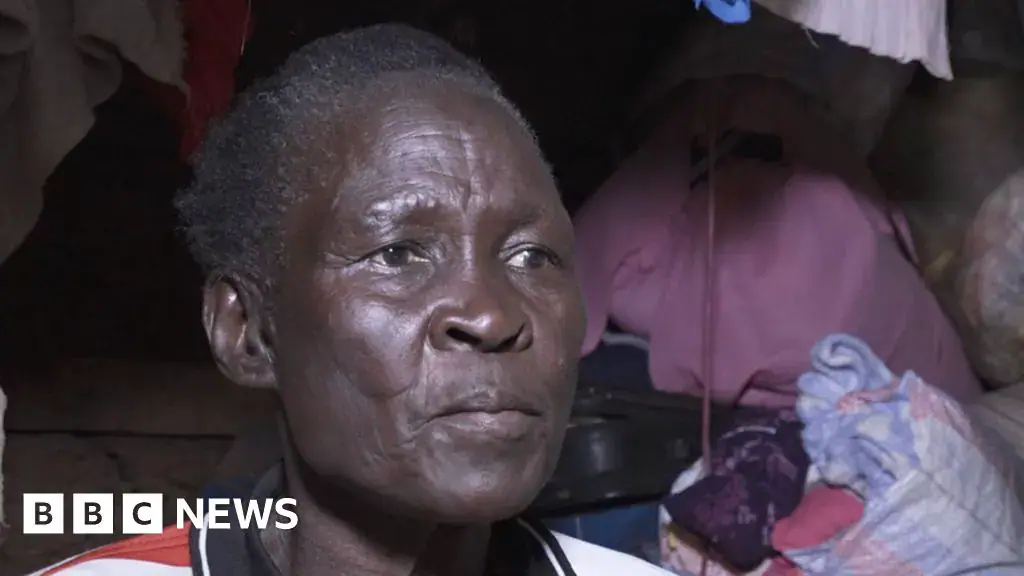
Agnes Shikoli, a 62-year-old resident of Kibera, one of Kenya's largest informal settlements, is worried about the impending floods. Her house, made of corrugated iron, is just a few meters from the Ngong river, which runs through the densely populated area. Shikoli's sister died in a flood earlier this year, and she fears for her own life. "I feel like it can kill us. These houses aren't made of stone. They can fall on us, or the water can drown us," she says.
The Kenyan government has launched a program called Climate Worx to rehabilitate Nairobi's rivers and mitigate the impact of El Niño. Workers are clearing garbage from the riverbed and disposing of it far from the water. Similar work is ongoing across Nairobi to unclog drainage systems. However, the task is huge, and the workers face a daunting challenge. Blocked drains and inadequate sewage systems were blamed for the high number of deaths after the floods earlier in the year.
Nairobi's drainage system has not been upgraded to deal with the rapid growth in population and infrastructure over the decades. The existing system was developed 30 years ago to cater for a population of about 2.5 million residents, but the city now has about 7 million people during the day and 5.5 million at night. The Nairobi County disaster management chief, Bramwell Simiyu, says that investment of up to $192m is needed to upgrade the sewerage and drainage system entirely.
The Nairobi River Basin Regeneration programme has recommended a "buffer" to protect rivers and "humane relocation" of communities where necessary. However, rising poverty has driven many people to live close to rivers. Simiyu says that up to 100,000 people are at risk, with moderate projections suggesting that about 20,000 people may be at risk. Anyone forced to leave their homes will be relocated to 167 designated holding grounds where relief food and supplies will be distributed.
Kenya's meteorological department warns that November is usually the peak rainfall month of the short rainy season, which normally lasts from October to December. A regional forecast from the Intergovernmental Authority on Development (Igad) warned in September that there was "an 81% probability of a very strong El Niño during October–December 2026". Weather forecaster Jemima Gacheru says that temperature conditions in the Indian Ocean are similar to those in 1997, which resulted in widespread flooding and destruction in Somalia and Kenya.
The UN's migration body, the International Organization for Migration (IOM), has warned that almost 900,000 people could be forced to leave their homes in Kenya this year, mostly due to predicted floods. Kenya is not the only African country worried about the impact of El Niño. In neighboring Somalia, the country's disaster management agency has warned that 1.2 million people are at risk of displacement caused by extreme weather.
The impact of El Niño is expected to worsen existing issues, including food insecurity in Somalia. The United Nation's famine warning system IPC has warned of the increased risk of food insecurity in Somalia due to supply chain issues exacerbated by the impact of El Niño. Elsewhere on the continent, forecasters fear El Niño could bring extreme heat and prolonged periods without rain, causing a crisis for farmers across parts of West Africa and southern Africa.
Key points
- Up to 100,000 people in Kenya are at risk of displacement due to predicted floods.
- The Kenyan government has launched a program to rehabilitate Nairobi's rivers and mitigate the impact of El Niño.
- Almost 900,000 people could be forced to leave their homes in Kenya this year due to predicted floods.