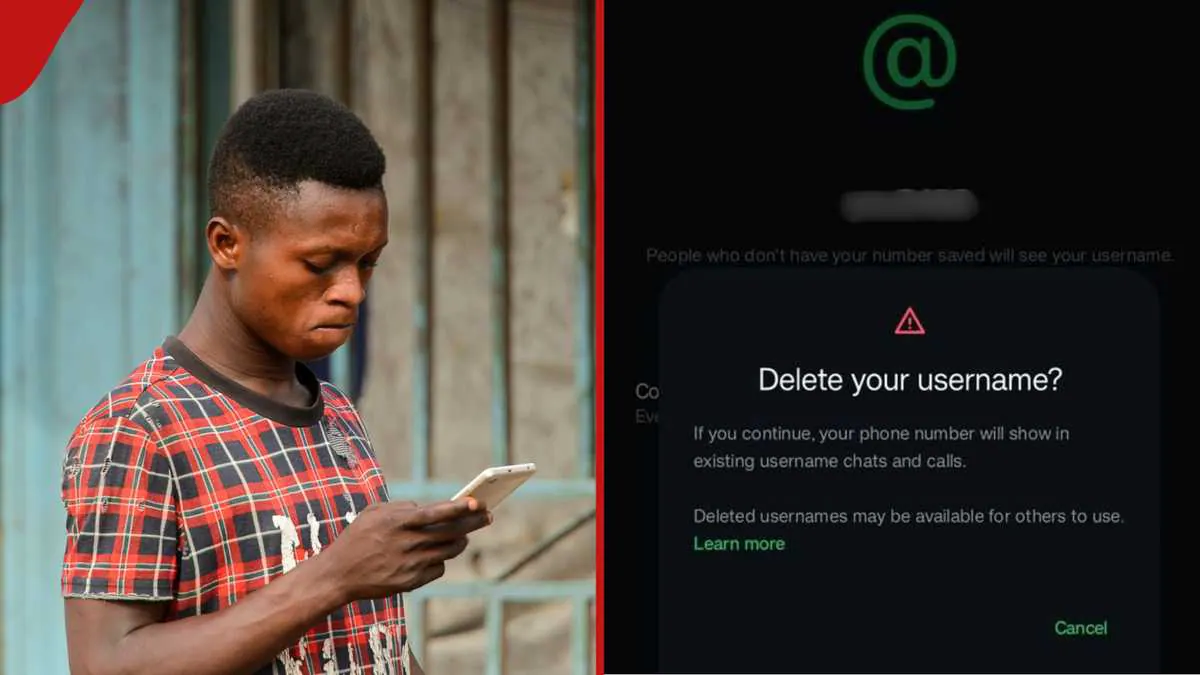
A growing debate in Kenya is centered on WhatsApp's username feature, with many users choosing to remove their usernames. Business owners are leading the pushback, citing concerns that usernames could cost them clients who cannot reach them through a regular phone call. This shift has sparked a discussion on balancing digital privacy against the practical need to stay reachable.
Small business owners appear to be at the heart of this reversal. They argue that a username may shield a phone number, but it can also shield them from customers who need to reach them quickly. A prospective buyer who does not have the seller's digits saved cannot simply switch to a regular voice call if a username replaces a visible phone number on a profile.
WhatsApp usernames were designed with privacy in mind, allowing users to chat with new contacts without exposing their phone numbers. However, concerns that usernames completely hide phone numbers from existing contacts or make ordinary calls impossible are not entirely accurate. Communication through a username requires an internet connection, and a standard voice call or SMS through the mobile network remains available to anyone who already holds the recipient's phone number.
The real gap appears when someone only knows a user's username and not their number. In that scenario, reaching them offline becomes genuinely difficult. User Rong highlighted the business case, stating that if a username is set up, people who don't have a user's number saved may see the username instead of the actual phone number, potentially leading to missed calls or lost customers.
Not everyone is convinced the alarm is warranted, however. User Angeelen pushed back, stating that WhatsApp has upgraded its features to address concerns about phone number visibility. The debate reflects a tension that many Kenyan users navigate daily: balancing digital privacy against the practical need to stay reachable in a market where a missed call can mean a missed opportunity.
Meta recently introduced new charges for Kenyan businesses using the WhatsApp Business Platform. Businesses that fail to add a valid payment method by 30 September risk having service messages blocked. This development has added another layer of complexity to the discussion around WhatsApp's features and their impact on businesses.
The discussion around WhatsApp usernames and phone numbers is likely to continue as users weigh the benefits of privacy against the need for accessibility. As the digital landscape evolves, users and businesses must adapt to new features and policies while navigating the challenges of connectivity and communication in Kenya.
Key points
- Business owners in Kenya are leading the pushback against WhatsApp usernames, citing concerns that they may lose clients who cannot reach them through a regular phone call.
- WhatsApp usernames were designed to protect users' phone numbers, but some users argue that they can also make it harder for customers to reach businesses.
- The debate highlights the tension between digital privacy and the practical need to stay reachable in Kenya's competitive market.