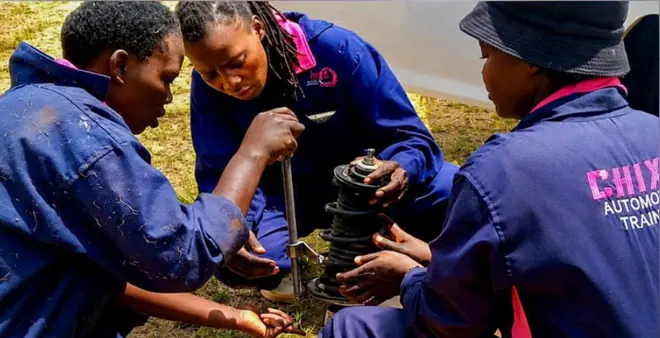
Kenya's electric vehicle market is experiencing rapid growth, with 39,324 electric vehicles registered cumulatively by the end of 2025, up from 1,378 in 2022. This growth has led to an increased demand for skilled technicians to repair and maintain electric motorcycles, vehicles, tricycles, and bicycles. In response, initiatives such as Chixz Auto Garage and Services are providing training and job placement for young women in automotive mechanics and electric mobility.
Chixz Auto Garage and Services, founded by Irene Wali, is a leading example of an initiative aimed at empowering women in the electric vehicle industry. The garage offers training in electric motorcycle repair, EV battery repair, and vehicle maintenance, with a focus on young women and mothers aged below 25 from low-income settlements. Chixz has partnered with companies such as BasiGo to provide job placement for its graduates and is preparing to launch a franchise model called Chixz Hub.
The electric motorcycle boom is particularly significant in rural and peri-urban areas where they are becoming a common mode of transport. However, there is a shortage of mechanics with the skills to work on electric vehicles. Chixz's trained women are well-positioned to fill this gap and earn a living. According to Wali, the workshop is a place to test whether those skills can become a livelihood.
Other initiatives, such as the Flone Initiative's Women in E Mobility Network, are also working to promote women's participation and leadership in the electric vehicle sector. The network has three pillars: research and advocacy, skills and mentorship, and access to resources including financing. The German Development Cooperation (GIZ) supports the network through its Promotion of Electric Mobility in Kenya project.
The Kenyan government is also taking steps to support the growth of the electric vehicle industry. In February, the government introduced its National Electric Mobility Policy, which aims to draw investment into charging infrastructure, local production, skills training, and a mix of financial and non-financial incentives. The policy is part of the government's plan to build a new transport industry, with work ranging from manufacturing and assembly to vehicle servicing, charging infrastructure, battery systems, and fleet operations.
Faith Waraki, who works at AfricaNEV and runs the Green Women Accelerator, believes that women should be empowered to take on various roles in the electric vehicle industry, including employers, freight managers, technicians, energy managers, and owners. Waraki emphasizes the importance of connecting skills training with actual opportunities in the market.
As the electric vehicle industry continues to grow, women like Wali are strategizing how to absorb more value from the growing chain. With the support of initiatives like Chixz and Flone, women are well-positioned to take advantage of the new opportunities emerging in the sector. Key players in the industry are working together to create a more inclusive and sustainable electric vehicle ecosystem in Kenya.
Key points
- Kenya's electric vehicle market has grown to 39,324 registered vehicles by the end of 2025.
- Initiatives like Chixz Auto Garage and Services are providing training and job placement for young women in electric vehicle repair and maintenance.
- The Kenyan government has introduced its National Electric Mobility Policy to support the growth of the electric vehicle industry.