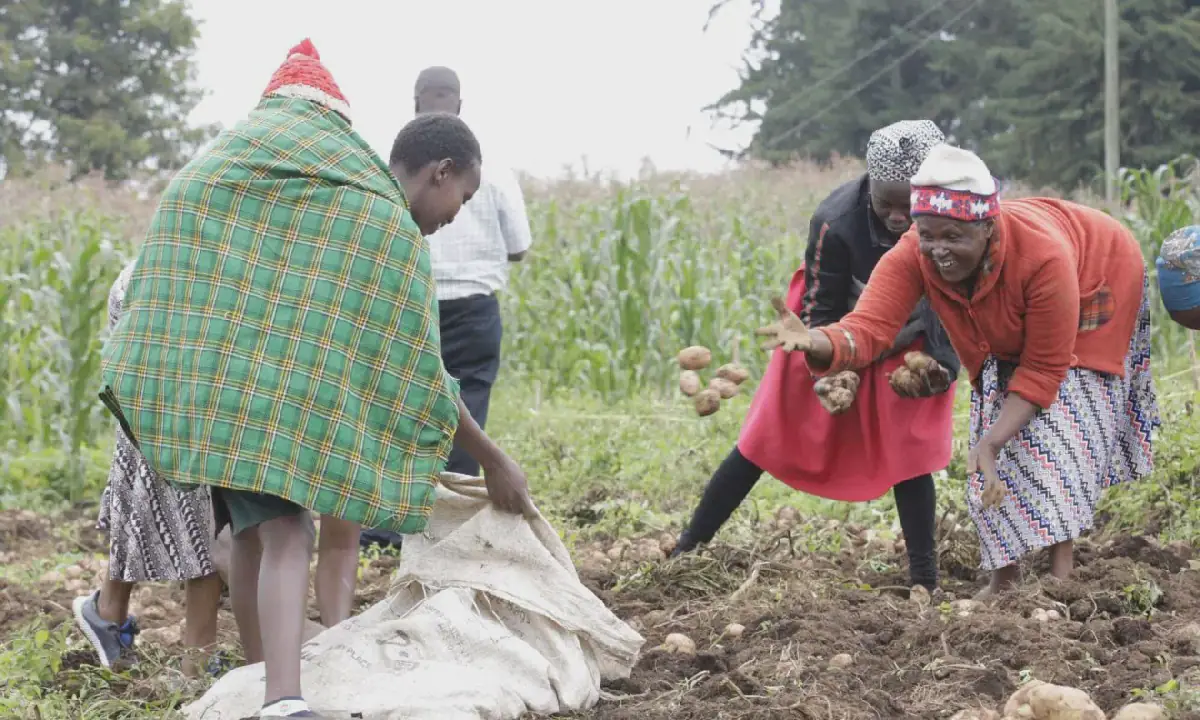
A recent report by the Farm to Market Alliance (FtMA) has highlighted the challenges faced by women farmers in Kenya. Despite earning higher incomes per hectare than men, women farmers struggle to access affordable credit and modern equipment, hindering their ability to expand their agricultural businesses. The report, which covered a period of nine years, found that women farmers earn an average of Sh82,494 per hectare during the peak farming season, compared to Sh69,833 earned by men.
The report also found that farmer service centers led by women generate an average annual profit of Sh143,989, significantly lower than the Sh515,253 earned by centers led by men. The disparity is attributed to the limited access to finance and equipment, which restricts the centers' ability to provide machine services, handle large harvests, and preserve produce after harvesting. On average, women-led centers have only two pieces of equipment, compared to 3.2 in men-led centers.
The report's findings suggest that women and youth can increase their income if they have access to quality seeds, training, and guaranteed markets. George Njoroge, FtMA's national coordinator, emphasized the need to address the barriers that prevent women farmers from expanding their businesses. He noted that removing these barriers can help increase the income of women farmers and improve their livelihoods.
The report also revealed that 70% of farmer service centers lack formal credit from financial institutions, despite 97% having bank accounts. The stringent loan requirements, which often demand land as collateral, force many centers to rely on informal credit. This limitation leads to significant post-harvest losses, particularly for women, who may lose up to half of their bean harvest due to inadequate drying facilities.
In addition to accessing credit and equipment, women farmers also face challenges in accessing markets. Although 88.9% of farmers sell their produce, only 3.8% have formal contracts with buyers. The FtMA program, which began in 2017, has expanded to 13 counties, establishing 2,126 centers that serve 401,955 farmers. The program aims to build sustainable rural businesses that can operate without relying on project funding.
Bai Mankay Sankoh, Deputy Country Director of the World Food Programme (WFP), emphasized the importance of creating self-sustaining rural businesses. The report recommends providing collateral-free loans, equipment financing for women-led centers, and strengthening market systems to address the challenges faced by women farmers.
The report's recommendations aim to address the systemic challenges that hinder women farmers' ability to access affordable credit and modern equipment. By implementing these recommendations, women farmers in Kenya can increase their income, improve their livelihoods, and contribute to the country's agricultural development.
Key points
- Women farmers in Kenya earn more per hectare than men but struggle to access affordable credit and modern equipment.
- The Farm to Market Alliance (FtMA) program has established 2,126 centers serving 401,955 farmers in 13 counties.
- The report recommends providing collateral-free loans, equipment financing for women-led centers, and strengthening market systems to address the challenges faced by women farmers.
Reporting sources
- Ripoti yafichua changamoto wakulima wa kike wanapitia katika miradi ya kilimo · taifaleo.nation.co.ke