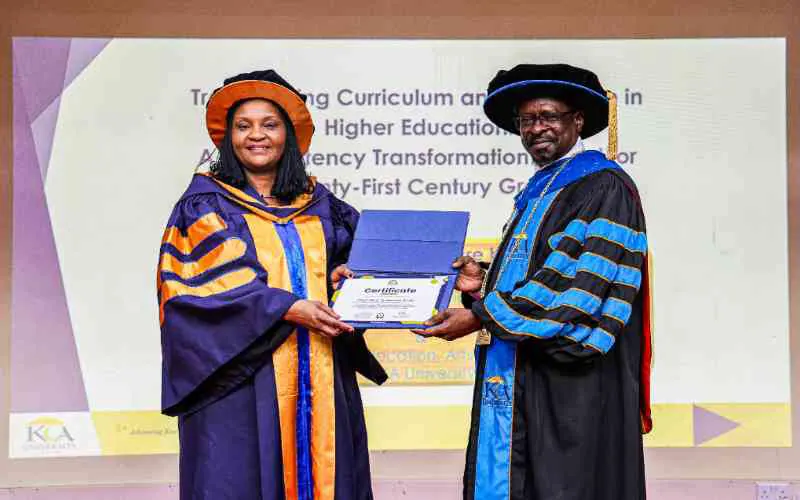
Kenyan universities have been warned that they have three years to rethink their teaching methods in preparation for the first batch of students under the Competency-Based Education system, who are expected to arrive in 2029. Prof Isaiah Wakindiki, the vice chancellor of KCA University, made this statement during an inaugural lecture in Nairobi last week. He emphasized that the institutions must change their approach to focus on what students can do, rather than what they know.
The Competency-Based Education system, which has already seen over 1.13 million learners in its pioneer cohort, aims to produce graduates with specific attributes, including critical thinking, digital competence, and entrepreneurship. Prof Wakindiki stressed that if competency is to become the organizing principle of Kenyan higher education, someone must do the hard intellectual work of showing how. This requires a fundamental shift in the way universities approach education.
Prof Anne Kisilu, the dean of the School of Education, Arts and Social Sciences, has proposed a framework called the Competency Transformation Model. This model lists ten dimensions, including an evidence-based needs assessment and the retraining of faculty, which are not sequential steps but rather interconnected components that require simultaneous change. The goal is to produce graduates with 14 named attributes.
The Competency Transformation Model demands significant changes in the way universities operate, including a shift from recall-based examinations to real-world, performance-based tasks that demonstrate learners' competences in meaningful contexts. This will require lecturers to take on new roles as facilitators, coaches, mentors, and learning designers, rather than simply being subject experts.
The proposed changes also emphasize the importance of collaboration with industry, continuous staff retraining, and investment in laboratories, innovation hubs, and simulation facilities. Prof Kisilu urged universities to involve employers in curriculum design and assessment and to adopt a continuous, evidence-based cycle for curriculum reviews.
However, the proposals raise questions about cost and pace, particularly given the varying resources available to Kenya's universities. While some institutions may be better equipped to implement these changes, others may face significant challenges. Prof Wakindiki cautioned that a university's worth is not measured by its assets, but rather by its scholarly excellence.
As Kenyan universities prepare for the arrival of students under the Competency-Based Education system, they must navigate the complexities of implementing a new education model. The success of this endeavor will depend on the ability of universities to adapt and evolve, producing graduates who are equipped with the skills and competences required to succeed in the modern world.
Key points
- Kenyan universities have three years to adapt to a new education system that focuses on competency-based education.
- The Competency Transformation Model proposes significant changes in the way universities operate, including a shift from recall-based examinations to real-world, performance-based tasks.
- The success of the new education model depends on the ability of universities to adapt and evolve, producing graduates with specific attributes such as critical thinking and entrepreneurship.