A Kenyan tribunal has dismissed a petition filed by the Consumers Federation of Kenya (COFEK) seeking to challenge the planned construction of a $16bn refinery by the Dangote Group in Lamu, Kenya. The tribunal ruled that COFEK failed to demonstrate that the refinery project qualified as a public-private partnership (PPP) venture. The ruling represents a setback for COFEK, which had sought to overturn approvals granted for the project over concerns about compliance with public-private partnership regulations.
The tribunal, in its ruling dated October 30, also found no legal grounds to compel the disclosure of documents relating to the project. COFEK had approached Kenya's Public-Private Partnerships Petition Committee Tribunal, requesting a review and cancellation of any approvals for the refinery that failed to meet the relevant legal requirements. The organisation also wanted the tribunal to order the disclosure of details surrounding the Kenyan government's proposed acquisition of an equity stake in the project.
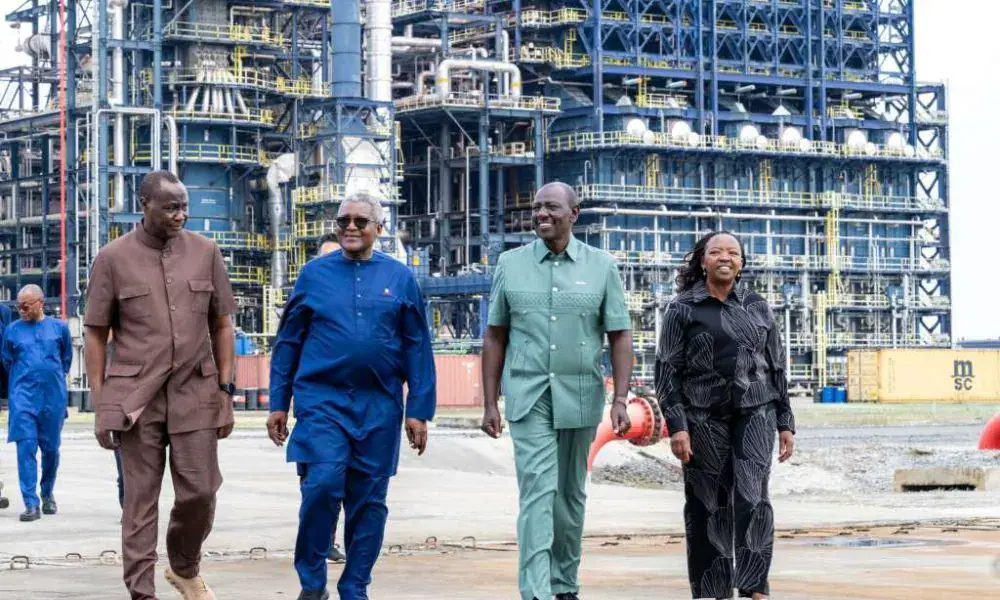
The dispute is one of several legal and regulatory challenges confronting the proposed refinery, which is expected to be developed at Lamu port along Kenya's Indian Ocean coastline. The project has attracted interest from governments across East Africa, particularly following an offer by Dangote to accommodate regional participation in the investment. On August 21, David Ndii, chairman of Kenyan President William Ruto's Council of Economic Advisers, disclosed that the Dangote Group had offered East African countries a combined 30 per cent equity stake in the proposed refinery.
The development has also faced opposition from some residents of Lamu, who instituted legal proceedings against the project, prompting a Kenyan court to order a suspension of construction activities. Dangote had proceeded with the launch of the project despite the earlier court order. However, on October 14, the court lifted the suspension, clearing the way for construction work to commence. The refinery, with a proposed capacity of 700,000 barrels per day, is expected to become a major component of Dangote Group's expansion into East Africa's energy market.
The project is expected to be a major boost to Kenya's economy, with the Dangote Group planning to invest $16bn in the refinery. The project is also expected to create thousands of jobs, both during the construction phase and in the long term. The Kenyan government has expressed support for the project, with President William Ruto's administration seeing it as a key component of the country's economic development strategy.
Despite the setback for COFEK, the petition is one of several challenges that the Dangote Group is likely to face as it seeks to develop the refinery. The group has already faced opposition from some residents of Lamu, and there are likely to be further legal and regulatory challenges as the project progresses. The Dangote Group has a track record of investing in large-scale projects in Africa, and the company is likely to face increased scrutiny as it seeks to develop the refinery.
The refinery project is a significant investment in East Africa's energy sector, and its development is likely to have a major impact on the region's economy. The project is expected to increase Kenya's refining capacity and provide a boost to the country's economy. The Dangote Group's investment in the refinery is also likely to have a positive impact on the region's energy security, with the project expected to reduce the region's reliance on imported petroleum products.
Key points
- The Kenyan tribunal's dismissal of the petition against Dangote's $16bn refinery project is a significant boost to the development of the project.
- The project is expected to create thousands of jobs and increase Kenya's refining capacity.
- The Dangote Group's investment in the refinery is likely to have a positive impact on the region's energy security.
Reporting sources
- Kenyan tribunal throws out petition against Dangote’s $16bn refinery project · Business Hallmark