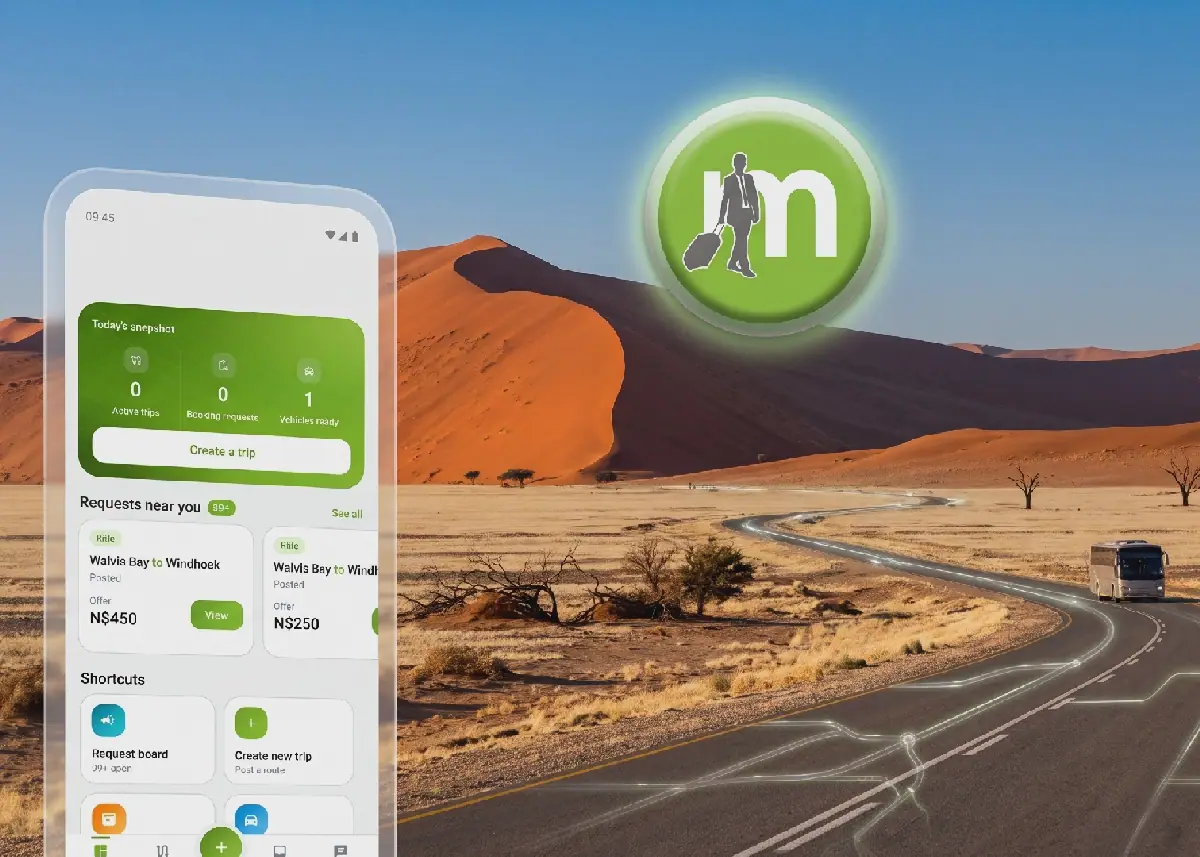
Travelling by road in Africa can be a complex and time-consuming process, involving multiple bus companies, booking arrangements, and connections. To address this issue, Kenyan startup Msafiri has developed a transport marketplace that connects passengers with independent drivers and transport operators. The platform, currently focused on Namibia, allows passengers to book trips and drivers to create routes and offer seats through the Msafiri Namibia app. By streamlining the process, Msafiri aims to make road travel across Africa more efficient and convenient.
Msafiri's business model is built around working with independent drivers and transport businesses, allowing it to bring different providers onto one platform without owning a fleet or running underlying operations. The platform's standout feature enables passengers to request a ride when no existing trip suits their plans, and drivers can pick up the request if they have spare seats. This setup is particularly suited to markets where transport is not always organised around fixed schedules. Additionally, Msafiri is moving into e-hailing and developing a dashboard for bus operators to manage their services.
The idea for Msafiri was born in 2017, when founder Orina Nyakaru started exploring ways to organise transport bookings digitally in Kenya. However, the business faced financial and operational challenges, including the cost of maintaining regulatory approvals. A trip to Namibia in 2025 changed the direction, as Nyakaru found a market with a significant need for a coordinated transport system. He teamed up with the administrators of a WhatsApp community connecting people who needed transport, growing the group to about 15,000 members and laying the groundwork for the Msafiri platform.
Msafiri has made significant progress in Namibia, with a community of roughly 30,000 people and about 1,500 app downloads. The company has also begun exploring partnerships with transport and tracking businesses, including Londeka, which operates across several Southern African markets. Nyakaru believes that African road transport suffers from poor coordination between operators, particularly on cross-border journeys. He argues that a connected system could significantly reduce the number of bus connections required for a trip, making travel faster and more efficient.
The long-term goal for Msafiri is to build a platform similar to WeChat for logistics, where users can access different transport and logistics services through one platform. To achieve this, the company is developing a dashboard for bus operators to manage their services and list their routes on the platform. Msafiri is also looking at school transport and corporate carpooling, and has started talks with Namibian bus operator Silas Ndapuka Transport over a potential pilot. By expanding its services and user base, Msafiri aims to become a leading player in the African transport market.
Despite its early traction, Msafiri faces significant challenges in turning its platform into a sustainable transport marketplace. The company currently has more passengers than providers, which is a central risk for any new marketplace. To address this, Msafiri is focusing on onboarding more service providers and ensuring that route information is accurate. Nyakaru says that decision-makers in Namibia are relatively easy to reach, which has helped the company make progress. However, funding remains a constraint, and Msafiri is being selective about investors as it looks to raise capital.
As Msafiri continues to grow and expand its services, it will need to overcome several hurdles to achieve its goal of simplifying road travel across Africa. The company's success will depend on its ability to bring more providers onto the platform, ensure accurate route information, and secure funding to support its growth. If successful, Msafiri could revolutionise the way people travel by road in Africa, making it faster, cheaper, and more convenient. With its focus on Namibia and plans to expand into neighbouring markets, Msafiri is well-positioned to make a significant impact in the region.
Key points
- Msafiri's platform connects passengers with independent drivers and transport operators, streamlining the process of booking trips and making road travel more efficient.
- The company has made significant progress in Namibia, with a community of roughly 30,000 people and about 1,500 app downloads.
- Msafiri's long-term goal is to build a platform similar to WeChat for logistics, where users can access different transport and logistics services through one platform.
Reporting sources
- techweez.com · techweez.com