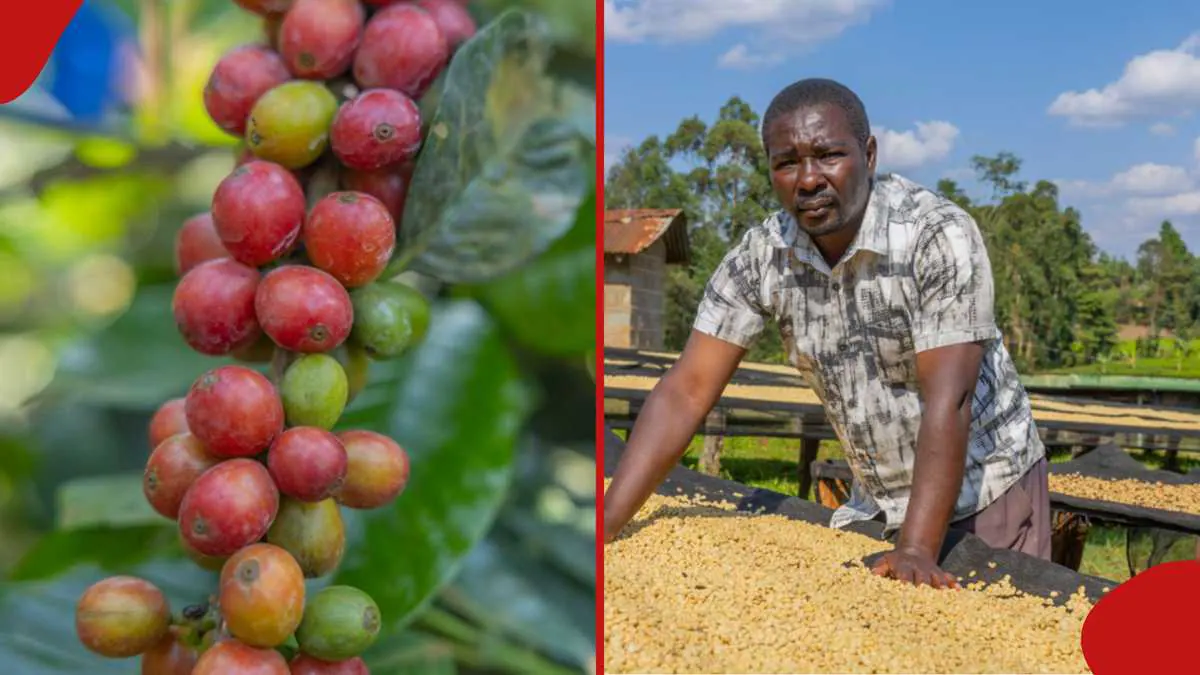
In Kirinyaga, Kenya, coffee farming has experienced a resurgence due to improved payouts and subsidized fertilizer. Retiree John Ndamberi relies solely on coffee for his income, producing around 80,000 kilogrammes annually. He earns between Sh130 and Sh150 per kilogramme, bringing him financial stability. Ndamberi's coffee farm has been his primary source of income, supporting his children's education and sustaining him in his old age.
The improved earnings have encouraged farmers to invest more in their farms. Simon Muchira, a colleague of Ndamberi, notes that people were abandoning coffee farming due to low returns. However, with the current payment of around Sh150 per kilogramme, farmers are now interested in investing in their farms. The better earnings have led to increased spending on fertilizer, pruning, and spraying, practices that were previously neglected.
The recovery of coffee farming in Kirinyaga is reflected in the records of factories and cooperatives. The Baragwi Farmers' Cooperative Society has seen a significant increase in cherry deliveries, from 10 million kilogrammes to 13 million kilogrammes in one season. Similarly, Nyanja Factory has experienced a rise in output, from approximately one million kilogrammes last year to a projected 1.2 million kilogrammes in the current season.
The Kenyan government has launched initiatives to support the coffee sector. In February 2026, the Ministry announced a target to increase national coffee production from 50,000 to 150,000 metric tonnes within three years. The government is providing disease-resistant seedlings, implementing cooperative reforms, and offering farmer training programs. Additionally, the subsidized fertilizer scheme has made a significant difference, allowing farmers to access fertilizer at Sh2,000 for a 50-kilogramme bag.
The subsidized fertilizer scheme has been particularly beneficial for farmers. The reduced cost of fertilizer has enabled farmers to maintain productive farms. According to Muchira, the numbers are less important than what they represent – the recovery of confidence among farmers. After years of struggling, farmers now believe that their hard work will be worth it.
The positive trend in coffee farming is not limited to Kirinyaga. Coffee farmers in Embu and Nyeri have also praised President William Ruto's reforms, citing improved payments and lower fertilizer costs. However, farmers emphasize that the lasting test is whether lower costs and improved prices translate into consistently higher incomes.
The growth of coffee farming in Kirinyaga and other regions is a welcome development for the Kenyan economy. With continued government support and favorable market conditions, coffee farmers are optimistic about their future prospects. As Ndamberi's story demonstrates, coffee farming can be a lucrative venture, providing a stable income and improving the livelihoods of farmers and their families.
Key points
- A Kenyan retiree produces 80,000 kgs of coffee annually, earning a significant income.
- Improved payouts and subsidized fertilizer have led to a resurgence in coffee farming in Kirinyaga.
- The Kenyan government has launched initiatives to support the coffee sector, aiming to increase national coffee production.