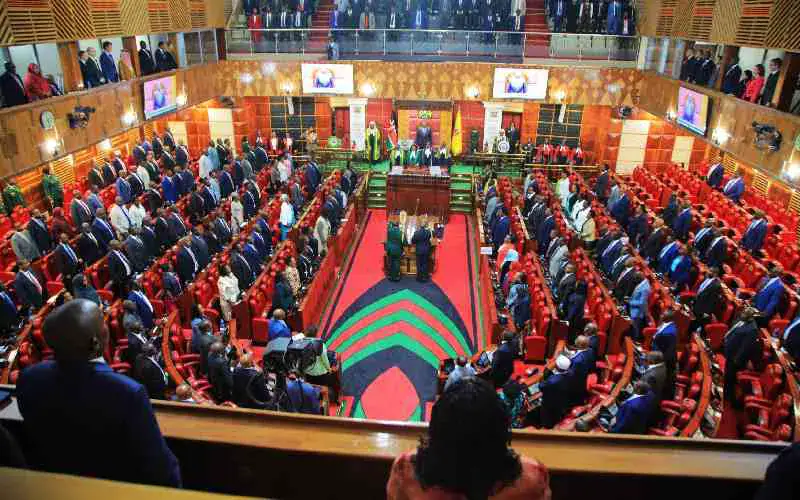
Kenyan President William Ruto recently delivered a 41-page State of the Nation Address, highlighting the government's economic achievements and plans. The address, which was a significant departure from last year's 18-page speech, emphasized the administration's bottom-up economic model. This model aims to connect with citizens from different parts of the country through personalization. The speech also referenced Session Paper 10 and its consequences, reinforcing the usawa theme.
The president acknowledged that the new Constitution and Vision 2030 have not brought the expected changes to the lives of ordinary Kenyans, including mama mboga, farmers, jobless youth, and jua kali hustlers. He then turned to the cost of living, providing macroeconomic data on inflation, interest rates, exchange rates, and foreign exchange reserves. However, the economic growth figure was not mentioned. The president's focus on Wanjiku, a term used to refer to ordinary Kenyans, was seen as an attempt to emotionally connect with his audience.
The president outlined plans to boost the agricultural sector, including subsidies for seeds and fertilizers, as well as irrigation projects. He mentioned that 2.5 million acres of land will be irrigated, but did not provide a timeframe for implementation. The president also touched on the blue economy, animal insurance, and fishing, but did not elaborate on deep-sea fishing or new markets for meat and fish abroad. Additionally, he discussed marketing and processing, including the completion of 15 aggregation parks.
The president emphasized the importance of managing the cost of living, stating that "more affordable food for consumers and higher incomes for producers" are two sides of the same national undertaking. He also provided data on Social Health Authority registration, but did not address operational challenges or debt payments to service providers. The president then turned to education, announcing the recruitment of teachers and a higher budget for the sector.
The president's economic plans also focus on housing and job creation. He claimed that over 1.1 million jobs have been created through affordable housing, surpassing the number of civil servants in Kenya. Additionally, 305,000 jobs have been created in the digital economy, and 707,000 abroad. However, concerns have been raised about graduates going through multiple internships. The president also mentioned tax exemptions for earnings below Sh32,333 and land transactions worth less than Sh1 million.
The president's address also touched on entrepreneurship and access to credit, including the Hustler's Funds. However, experts argue that opportunities are not created solely by the availability of credit, but also by economic growth driven by innovation and national confidence. The president also emphasized the importance of patriotism through paying the housing levy and building markets.
The president's plans have been met with mixed reactions, with some critics arguing that they do not go far enough in addressing the country's economic challenges. The government has announced plans to increase funding for education, implement bills in parliament, and provide access to government procurement opportunities. Devolution was also mentioned, with counties set to receive more funding. The president's address has sparked a national conversation about the country's economic future and the role of the government in driving growth and development.
Key points
- President William Ruto outlines economic plans in 41-page State of the Nation Address
- Economic plans focus on agriculture, housing, job creation, and entrepreneurship
- President emphasizes importance of managing the cost of living and patriotism through paying the housing levy
Reporting sources
- My economic response to the State of the Nation Address · The Standard