The intervention came after three university staff unions petitioned the National Assembly over unresolved funding and implementation issues surrounding the 2025-29 Collective Bargaining Agreement (CBA). The unions, including the Universities Academic Staff Union (UASU), Kenya Universities Staff Union (KUSU), and Kudheiha, accused the Ministry of Education and the Inter-Public Universities Councils Consultative Forum (IPUCCF) of failing to honour commitments made under return-to-work agreements.
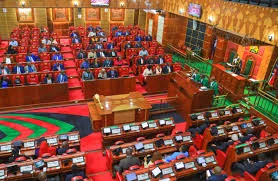
Speaker Moses Wetang'ula referred the petition to the joint committees on Education and Labour, which will investigate the matter. The unions told Parliament that, despite repeated commitments to conclude negotiations within 30 days, key financial questions remained unresolved. They expressed concerns that relying on student fees and market-based funding to meet staff remuneration obligations could lead to discrimination among university employees.
The Salaries and Remuneration Commission (SRC) had informed the unions' representatives that neither the Ministry nor the National Treasury had provided a written commitment guaranteeing that financial obligations arising from the CBAs would be funded through the Exchequer. This disclosure raised serious concerns regarding the credibility and viability of the negotiations.
Majority leader Kimani Ichung'wah backed Parliament's intervention but urged the unions to soften their stance and return to negotiations. He said MPs were familiar with the history of the dispute and the SRC could not simply be excluded from discussions involving public funds. Ichung'wah called for sobriety and dialogue between the unions and the Ministry of Higher Education.
Funyula MP Wilberforce Oundo called for an even stronger parliamentary intervention, urging Wetang'ula to establish an ad hoc committee to deal with the matter. He said strikes had increasingly become an annual feature of the university calendar, disrupting students' academic programmes. Oundo questioned why students in private universities were completing their studies earlier than those in public institutions due to recurring disruptions.
The government had offered Sh9.7 billion against union demands of Sh98 billion, according to Higher Education PS Beatrice Inyangala. She disclosed that the government was consulting the Public Service Commission on some human resource-related issues and remained committed to dialogue with the unions. Student unions from various universities have threatened to join their lecturers' strike if the government does not release all outstanding dues owed to the dons.
Key points
- The Kenyan parliament has intervened in a lecturers' strike stalemate, with two House teams making fresh efforts to end the three-week disruption of learning in public universities.
- The strike is over unresolved funding and implementation issues surrounding the 2025-29 Collective Bargaining Agreement (CBA).
- The government had offered Sh9.7 billion against union demands of Sh98 billion.