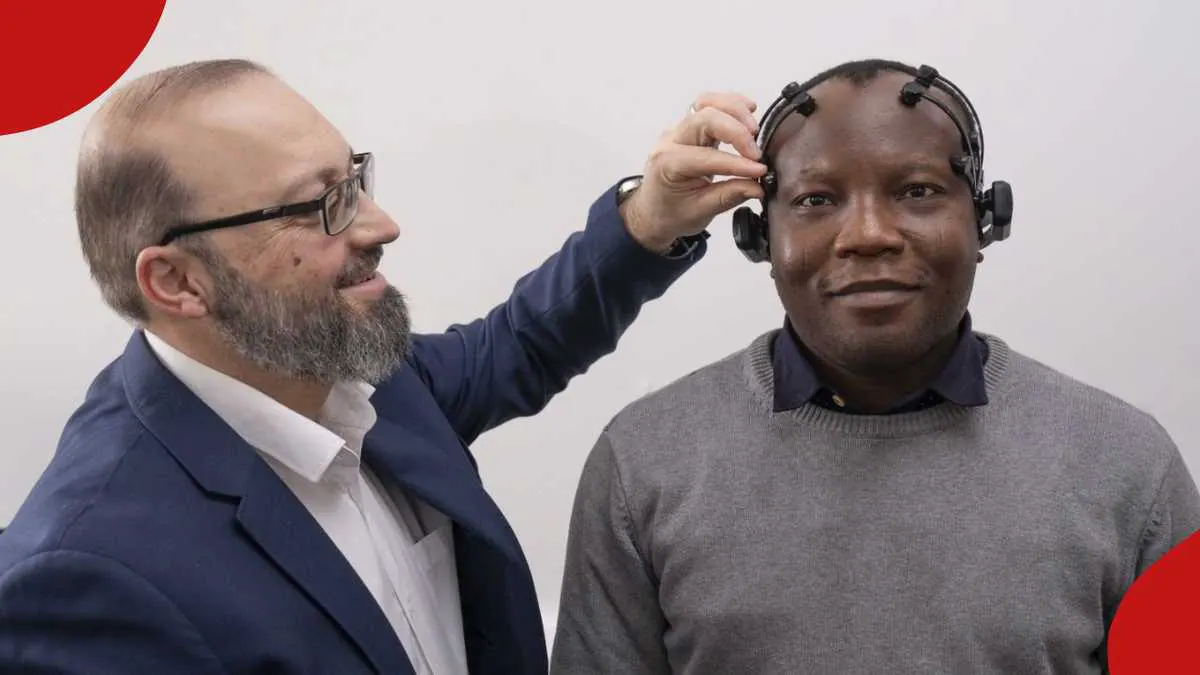
Peter Akor, a postgraduate researcher at Glasgow Caledonian University (GCU), has made history by winning both the Judges’ Choice Award and the People’s Choice Award at the 2026 Vitae 3MT national final in the UK. His research focuses on using data and technology to predict epileptic seizures before they occur, which could significantly improve patient safety, treatment outcomes, and quality of life. Akor’s achievement is notable as he finished ahead of finalists from renowned UK universities, including Oxford, King’s College London, Surrey, Reading, and Westminster.
Akor’s winning presentation, titled “The Minutes That Matter: Transforming Epileptic Seizure Care from Reaction to Prediction,” explored the potential of technology and data in anticipating seizures. The 3MT contest requires postgraduate researchers to explain their work to a general audience in three minutes using a single slide. Akor qualified for the national final after winning the Judges’ Choice Award at GCU’s internal competition in June, which came with a £1,000 grant, mentorship, and a trophy.
The People’s Choice Award, which Akor also won, brought a further £250 grant, mentorship, and a second trophy. The grants are intended for public engagement or professional development. Akor plans to use the combined funding for two public engagement events, one in the UK and one in Nigeria, subject to approval. These events will bring together researchers, medical professionals, artificial intelligence specialists, patients, and carers to explore how AI can support people living with neurological disorders.
Akor’s academic journey began in Nigeria, where he graduated with First Class Honours in Electrical/Electronics Engineering from Joseph Sarwuan Tarka University, Makurdi, in 2012. He was named the College of Engineering’s Best Graduating Student and later joined the university as a Graduate Assistant, rising to lecturer. After about nine years working in Nigerian academia, Akor moved to the UK to pursue a PhD at GCU.
GCU had not previously won the national 3MT final, making Akor’s achievement a significant milestone for the university. Akor also made history by becoming only the second researcher in the competition’s history to claim both major awards in the same year. Rachel Bernasconi, from the University of Surrey, received the Editor’s Choice Award, selected by The Conversation UK.
Akor’s achievement shines a spotlight on the work of Nigerian researchers abroad and the effort involved in making complex research accessible to the public. His research has the potential to make a significant impact on the lives of people living with epilepsy. Akor comes from Owukpa in Benue State, Nigeria, and his success is an inspiration to many young researchers.
The Vitae 3MT competition is a prestigious event that showcases the research of postgraduate students across the UK. Akor’s win is a testament to his hard work and dedication to his research. He will use his awards to further engage with the public and explore the potential of AI in supporting people with neurological disorders.
Key points
- Peter Akor, a Kenyan-Nigerian researcher, won two top awards at the 2026 Vitae Three Minute Thesis (3MT) national final in the UK for his work on predicting epileptic seizures.
- Akor’s research focuses on using data and technology to predict epileptic seizures before they occur, which could significantly improve patient safety, treatment outcomes, and quality of life.
- Akor’s achievement is notable as he finished ahead of finalists from renowned UK universities, including Oxford, King’s College London, Surrey, Reading, and Westminster.