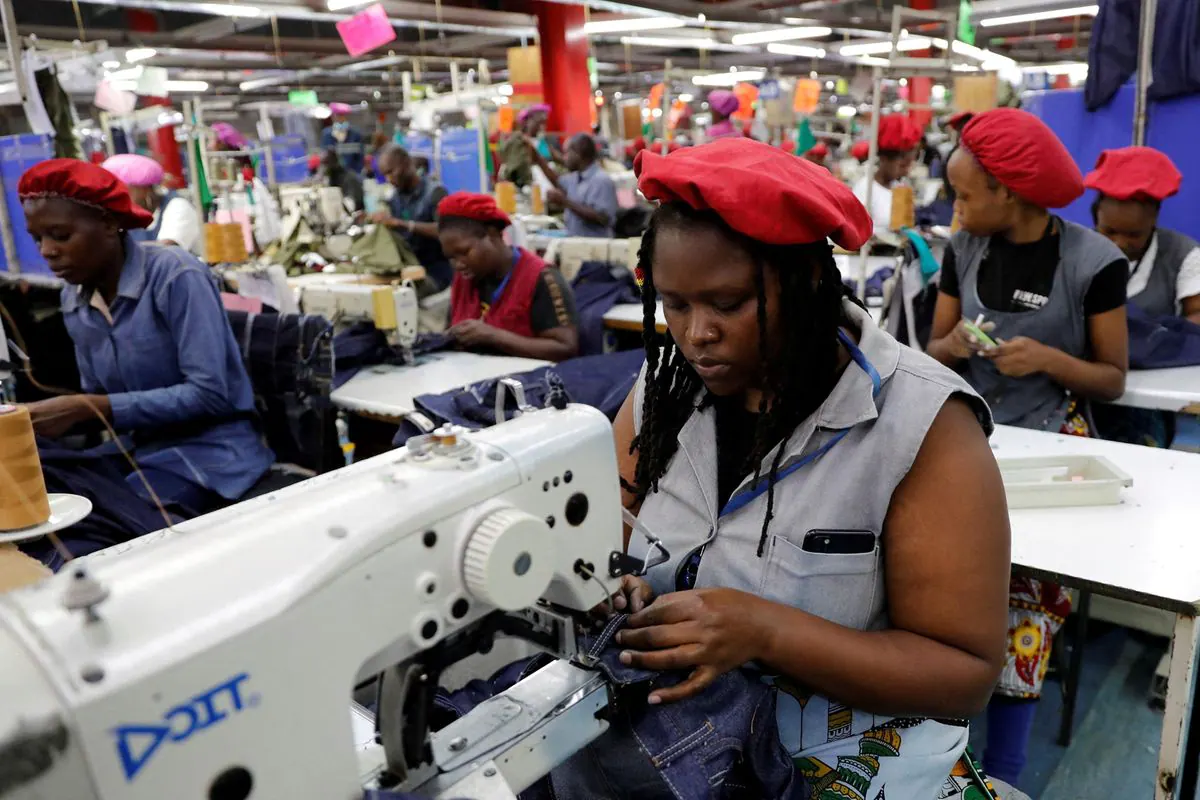
Kenya's manufacturing sector is facing a deep structural problem, with imports surging while local factories operate below capacity. The country possesses the installed capacity, workforce, and technical expertise to produce a wide array of industrial and consumer products locally. However, the latest macroeconomic indicators reveal a sobering reality, with national imports climbing past Sh2.7 trillion and the annual trade deficit surpassing Sh1.6 trillion.
The Central Bank of Kenya has projected that the import bill will expand by over eight percent to surpass Sh3.3 trillion, while export growth will remain stagnant at just over two percent. This massive trade imbalance is heavily driven by Asia, which commands over two-thirds of Kenya's total imports. China remains the largest source of foreign goods, sending hundreds of billions of shillings worth of items into the country each year.
The massive reliance on overseas supply lines directly erodes Kenya's gross domestic product (GDP). Despite clear policy ambitions to lift industrial input to 15 percent under Vision 2030, official economic surveys reveal that manufacturing's actual contribution to GDP has fallen to just over seven percent. Total output from factories grew by a marginal two percent to rest at Sh3.8 trillion.
This stagnation is particularly painful because it occurs despite manufacturing remaining the absolute anchor of private-sector livelihoods, supporting more than 360,000 formal industrial workers across the country. The claim that local industries are being systematically bypassed for goods that can easily be built locally is not idle speculation; it is an undeniable reality across vital sectors.
In the steel industry, Kenya boasts an impressive installed production capacity of over four million tonnes, yet factories operate at approximately 35 percent capacity. Consequently, the country imports over 1.6 million tonnes of iron and steel products annually while exporting barely a fraction of that quantity. Senior leadership from the Ministry of Investment, Trade, and Industry noted that Kenya relies on imports for roughly 80 percent of what it consumes.
Kenyan fabricators are choked by a high-cost, low-protection trade setup, with power remaining a prohibitive structural tax. Electricity tariffs account for up to 35 percent of direct factory production costs. Additionally, the regulatory overhead is exhausting, with formal manufacturers having to deal with up to 57 separate licenses, fees, and county-level permits. Illicit trade and counterfeits make up nearly nine percent of GDP, completely undercutting legitimate businesses.
However, there is optimism that the tide can turn. In the first half of this year, manufacturing growth rebounded to 4.4 percent, acting as a primary driver of Kenya's broader economic expansion. To maintain this momentum, policymakers must prioritize passing the Local Content Bill, which will require foreign firms to source at least 60 percent of industrial components locally while maintaining an 80 percent local payroll.
Key points
- The Kenyan manufacturing sector is struggling to operate at full capacity despite having the installed capacity, workforce, and technical expertise.
- The country's reliance on imports is eroding its GDP, with the import bill projected to expand by over eight percent.
- Policymakers must prioritize passing the Local Content Bill to boost local production and create sustainable jobs.