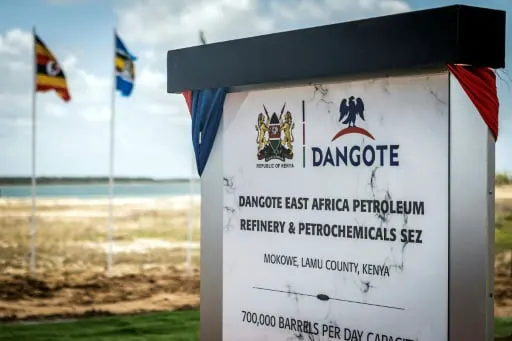
The Kenyan island of Lamu, a favorite haunt of celebrities like Mick Jagger, Kate Moss, and the Obamas, is facing a tough trade-off between preserving its environment and culture, and hosting Africa's second-biggest oil refinery. The refinery, being built by Nigerian tycoon Aliko Dangote, is expected to be operational by 2030 and has sparked concerns among locals and environmental organizations. Lamu's UNESCO-listed old town and sandy beaches have made it a popular tourist destination, but the refinery's construction has raised fears of damage to the island's fragile coastal ecosystem.
The construction of the $16 billion refinery began recently, with Dangote breaking ground alongside multiple heads of state in what is billed as Kenya's biggest-ever industrial project. The refinery is expected to create 60,000 direct and indirect jobs, as well as a training center for 1,000 young people. However, locals are worried that these benefits will mainly go to outsiders, and that their land rights and livelihoods will be threatened. Some have already taken the project to court, fearing that their rights will not be respected.
Environmental organizations, including Greenpeace, have also expressed concerns about the refinery's impact on the island's ecosystem. They argue that the refinery threatens to damage one of East Africa's most fragile coastal ecosystems. Locals have also expressed concerns about the refinery's impact on their way of life, with many saying that they were not consulted before the project was approved. The island's unique culture and history, including its 12th-century Old Town and traditional dhow sailing boats, are seen as being under threat from the refinery's construction.
Kenyan President William Ruto has promised a rigorous environmental study and assured Lamu residents that their rights will be protected and their voices will be heard. However, some locals have expressed skepticism about Ruto's promises, citing his reputation for over-promising on development and cracking down on dissent. They argue that the study should have been conducted before the excavation and digging began, not after.
The refinery's construction has also sparked concerns among fishermen and tourism workers, who fear for their livelihoods. The tourism sector supports 90 percent of the island, with tourists drawn to the island's culture, beaches, and wildlife. Locals are worried that the refinery will deter tourists and damage the island's reputation as a pristine and unspoiled destination.
Dangote has dismissed critics of the refinery, describing them as "people who don't want the development of Africa". He has also warned that he is prepared to deal with anyone who tries to cause trouble. However, some locals remain determined to fight the project, citing concerns about their rights, livelihoods, and the island's environment.
The project has highlighted the trade-offs between economic development and environmental protection in Africa. While the refinery is expected to bring jobs and economic growth, it also poses significant risks to the island's ecosystem and culture. As the project moves forward, it remains to be seen how the Kenyan government and Dangote's company will balance these competing interests and address the concerns of local communities.
Key points
- The construction of the refinery has sparked concerns among locals and environmental organizations about its impact on the island's ecosystem and culture.
- The refinery is expected to create 60,000 direct and indirect jobs, but locals are worried that these benefits will mainly go to outsiders.
- The Kenyan government has promised a rigorous environmental study, but some locals remain skeptical about its effectiveness.