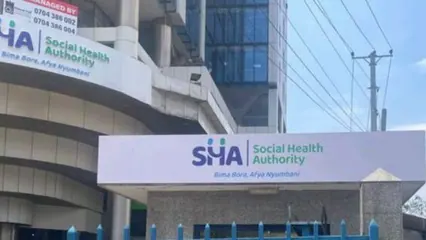
Healthcare providers across Kenya are on high alert as the Social Health Authority (SHA) announced that all current provider agreements will expire on September 30, 2026. The SHA Chief Executive Officer, Dr. Mercy Mwangangi, has urged healthcare facilities seeking to continue treating SHA beneficiaries to complete their applications and execute new agreements before the midnight deadline on October 1. This move has significant implications for the country's healthcare sector.
The authority has cautioned that facilities without executed contracts for the upcoming 2026–2029 cycle will be barred from rendering services to beneficiaries. Non-compliant facilities will have their credentials deactivated on the SHA provider portal, cutting off access to the scheme's administrative and claims systems. This measure aims to ensure a smooth transition into a new three-year contracting cycle running from October 1, 2026, to June 30, 2029.
To prevent disruptions in patient care, SHA has directed facilities unable to finalize their contracts in time to coordinate the transfer of patients undergoing active treatment to accredited, fully contracted health facilities. The impending deadline marks a significant shift in the healthcare sector, with the updated framework, dubbed HAKIKA, officially rolled out alongside a digital E-Contracting Platform on September 18.
The HAKIKA framework establishes clearer parameters regarding benefits, reimbursement timelines, quality benchmarks, and dispute resolution mechanisms. The introduction of the E-Contracting Platform aims to streamline application submissions, document uploads, license verifications, and digital contract execution while resolving previous operational bottlenecks. This update is expected to improve the overall efficiency of the healthcare system.
Despite these administrative updates, the transition has generated anxiety among healthcare providers. Medical associations and private facility operators have raised concerns over specific contractual terms, particularly those governing claim deductions, liability obligations, and payment default protocols when state disbursements are delayed. These concerns highlight the need for effective communication and collaboration between stakeholders.
The new contracting cycle will cover services funded through various funds, including the Primary Health Care Fund (PHCF), Social Health Insurance Fund (SHIF), Emergency, Chronic and Critical Illness Fund (ECCIF), and the Public Officers Medical Scheme Fund (POMSF). This move is expected to enhance the overall quality of healthcare services in Kenya.
As the deadline approaches, healthcare facilities are working to finalize their contracts and ensure continuity of services. The Ministry of Health and SHA are working together to address concerns and ensure a smooth transition. The success of this transition will have a significant impact on the country's healthcare sector.
Key points
- Healthcare facilities in Kenya are on high alert as SHA contracts expire on September 30, 2026.
- The new HAKIKA framework and E-Contracting Platform aim to improve efficiency and clarity in the healthcare system.
- Medical associations and private facility operators have raised concerns over specific contractual terms.