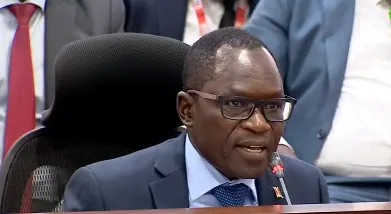
The Kenyan government has announced plans to prioritize communication in public service performance, with state officers' effectiveness in communicating with citizens set to be a key performance indicator. Broadcasting and Communications PS Stephen Isaboke stated that communication would be embedded in government projects and be part of the yardstick to measure the performance of state officers. This move aims to address communication asymmetry and a trust deficit that has allowed misinformation and fake news to gain ground.
The government has recognized that while it can deliver projects successfully, it often fails to get public support if it does not explain what it is doing, why it is doing it, and how citizens stand to benefit. Isaboke noted that considerable work has been done on physical development, but communication has not always received similar attention. To address this, major government projects will be required to have a communication component in their budgets, ensuring that citizens are informed and engaged throughout the project implementation process.
The new approach is part of efforts to address communication asymmetry and a trust deficit. Isaboke stated that government communication is complex due to the state's large institution with different levels, ministries, departments, and agencies, each with responsibilities that must ultimately support the administration's agenda. Effective communication, he emphasized, must begin with clarity on what the government is seeking to communicate.
President William Ruto's administration has identified five pillars to guide its program, including agricultural reform, support for small and medium enterprises, Universal Health Coverage, affordable housing, and the digital superhighway and creative economy. Isaboke explained that the President remains the formal spokesperson of the state, supported by officials around the presidency, and the Ministry of Information, Communications and the Digital Economy serves as the parent ministry for government communicators.
The government spokesperson serves as the official voice of government, amplifying positions already taken by the state. The ministry also coordinates communicators across national government institutions and county structures, linking policy messages with public engagement and public feedback channels. Isaboke dismissed concerns that government agencies were operating in silos, pointing to the communication policy recently approved by Cabinet.
The communication policy aims to avoid discordance by ensuring government institutions work from one set of facts and details when communicating on a common agenda. Isaboke stated that communication officers are being elevated within government structures, with some being promoted to director level to support Cabinet secretaries and principal secretaries in explaining government programs. Funding is also being addressed, as communication can no longer be treated as an afterthought.
The government is seeking to strengthen public feedback mechanisms, including traditional channels such as barazas, and introducing new channels like a USSD code for enquiries and feedback. Isaboke emphasized that improved connectivity is critical to the initiative, citing the growing use of digital government platforms such as eCitizen. The overall objective is to ensure communication moves from being an activity undertaken after government decisions have been made to becoming part of policy implementation itself.
Key points
- State officers' performance will be judged on their communication skills
- Government projects will be required to have a communication component in their budgets
- The government aims to address communication asymmetry and a trust deficit