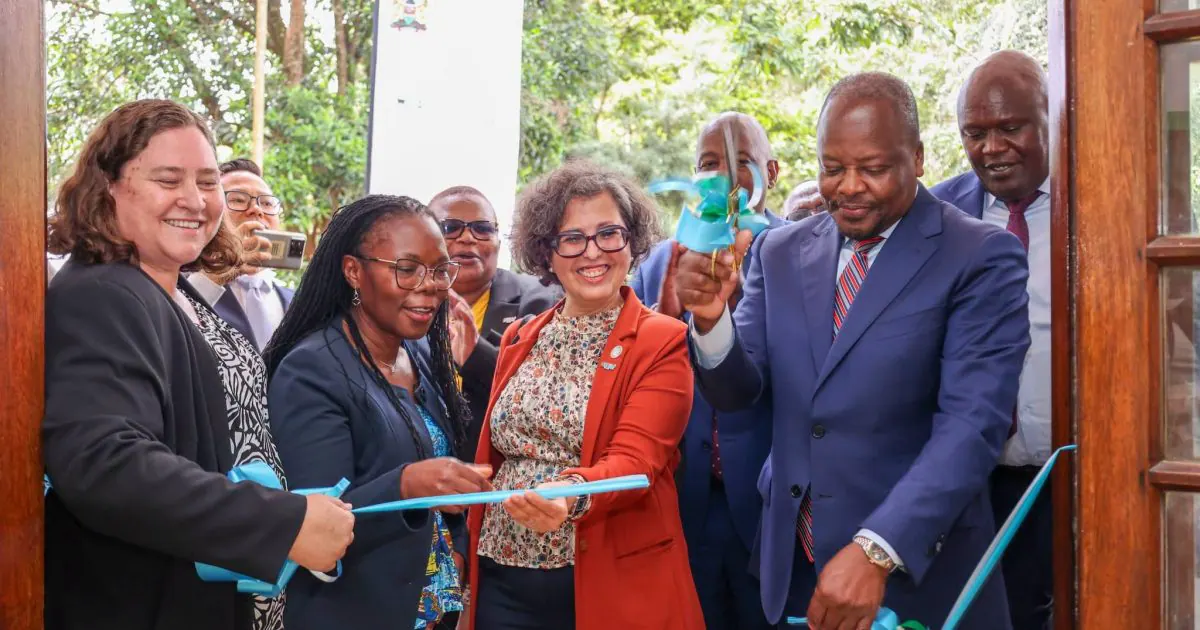
Kenyan farmers are being urged to prioritize soil health to maximize the effectiveness of fertilizers. Cabinet Secretary for Agriculture and Livestock Development Mutahi Kagwe launched the national soil health drive, dubbed ‘Soilfer’, which aims to change how Kenyan farmers choose fertilizers. The initiative emphasizes that even subsidized fertilizers are a wasted investment if they do not meet the specific needs of the soil.
The launch event took place at the Kenya Agriculture and Livestock Research Organization (KALRO) in Kabete, where Kagwe also introduced the National Soil Partnership, the National Soil Laboratory Network, and the national rollout of the Global Soil Doctors Programme. Additionally, he handed over the refurbished KALRO Soil Chemistry Laboratories, which cost Sh220 million. These new initiatives aim to improve soil testing and fertilizer recommendations for farmers.
Kagwe emphasized the importance of soil testing, drawing from his personal experience as a farmer. He recalled that a soil test revealed he had been adding unnecessary nutrients to his land while neglecting those it lacked. The CS likened soil testing to a medical diagnosis, stating that just as a doctor would not prescribe treatment without examining a patient, farmers should not apply fertilizers without understanding their soil's conditions.
The Kenyan government has made efforts to support farmers through subsidized fertilizers. Over 8 million farmers are registered on the Kenya Integrated Agriculture Management System (KIAMIS), and more than 180,000 bags of subsidized fertilizer were distributed daily during peak planting seasons. However, Kagwe stressed that the next step is to make these inputs more precise by linking soil test results to KIAMIS.
To achieve this, KALRO will continue to analyze around 77,000 soil samples across 45 counties and publish county-level soil fertility maps for public use. The Ministry and KALRO will work towards integrating soil test results with KIAMIS, allowing subsidy support to reflect the specific needs of each farmer's soil. The refurbished laboratory at Kabete is expected to expedite the delivery of soil test results.
The National Soil Partnership will bring together various stakeholders, including the national government, counties, KALRO, universities, and the private sector, to coordinate soil-related work and share information. The National Soil Laboratory Network will establish common testing standards, while the Global Soil Doctors Programme will empower farmers to understand their soils and share knowledge with others.
Kagwe also emphasized the need for county governments to co-finance soil testing services and make them more accessible to farmers. He encouraged the use of lime in acidic soils and the restoration of organic matter to land. Furthermore, he warned of a continued crackdown on counterfeit, expired, and substandard farm inputs, stressing that accurate soil advice is only useful if products match their labels.
Key points
- The Kenyan government has launched a national soil health drive to help farmers make informed fertilizer choices.
- Over 8 million farmers are registered on the Kenya Integrated Agriculture Management System (KIAMIS).
- The Ministry and KALRO will work towards linking soil test results to KIAMIS to provide more precise subsidy support.