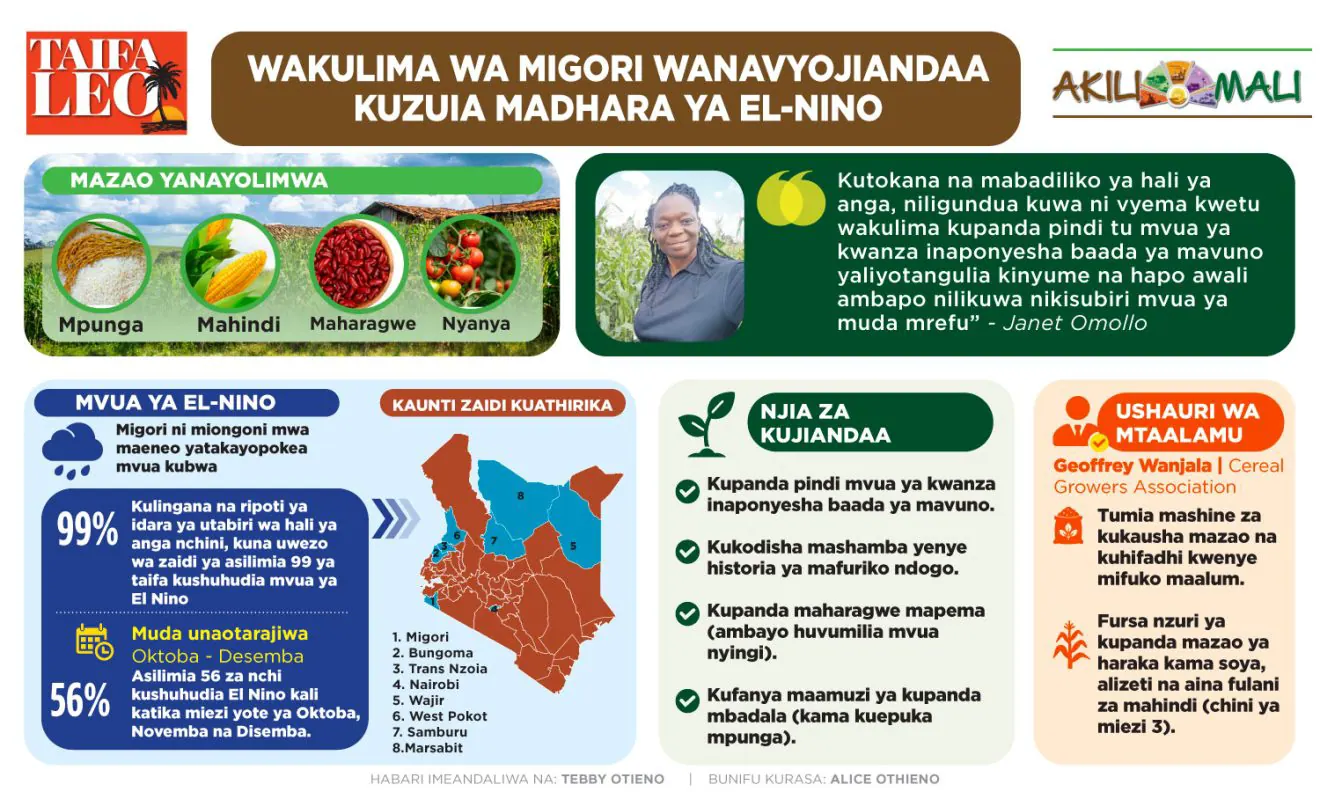
Kenyan farmers are taking proactive measures to mitigate the potential impacts of the impending El Nino rains, expected to hit the country between October and December. Janet Omollo, a farmer from Nyatike, Migori County, has adjusted her farming schedule to avoid losses. She has planted early-maturing crops like beans, which are less susceptible to heavy rainfall. Omollo has also rented a farm in an area less prone to flooding, demonstrating her efforts to adapt to the predicted weather patterns.
The Kenya Meteorological Department has forecast a 99% chance of El Nino occurring in the country, with 56% of the country expected to experience severe El Nino conditions. Migori County, where Omollo farms, is one of the areas expected to receive heavy rainfall. To minimize losses, Omollo has decided not to plant rice this season, as it relies on irrigation and would be vulnerable to damage from excessive rainfall. Her experience in 2023, when heavy rainfall damaged her rice crop, has informed her decision.
Other farmers, like Norah Khamuye, are also taking precautions. Khamuye, who owns a nursery in the Ufa Valley, has installed nets and shade cloth to protect her seedlings from potential damage caused by heavy rainfall and hail. Her experience during previous El Nino events has taught her the importance of being prepared. Khamuye's nursery is located in an area prone to landslides and heavy rainfall, making her preparations crucial to minimizing potential losses.
Despite these efforts, there are concerns about the potential impact of El Nino on food security. Geoffrey Wanjala, from the Cereal Growers Association, warns that delayed planting and harvesting during the rainy season could lead to reduced yields and lower-quality crops. He advises farmers to use drying machines and store their crops in specialized bags to maintain quality. Wanjala also suggests that El Nino could provide opportunities for farmers to plant quick-maturing crops like soybeans and sunflowers to offset losses from previous droughts.
The Cereal Growers Association is urging farmers to take proactive measures to mitigate the effects of El Nino. Wanjala emphasizes the importance of early planning and preparedness to minimize losses. The association is working with farmers to develop strategies for managing the potential impacts of El Nino, including the use of climate-resilient crop varieties and conservation agriculture practices.
The Kenyan government has also taken steps to prepare for the impending El Nino rains. The National Drought Management Authority has activated its emergency response plan, which includes providing support to farmers and pastoralists affected by the drought. The government has also established a task force to coordinate response efforts and provide assistance to affected communities.
As the El Nino rains approach, Kenyan farmers are bracing for the potential impacts on their livelihoods. While some farmers are taking proactive measures to mitigate the effects, others are concerned about the potential risks to food security. The government's efforts to support farmers and pastoralists will be crucial in minimizing the impacts of El Nino and ensuring the country's resilience to climate-related shocks.
Key points
- The Kenyan Meteorological Department has forecast a 99% chance of El Nino occurring in the country, with 56% of the country expected to experience severe El Nino conditions.
- Farmers are taking proactive measures to mitigate the potential impacts of El Nino, including adjusting their farming schedules and using climate-resilient crop varieties.
- The government has activated its emergency response plan and established a task force to coordinate response efforts and provide assistance to affected communities.