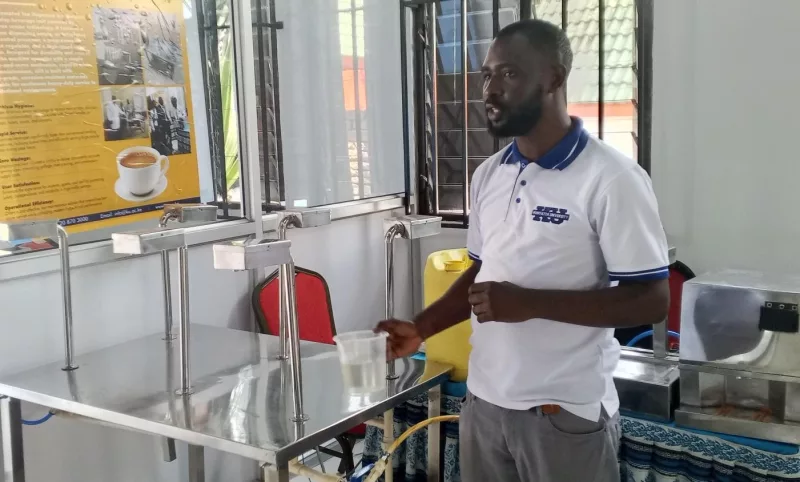
A young Kenyan engineer, Felix Nyabuto, has designed an automated tea dispenser to make the tea-serving process in schools more hygienic, efficient, and less wasteful. Nyabuto, a 2025 Kenyatta University graduate, was inspired to develop the dispenser after observing the tea-serving system in schools, where he identified challenges such as tea wastage and accidental burns. His innovation allows students to serve themselves without touching the machine, addressing hygiene concerns and reducing waste. The dispenser has several features that make it efficient and effective.
The automated dispenser is designed to control the amount of tea released, eliminating the possibility of students leaving the tap running. The school can program the machine according to the serving size it wants, and the dispenser automatically releases a pre-set quantity. This feature significantly reduces tea wastage, which can be as high as 15 liters from a 60-liter container after a single serving session. By minimizing waste, schools can save resources and reduce their environmental impact. The dispenser's design also prioritizes hygiene and efficiency.
Nyabuto's dispenser is touchless, replacing the manual tap with sensors that detect the cup and automatically release the tea. This feature reduces the risk of contamination, as hundreds of students no longer need to handle the same tap during a tea break. The dispenser is also equipped with a pump capable of delivering large quantities of tea within seconds, making it possible to serve up to 1,500 students in about 20 minutes. This efficient serving system allows students to spend more time interacting during breaks or returning to class. The dispenser's technical components are designed for high-volume use.
The automated tea dispenser can be connected to electricity or alternative power sources such as solar power or batteries. Nyabuto designed the dispenser to be switched on during scheduled serving times, such as breakfast, midday tea, or evening meals. The machine has evolved through several prototypes, from a small household model to larger versions targeting schools and small businesses. The school version is designed for high-volume use and can be installed on a wall near the kitchen or serving area, keeping the technical components out of reach of students. This design consideration prioritizes durability and safety.
Nyabuto's innovation has potential applications beyond schools, including hospitals, training institutions, events, and commercial vending. The technology can also be used to dispense water, juice, and milk, making it a versatile solution for various settings. The dispenser's controlled dispensing system can help institutions reserve treated water specifically for drinking, which is particularly important in areas where access to clean water is challenging. By adapting the technology to different contexts, Nyabuto aims to make a broader impact on hygiene and efficiency. The dispenser's adaptability is a key aspect of its design.
Nyabuto is now exploring partnerships to improve the design and manufacture of the dispenser locally. The cost of the dispenser depends on the number of dispensing points required, with a complete unit costing about Sh30,000 per tap. He is currently in discussions with potential clients, including schools in Murang'a and Limuru, as well as institutions such as Kenyatta University. The first installations of the dispenser are expected to take place in schools in Murang'a and another location. Nyabuto's goal is to implement his innovation in various settings and make a positive impact.
The automated tea dispenser has the potential to transform the tea-serving process in schools, making it more efficient, hygienic, and environmentally friendly. By reducing waste and promoting hygiene, the dispenser can contribute to a healthier and more sustainable environment for students. As Nyabuto continues to develop and refine his innovation, it is likely to have a significant impact on the education sector and beyond. The dispenser's success will depend on its implementation and adoption in various settings.
Key points
- The automated tea dispenser can serve up to 1,500 students in about 20 minutes.
- The dispenser can be programmed to release pre-set quantities of tea, reducing waste and saving resources.
- The touchless system reduces the risk of contamination, promoting hygiene and a healthier environment for students.