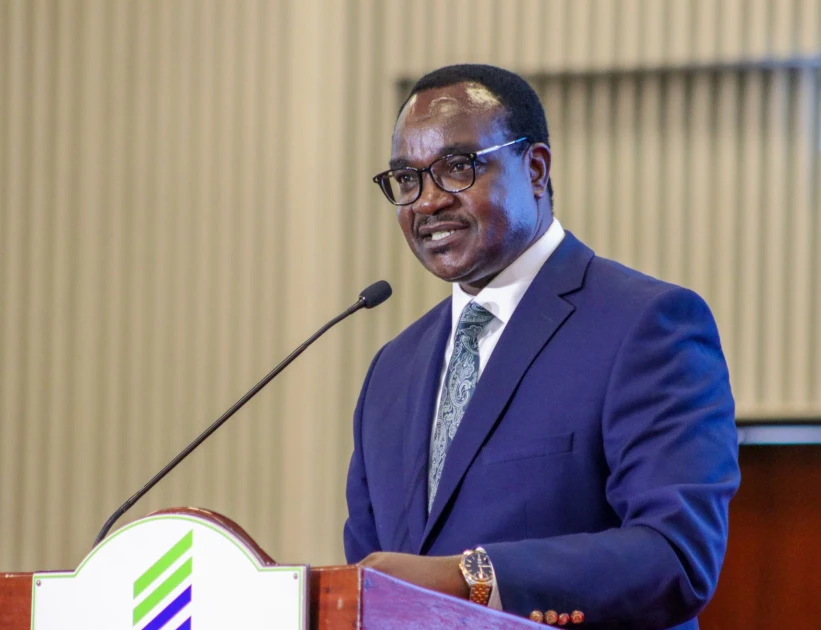
Kenyan Education Cabinet Secretary, Julius Migos Ogamba, has called on lecturers to resume teaching activities after they declared a national strike over the implementation of the 2025-2029 Collective Bargaining Agreement (CBA). The strike, initiated by members of the Universities' Academic Staff Union (UASU) and Kenya University Staff Union (KUSU), followed the collapse of talks between the unions and the Inter-Public Universities Councils Consultative Forum (IPUCCF). Ogamba made the appeal during the World Teachers' Day celebrations on Monday.
According to CS Ogamba, the government has paid all historical arrears under the 2017-2021 and 2022-2025 CBAs and will extend the same goodwill to the current CBA. He emphasized the government's commitment to timely negotiation and conclusion of future Collective Bargaining Agreements, including the 2025-2029 CBA. Ogamba urged university staff unions and individual lecturers to reciprocate the government's good faith, obey court orders, and return to work.
The lecturers' strike was triggered by their rejection of recommendations made to the Ministry of Education and the Salaries and Remuneration Commission without prior negotiations with the unions. They proposed that employment terms should be agreed upon through a CBA rather than government circulars. Additionally, the unions rejected a proposed Ksh.9.76 billion settlement, arguing that the figure was not negotiated.
President William Ruto has promised to consider the teachers' plea to reduce the four-year cycle of reviewing the CBA between the Teachers Service Commission and their unions to two years. He proposed holding talks upon the completion of the 2025-2029 CBA, stating that he would take the request as "homework" and return with answers. The current CBA, signed in July 2025, introduces a basic salary increase for teachers spread over four years.
The first phase of the current CBA was implemented in July 2025, and the second phase followed in July 2026. President Ruto announced that the 2026/2027 budget has provided for an additional Ksh.8.1 billion to keep the agreement on schedule. The government's efforts aim to address the concerns of teachers and lecturers while ensuring the smooth operation of educational institutions.
The dispute between the government and lecturers highlights the challenges in the education sector, particularly in the negotiation and implementation of Collective Bargaining Agreements. The government's commitment to addressing the concerns of teachers and lecturers is crucial in resolving the strike and ensuring the continuity of learning in universities.
As the situation unfolds, stakeholders will be watching closely to see how the government and lecturers' unions navigate the complexities of the CBA dispute. The outcome will have significant implications for the education sector in Kenya, affecting not only the lecturers but also the students and the overall quality of education.
Key points
- The Kenyan government has paid all historical arrears under the 2017-2021 and 2022-2025 CBAs.
- President William Ruto has promised to consider reducing the four-year cycle of reviewing the CBA to two years.
- The 2026/2027 budget has provided for an additional Ksh.8.1 billion to keep the current CBA on schedule.