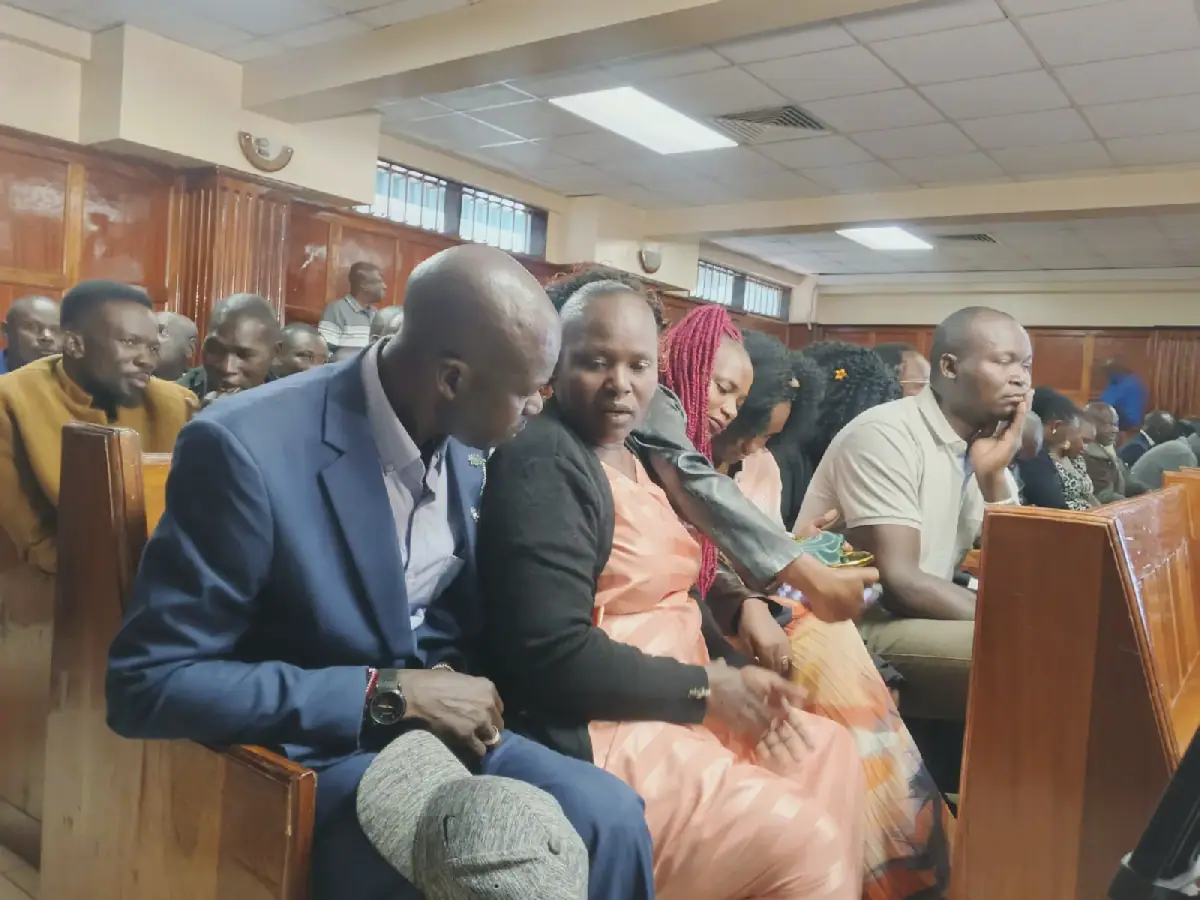
The High Court of Kenya has rejected a request by the family of murdered Rongo University student Sharon Otieno for compensation, including a house, a car, and financial support for her three children. The family had sought financial assistance for expenses incurred during Sharon's funeral and burial, as well as transport, accommodation, and meals during court proceedings. The court ruled that the family had not provided sufficient evidence to support their claims. This decision was delivered on Friday, November 27, 2026, by Justice Cecilia Githua.
The family had alleged that former Migori Governor Okoth Obado had made promises to provide them with a house and a car. However, Justice Githua stated that the court could only grant compensation after the losses suffered by the victims' family had been adequately established. The judge cited Section 175 of the Criminal Procedure Code, which empowers courts to award compensation in appropriate cases where the relevant facts have been proved. The court emphasized that such orders must be supported by credible evidence and should not compromise the rights of a convicted person.
Justice Githua observed that the family had not presented sufficient material to demonstrate the actual financial loss suffered, making it difficult for the court to determine an appropriate compensation amount. As a result, the court ruled that it could not grant the request. The judge further explained that compensation or restitution orders are separate from criminal sentences and should neither form part of the punishment nor serve as an alternative to it.
The court also noted that the Constitution provides for compensation awarded through the Victim Protection Trust Fund. However, Justice Githua noted that there was uncertainty over whether the fund had been fully operationalised, raising questions about the mechanism through which such compensation would be administered. This uncertainty may leave the family of Sharon Otieno without adequate compensation for their loss.
Okoth Obado, along with others, was previously convicted and sentenced for their role in Sharon Otieno's murder. Obado and Oyamo were jailed for 25 years, while Obiero received an 18-year sentence. The court had taken into account the severity of their crimes when determining their sentences. However, the issue of compensation for the victim's family remains unresolved.
The decision by the High Court highlights the challenges faced by victims' families in seeking compensation for their losses. In cases where the perpetrators are convicted, the court may order compensation, but this must be supported by credible evidence. The court must balance the need to provide justice for the victims' families with the rights of the convicted persons.
The case of Sharon Otieno has raised concerns about the safety of students and the need for greater protection for vulnerable individuals. Activists and feminists have also sounded the alarm over misinformation about sexual reproductive health and rights in Kenya. The issue of compensation for Sharon Otieno's family serves as a reminder of the complexities and challenges involved in seeking justice for victims of crime.
Key points
- The High Court of Kenya rejected a request for compensation for Sharon Otieno's family citing a lack of evidence to support their claims.
- The court ruled that compensation or restitution orders are separate from criminal sentences and should not compromise the rights of a convicted person.
- The Constitution provides for compensation awarded through the Victim Protection Trust Fund, but its operational status is uncertain.