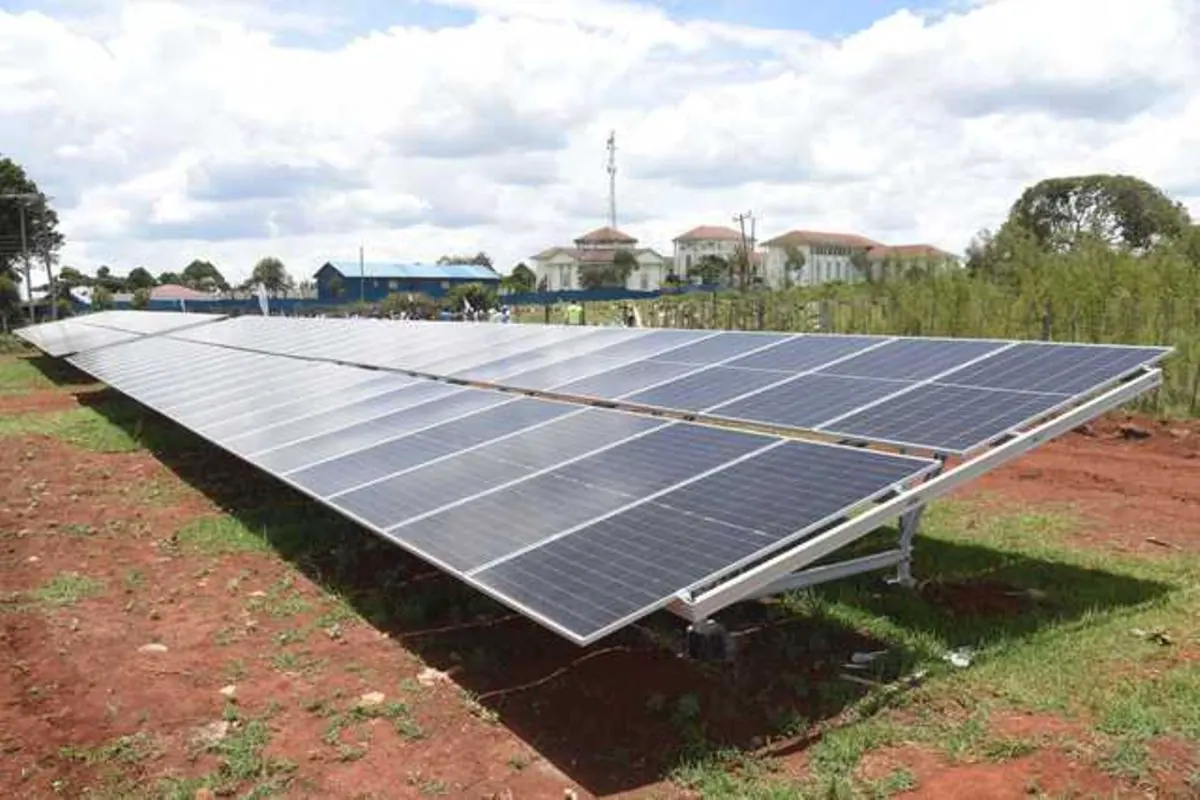
In the year ended June 2026, Kenyan businesses added 72,800 kilowatts (kW) of solar energy for their own use, extending a trend of firms turning to self-generation of electricity to lower bills and ensure steady supplies. This growth reflects the continued uptake of distributed renewable energy solutions by commercial and industrial consumers. The Energy and Petroleum Regulatory Authority (Epra) noted this trend in its latest review of the energy sector.
The increase in self-generation of electricity, technically referred to as captive power, reached 676.60MW in the year to June 2026, up from 603.8MW the previous year. Many businesses are shifting to solar to cut costs and ensure a stable and reliable electricity supply. A growing list of manufacturers have already made the switch to solar power generation to reduce operational costs and lower emissions.
Several prominent companies, including Bio Food Products, Total Energies Kenya, Maisha Mabati Mills, Simba Cement, Unilever Tea Kenya, British American Tobacco, Africa Logistics Properties, Bidco, Mabati Rolling Mills, Centum Real Estate, and Devyani Food Industries, have adopted solar power. Beverages company Coca-Cola received regulatory approval to set up solar plants at its Nairobi and Kisumu facilities, with a combined capacity of 3.98 Megawatts (MW).
Unilever Kenya is the latest firm to join the list of commercial and industrial clients using captive power, with a solar photovoltaic plant producing 1,500,000 kilowatt-hours (kWh) annually. The company estimates that the solar power will save them about Sh30 million from their annual power bill. According to Unilever East Africa Managing Director Luke Ochieng, the facility is generating 1,500 megawatt-hours (MWh) of solar power.
The migration of companies to solar power could impact Kenya Power, as industries and firms are a significant source of revenue for the electricity distributor. Revenue from electricity sales to new Kenya Power customers dropped by Sh1.07 billion in the year to June 2026 despite increased connections. This decline may be attributed to slowing economic expansion and increased adoption of off-grid solar alternatives.
Official data shows that Kenya Power’s new customers consumed 161.7 Gigawatt-hours (GWh) in the year to June, marking a 20 percent drop from 202.98 GWh a year ago. This decrease pulled down revenues from this customer segment to Sh4.05 billion from Sh5.12 billion in the previous period, or a 26.41 percent drop. Despite this, Kenya Power connected 412,249 new customers in the 12 months to June 2026.
More than half of the new customers connected by Kenya Power, or 226,803, were commercial customers. The company’s revenue decline from new customers may be a concern, given the increasing trend of businesses turning to solar power for self-generation. As more companies follow suit, Kenya Power may need to adapt its business strategy to remain competitive in the market.
Key points
- Kenyan businesses added 72,800 kW of solar power for own use in the year to June 2026.
- Self-generation of electricity reached 676.60MW in the year to June 2026, up from 603.8MW the previous year.
- Unilever Kenya’s new solar photovoltaic plant will produce 1,500,000 kilowatt-hours (kWh) annually, saving the company about Sh30 million from its annual power bill.