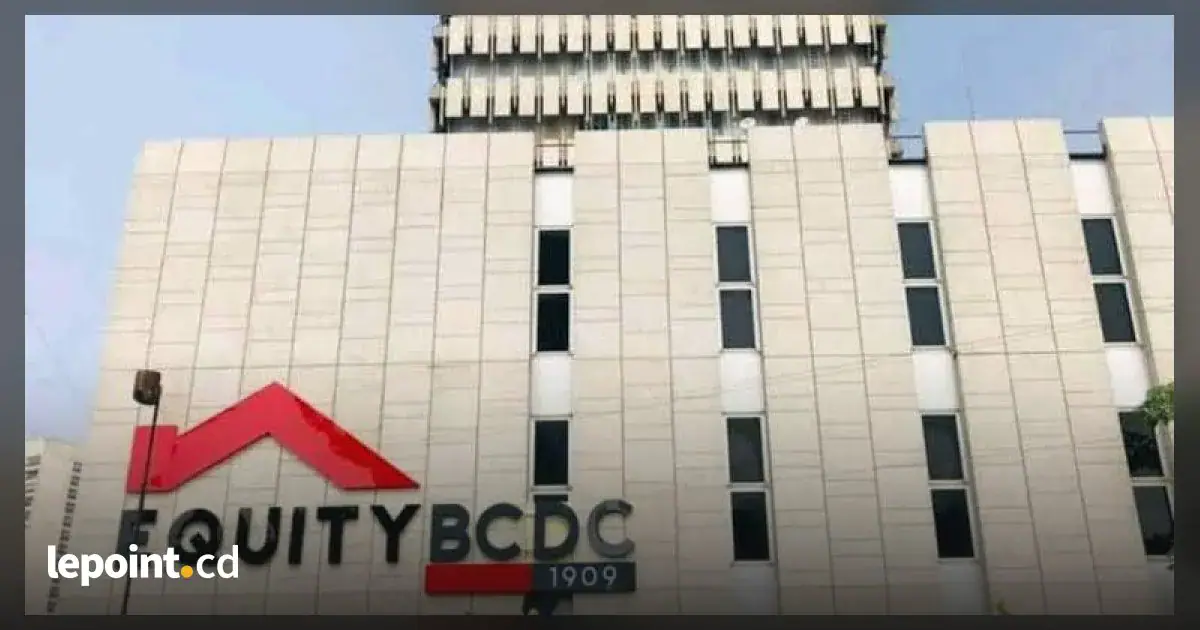
Kenyan banking groups hold approximately 48% of the Congolese banking sector's assets, according to a working paper by the International Monetary Fund published in mid-November 2026. The study, authored by Zhongxia Zhang and Francine Nyankiye, examines cross-border banking exposures between Kenya and the Democratic Republic of Congo. This significant presence marks the DRC as the primary external market for Kenyan banks within the East African Community.
The DRC accounted for around 43% of Kenyan banks' assets in other East African countries in 2024, up from nearly 10% in 2018. Kenyan banks also dominate the Rwandan and Ugandan banking sectors, with a 65% and 29% share of banking assets, respectively. Two Kenyan groups, Equity Group and KCB Group, drive this presence through their subsidiaries EquityBCDC and Trust Merchant Bank (TMB).
Equity Group owns 85% of EquityBCDC, while KCB Group holds 85% of TMB. As of late 2025, TMB reported assets worth 298.92 billion Kenyan shillings, approximately $2.31 billion, representing a 10.8% annual increase. EquityBCDC's deposits amount to 537.2 billion shillings, accounting for 29.3% of all deposits from Kenyan banks' foreign subsidiaries.
However, this dominance may be challenged by the Democratic Republic of Congo's regulatory requirements. Instruction 18 from the Banque centrale du Congo mandates that commercial banks be at least 45% owned by Congolese nationals by December 2026, with at least four shareholders, unrelated to one another, each holding 15% or more. Without an exemption, Equity and KCB would need to divest around 30% of their Congolese subsidiaries.
The value of these stakes was estimated at $388 million as of June 2025, with EquityBCDC accounting for $320 million and TMB for $68 million. Equity had previously requested an exemption for listed groups through the Congolese Banking Association. No divestment announcements had been made as of that date.
The IMF study highlights risks associated with this expansion, including differences in regulatory frameworks and accounting standards across countries. The DRC lacks a fully operational deposit guarantee system, complicating depositor protection in the event of a cross-border crisis. The study also notes that Kenyan banks' credit activities are linked to higher growth and inflation in host countries.
The eastern DRC has presented challenges for these banks, with KCB closing its 15 branches in the region and TMB's revenue declining by around 8% in 2025 to 28.7 billion shillings. The sector's future will depend on how these banks navigate regulatory requirements and regional economic conditions.
Key points
- Kenyan banks hold 48% of banking assets in the Democratic Republic of Congo.
- The DRC's regulatory requirements may force Kenyan banks to divest parts of their Congolese subsidiaries.
- The IMF study highlights risks associated with Kenyan banks' expansion into the Congolese market.