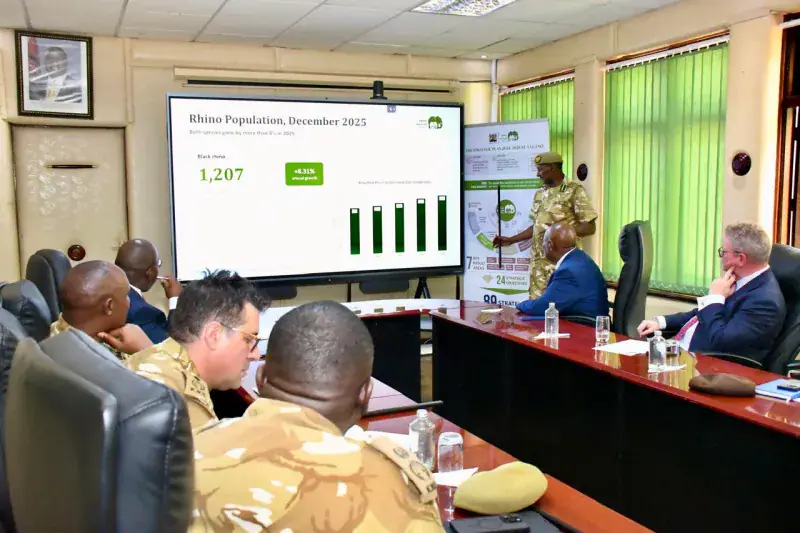
The Kenya Wildlife Service (KWS) is working to alleviate pressure on the Ol Pejeta Conservancy's rhino sanctuary, which has exceeded its ecological carrying capacity. On November 5, KWS Director General Erustus Kanga met with the conservancy's board of directors to discuss interventions to decongest the sanctuary and secure additional space for rhinos and other wildlife. This meeting highlights the challenges conservation managers face as successful protection efforts increase wildlife populations.
The Ol Pejeta Conservancy, located in Laikipia County, is a major wildlife conservation area and internationally recognised for its rhino conservation work. The sanctuary is home to both black and white rhinos and has played a significant role in protecting the endangered species. With the sanctuary's population exceeding its carrying capacity, concerns have been raised about the management and welfare of the animals. The conservancy's chairman, Philip Coulson, and former National Assembly Speaker Francis Olekaparo attended the meeting with KWS.
The carrying capacity of a sanctuary refers to the number of animals an area can sustainably support based on available resources, including food, water, habitat, and space. When populations exceed that capacity, competition for resources and pressure on the habitat can increase, potentially affecting animal health and the wider ecosystem. KWS stated that timely interventions are necessary to decongest the sanctuary and provide additional space for rhinos and other wildlife.
The discussions between KWS and Ol Pejeta Conservancy centred on addressing ecological pressures within the rhino sanctuary. KWS emphasised the importance of ensuring that interventions are timely and sustainable to support Kenya's wider rhino recovery efforts. The agency also highlighted its oversight role and continued collaboration with conservation partners to strengthen rhino management and protect Kenya's wildlife heritage.
The need to identify additional space for the rhino population has emerged as a key concern for the sanctuary. As wildlife managers continue to balance population growth, habitat availability, and the need to maintain viable ecosystems for threatened species, finding a solution to this challenge is crucial. The consultations between KWS and Ol Pejeta Conservancy aim to strengthen cooperation between the government agency and conservation partners.
Ol Pejeta Conservancy has played a significant role in efforts to protect endangered rhino species. The conservancy's work has contributed to the growth of the rhino population, but this success has also led to increased pressure on the sanctuary's resources. KWS and Ol Pejeta Conservancy are working together to ensure the long-term sustainability of the rhino population and the ecosystem as a whole.
While no specific timeline or details of the proposed decongestion measures were announced, the engagement between KWS and Ol Pejeta Conservancy highlights the importance of addressing ecological pressures in conservation efforts. The two institutions will continue to work together to find a solution to the challenges facing the Ol Pejeta Rhino Sanctuary and ensure the continued success of Kenya's rhino conservation efforts.
Key points
- The Kenya Wildlife Service is working to alleviate pressure on the Ol Pejeta Conservancy's rhino sanctuary.