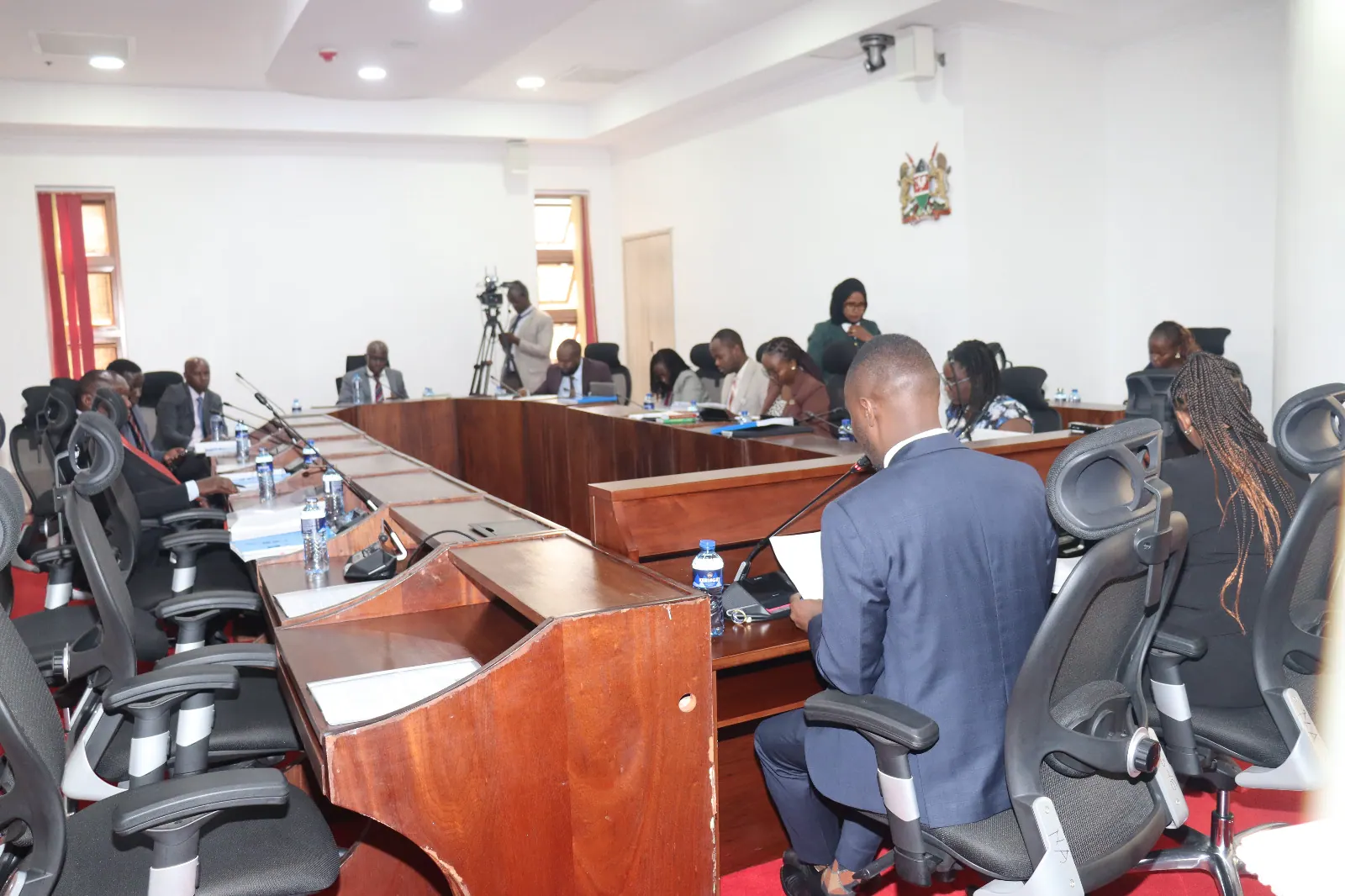
The Kenya Veterinary Association (KVA) has appealed to the National Assembly Departmental Committee on Labour to resolve a 19-year salary dispute that has left veterinary doctors earning less than their medical counterparts. KVA President Dr. Kelvin Osore presented prayers to the Committee, highlighting the challenges faced by veterinary doctors and interns. Despite undergoing a 5-year clinical training and 1-year internship, equivalent to medical doctors, they work in uncontrolled field environments with significant health risks.
Dr. Osore told the Committee that a 2007 job evaluation by the Ministry of Public Service recommended harmonization of veterinary doctors' salaries with those of medical doctors. However, the Salaries and Remuneration Commission declined to implement it, despite the National Treasury allocating Ksh. 449 million annually in 2017. The KVA is seeking a monthly Health Risk Allowance of Ksh. 50,000, non-practice allowance, extraneous allowance, call allowance, uniform allowance, and Health Workers Service Allowance.
The petitioners also raised concerns over inadequate staffing, noting that many counties have very few veterinary doctors. The Committee questioned the prevalence of quack veterinarians, fake animal feeds, and substandard veterinary medicines. The KVA sought a harmonization of Veterinary Interns' stipends to match that of Medical Doctors, which ranges from Ksh. 180,000 to Ksh. 208,000.
The Committee, chaired by Ken Chonga (Kilifi South), expressed support for the petition in principle but said further evidence was necessary before making recommendations. The Committee will hear from the Principal Secretaries for the State Departments for Livestock Development and Public Service, CEOs of the Salaries and Remuneration Commission, and Public Service Commission on Thursday.
Committee Vice Chairperson, Fabian Muli (Kangundo), challenged the veterinary regulatory structure, noting it remains split between a welfare association registered under the Societies Act and the Kenya Veterinary Board. Muli emphasized that a unified statutory body would give veterinarians direct licensing power and bargaining clout.
Members of the Committee, including Ernest Kagesi (Vihiga) and Peter Kihungi (Kangema), pressed the petitioners to provide documentary evidence supporting the 2007 harmonization proposal. They emphasized that the original Government instruments would be critical in establishing responsibility and guiding the Committee's recommendations.
The Kenya Veterinary Association's appeal to MPs highlights the need to address the long-standing salary dispute and improve working conditions for veterinary doctors and interns. The Committee's recommendations will be crucial in determining the fate of the veterinary profession in Kenya. Key issues, including inadequate staffing and regulatory structures, must be addressed to ensure better services for animal health.
Key points
- The Kenya Veterinary Association seeks to end a 19-year pay stalemate with the National Assembly Departmental Committee on Labour.
- Veterinary doctors and interns face significant health risks working in uncontrolled field environments.
- The Committee will hear from key stakeholders, including Principal Secretaries and CEOs, before making recommendations.