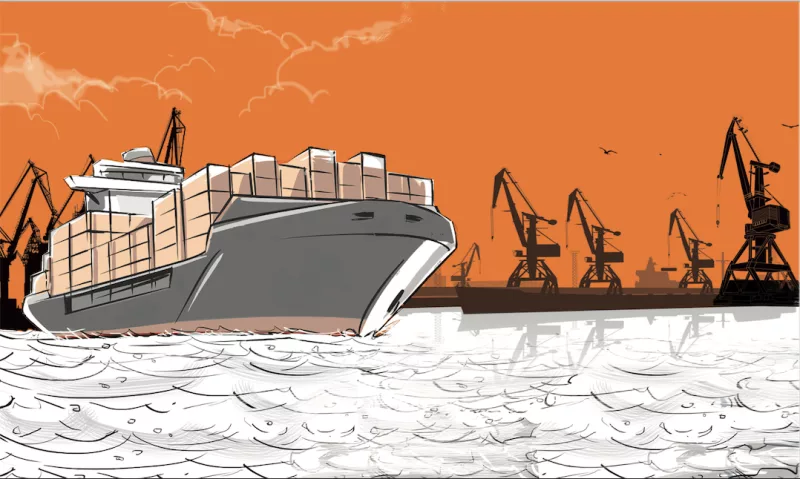
Today, countries mark World Maritime Day, celebrating the role of international shipping in global commerce. For Kenya, this day serves as a reminder of the importance of maritime affairs to the economy, trade, industrialization, jobs, and regional competitiveness. With over 80% of world trade carried by sea, a safe, secure, efficient, and environmentally responsible shipping industry is crucial for sustainable economic growth.
The International Maritime Organization has adopted a World Maritime Day theme for 2026 and 2027: "From policy to practice: Powering maritime excellence." IMO Secretary General Arsenio Dominguez emphasizes that good policies and conventions are not enough; their value lies in their implementation. He calls for collective decisions to be translated into tangible results that people can feel.
Kenya's policy direction is ambitious, with the blue economy recognized under the economic pillar of Kenya Vision 2030. The vision includes maritime transport, shipbuilding, fisheries, aquaculture, tourism, and other ocean-based activities as avenues for wealth and employment creation. The Kenya Maritime Authority's strategic framework focuses on sustainable use of maritime opportunities, trade and investment, education and training, job creation, seafarers' welfare, safety, security, and environmental protection.
Despite these policies, Kenya must examine its maritime journey and ask if its policies are powering maritime excellence. The country begins to think beyond Vision 2030, and the next chapter must demonstrate how policy becomes productive capacity. Questions arise about infrastructure, training, and pathways to sea time and employment for Kenyan seafarers.
The mandate of the ministry responsible for Blue Economy and Maritime Affairs includes formulating shipping and maritime policies and legislation. The national ambition is to secure greater socioeconomic value from aquatic resources. Implementation requires coordination among national and county governments, regulators, the private sector, universities, technical institutions, financiers, and coastal communities.
A recent Maritime Business Review analysis highlights Kenya's emerging ship repair proposition at Mombasa, including a modern slipway and specialized workshops. Developing this capability can retain foreign exchange, create skilled technical jobs, support local supply chains, and strengthen Kenya's standing as a regional maritime services hub.
World Maritime Day should leave Kenya with a clear assignment: disciplined execution at scale. Kenya has articulated ambition, built institutions, enacted maritime laws and regulations, and invested in ports, training, and emerging industrial capability. The next test is to make implementation a national maritime habit, ensuring that policy reaches the deck, dock, classroom, workshop, and marketplace.
Key points
- Kenya's maritime policies must be translated into practice to achieve excellence
- Implementation requires coordination among various stakeholders
- Disciplined execution at scale is necessary for Kenya's maritime industry to thrive