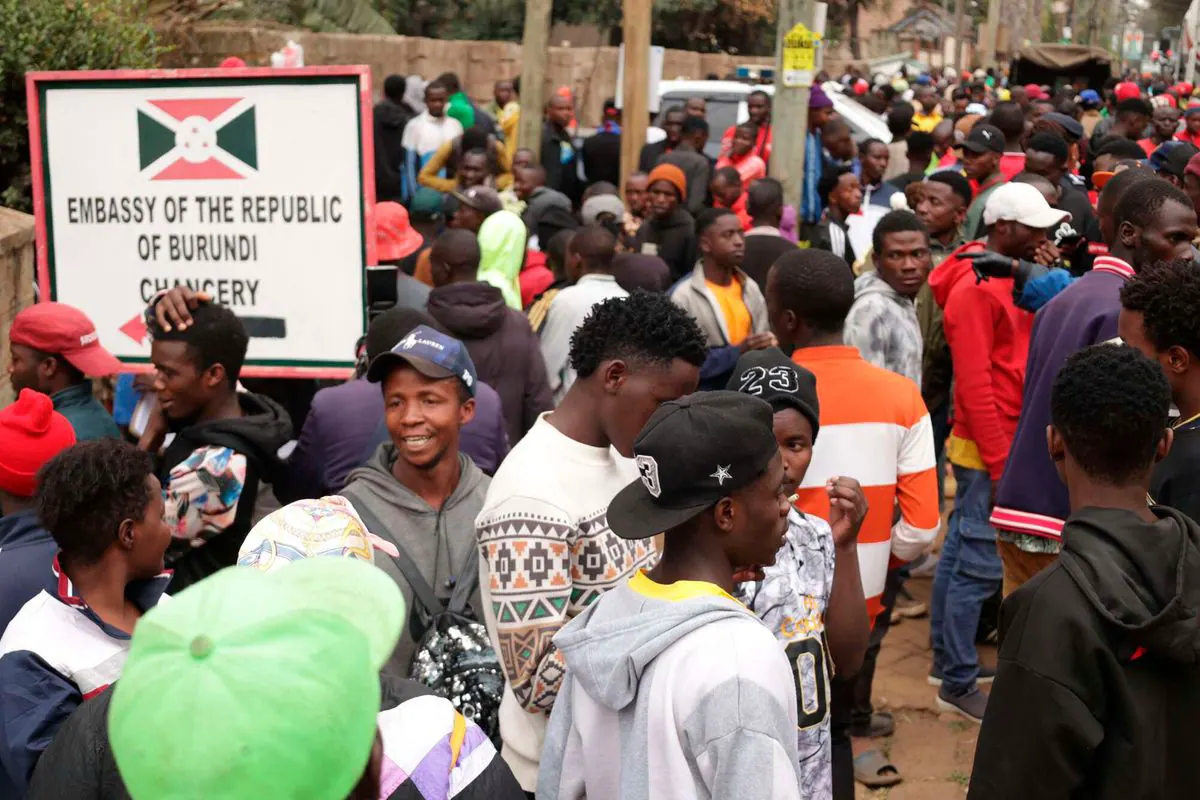
Kenya has the right to protect its economy and regulate immigration, but it must do so without unfairly targeting foreign nationalities. The government's recent actions against foreign-operated businesses have sparked a debate about the country's approach to immigration and economic regulation. President William Ruto has directed action against foreign nationals operating businesses without the required authorization, while the government has emphasized regularization and compliance rather than xenophobia.
A 90-day amnesty has been announced for undocumented East Africans, amid growing anxiety among immigrant communities. Kenya's immigration framework already recognizes that foreign nationals engaging in employment, trade, and business require appropriate authorization. There are specific permit categories for employment, business, and trade, while East African Community (EAC) nationals have a dedicated Class R permit framework. Operating a business or engaging in employment without the requisite permit or pass is an offense.
Experts argue that nationality should not become a proxy for wrongdoing. A foreign national who complies with Kenyan law should not be treated as equivalent to someone who violates it. The same applies to foreign-owned companies. Kenya is entitled to ask whether foreign investment creates jobs, contributes taxes, develops local capacity, and delivers meaningful value to communities. Those are legitimate questions of economic policy.
The standard for evaluating foreign investment should be compliance and contribution, not nationality. This is especially important because Kenya is part of a global and regional migration system. Kenyans themselves live, work, study, and operate businesses in other countries, and many depend on foreign governments allowing them to obtain permits, establish businesses, and contribute to local economies.
Foreign nationals are not a single economic category, and policymakers need more nuanced information to solve actual problems. Some foreign nationals compete with Kenyan traders, while others employ Kenyans, bring capital and technology, or fill skills gaps. Putting all foreign nationals under one label does not give policymakers enough information to develop effective solutions.
To build a fair and effective immigration system, Kenya needs to prioritize clear rules, fair enforcement, and measurable compliance. The country can prioritize Kenyan entrepreneurs without treating every foreign entrepreneur as a threat. It can protect local markets without demonizing immigrant communities and regulate foreign investment without rejecting it.
Experts suggest that technology can play a greater role in immigration management, making it more data-driven, transparent, and compliance-focused. A modern system should be able to answer key questions about immigration status, authorization, business registration, and economic contribution. By connecting relevant systems and data, Kenya can develop a more effective and fair approach to immigration enforcement.
Key points
- Kenya must enforce its laws without targeting foreign nationalities.
- The country needs a more nuanced approach to immigration and economic regulation.
- Technology can play a greater role in making immigration management more data-driven and transparent.