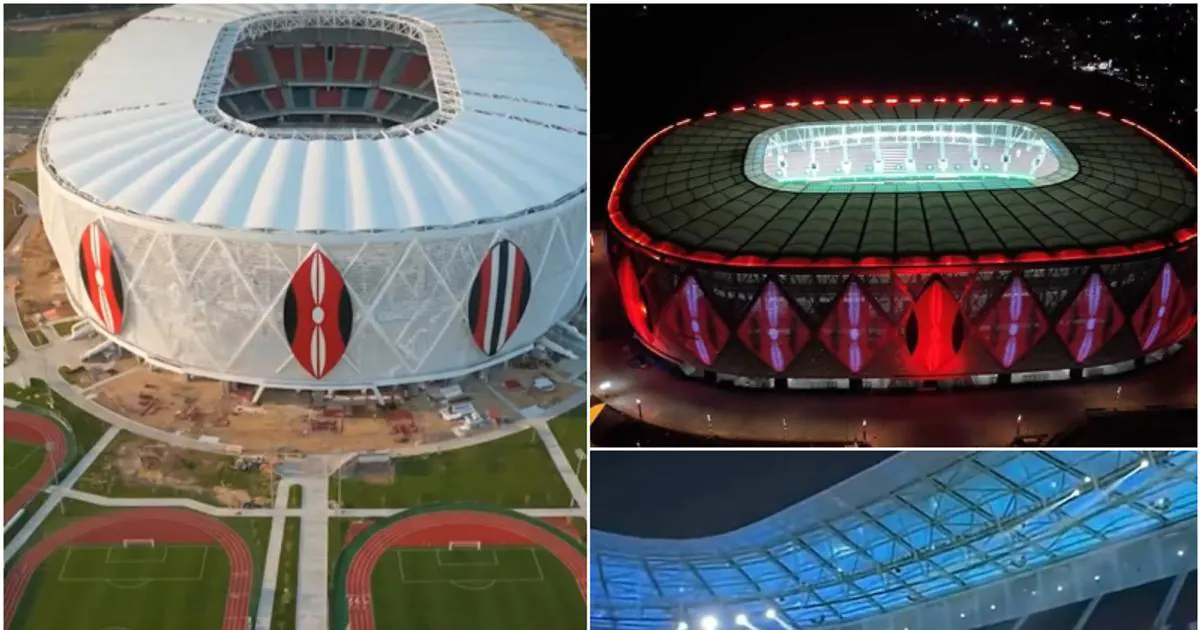
The Raila Odinga International Stadium, formerly known as Talanta Sports City, is nearing completion in Nairobi, Kenya. The 60,000-seater stadium is part of a larger sports city project and has been built at a cost of Sh45 billion. The stadium was renamed in honor of the late Prime Minister and ODM leader Raila Odinga. President William Ruto broke ground on the project on March 1, 2024, as part of Kenya's bid to host the 2027 Africa Cup of Nations.
The stadium's design incorporates elements of Kenyan heritage, including eight giant shields and spears mounted around the structure. These shields serve as a way-finding system, helping fans navigate the stadium. The design aims to create a cultural experience for spectators. The stadium's construction has been a significant undertaking, with over 3,500 young Kenyans working on the project. The construction is being supervised by the Ministry of Defence and carried out by China Road and Bridge Corporation.
The Raila Odinga International Stadium has been built to meet CAF Category Four standards and strict FIFA requirements. The stadium features a hybrid pitch, combining Bermuda grass with synthetic fibers, known as GrassMaster technology. This technology aims to improve durability and consistency. The pitch is being stitched by SIS Pitches, a company that has worked on famous grounds such as MetLife Stadium and San Siro.
The stadium's engineering is world-class, with a lightweight canopy held up by hydraulically tensioned steel cables. This design allows spectators to be sheltered without blocking their view of the action. The canopy is a unique feature, used in only four other stadiums worldwide. According to Major Victor King'e, the canopy is the first of its kind in the region.
Unlike most African sports complexes, the Raila Odinga International Stadium has no running track separating fans from the pitch. The stands sit directly against the field boundaries, creating a tight and loud atmosphere similar to Europe's best football grounds. The stadium is designed exclusively for football and rugby, allowing spectators to feel closer to the action.
The facility includes three additional training pitches, one with its own 1,500-seat mini-stand, allowing it to run independently during major tournaments. The stadium is also equipped with built-in VAR booths, Goal-Line technology infrastructure, and dedicated media centers for seamless live broadcasting. These features make it suitable to host football at the highest international level.
The stadium is expected to start hosting matches as early as next month, with 94 percent of the construction complete as of August. The project has been a significant milestone in Kenya's bid to host AFCON 2027, alongside Uganda and Tanzania. The CAF approved the joint bid on September 27, 2023.
Key points
- The Raila Odinga International Stadium is one of the venues earmarked for the 2027 Africa Cup of Nations.