The government of Kenya has embarked on an ambitious rehabilitation project for the Nairobi River Basin, aiming to transform 175 kilometres of waterways across five counties. This initiative, known as the Nairobi River Basin Regeneration Programme (NaBREP), seeks to reclaim polluted rivers and their surrounding riparian spaces, converting them into clean and productive public assets. The programme is crucial for addressing the challenges of rapid urbanisation and ageing infrastructure in the region.
The project covers several key areas, including the Nairobi, Ngong, Mathare and Stony Athi rivers, along with seven major tributaries. These waterways stretch from Ondiri Swamp to Dandora Falls, spanning across Nairobi, Kiambu, Machakos, Makueni and Kajiado counties. The programme is a collaborative effort, coordinated by the Nairobi Rivers Commission and implemented by the Ministry of Defence in partnership with the Nairobi City County Government and the Nairobi City Water and Sewerage Company.
A significant component of the regeneration project involves the construction of two 27-kilometre trunk sewer lines along the northern and southern banks of the river system. These sewer lines aim to prevent untreated sewage from flowing into the waterways, intercepting raw sewage and channeling up to 310 million litres of wastewater daily for treatment. This is expected to significantly improve sanitation and water quality in the region.
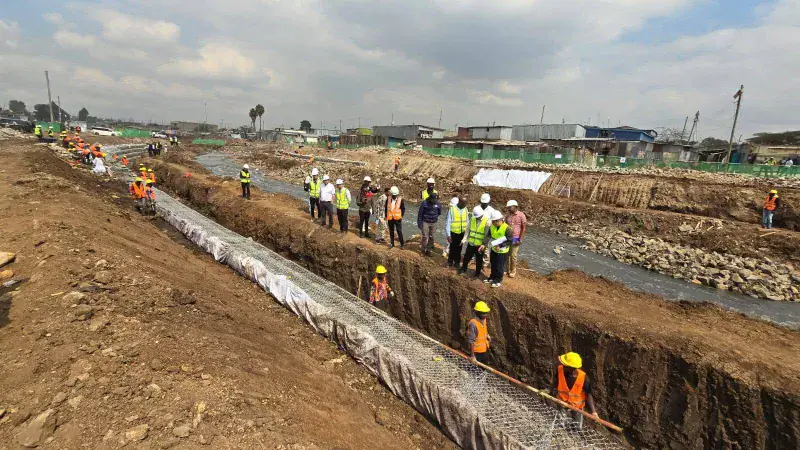
In addition to the sewer infrastructure, the programme includes several other interventions. These comprise the construction of 14 garbage interception dams, 12 ecological weirs and 40 grease traps at car wash facilities. The project also involves river channel deepening, the construction of gabion walls for flood control and the rehabilitation of the Dandora Dumpsite. These efforts aim to improve the overall environmental and health conditions in the area.
The regeneration programme also seeks to transform reclaimed riparian land into spaces that support housing, commerce and community development. The plan includes incorporating affordable housing projects into the regenerated river corridors. Modern markets, such as improvements around Gikomba, and community facilities like the Kamukunji Community Centre, are expected to create opportunities for businesses and improve livelihoods for local residents.
The wider development plan for the area includes 27 bridges, pedestrian walkways, cycling lanes and recreational parks. These additions aim to improve connectivity and give residents greater access to public spaces. Environmental restoration is another key pillar of the programme, with plans to establish constructed wetlands and plant five million trees. This will help restore biodiversity, improve the urban environment and strengthen climate resilience.
The government reports several early achievements, including the development of 10 kilometres of riverfront walkways and the Nairobi River Park. Improvements in water quality along sections of the upper tributaries, such as Karura and Gigiri, have also been noted. The programme is expected to reduce flooding, improve public health and lower the risk of waterborne diseases by addressing pollution and poor waste management.
Key points
- The project aims to transform 175km of waterways across five counties.
- The programme includes construction of sewer lines, garbage interception dams and ecological weirs.
- The regeneration effort seeks to improve sanitation, create liveable communities and restore biodiversity.