The Kenyan government has announced plans to roll out Parliamentary Information Centres (PICs) across all 47 counties, aiming to decentralize access to parliamentary processes and enhance civic education. The initiative, led by the State Department for ICT and the Digital Economy, will integrate PICs into existing Digital Hubs, leveraging the government's Digital Superhighway Initiative and Bottom-Up Economic Transformation Agenda (BETA) infrastructure. This move seeks to bring live proceedings, electronic Hansard records, and parliamentary publications to citizens in rural and underserved areas.
The implementation model, outlined by ICT Principal Secretary Eng. John Tanui, involves a tiered rollout based on the spatial assessment of digital hubs nationwide. The plan prioritizes 47 Centres of Excellence, one in each county, which will serve as primary hubs for hosting fully equipped parliamentary terminals, smart interactive screens, and video conferencing setups. Additionally, selected Standard Digital Hubs will host dedicated PIC spaces, while Basic Digital Hubs and renovated community structures will offer digital access to parliamentary websites and live streaming.
The Centres of Excellence, each spanning 750 square meters, feature dedicated Learning Centres and Tech/Creative spaces capable of hosting advanced technologies. In contrast, Standard Digital Hubs, covering 237 square meters, will host PIC spaces based on local connectivity and spatial readiness. Basic Digital Hubs, at 175 square meters, will provide basic digital access. The government has earmarked nearly 40,000 devices for digital hubs nationwide, with 8,000 ready for installation and 10,000 in transit.
The rollout is part of the government's broader digital agenda, which includes equipping Junior Secondary Schools with interactive smart screens, expanding fiber connectivity, and advancing national policy frameworks for Artificial Intelligence (AI). The Ministry is working with partners to establish regional centers of excellence in AI and digital skills at the Kenya School of Government. This initiative aims to position Kenya at the forefront of AI adoption in government services and equip young innovators.
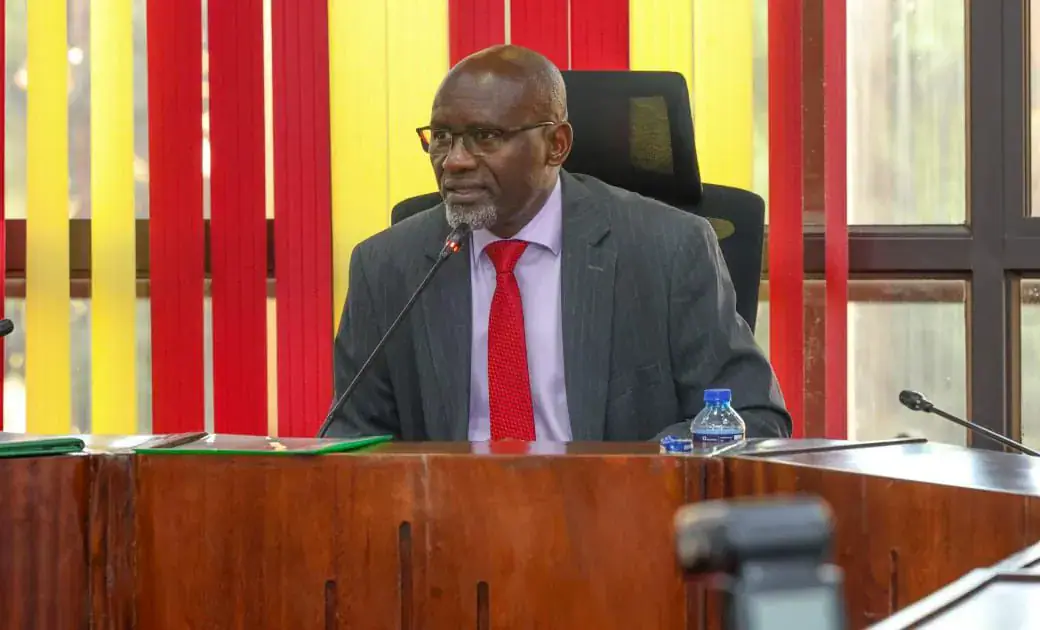
Committee Chairman Hon. Daniel Epuyo Nanok emphasized the urgency of counteracting public misinformation by providing authentic access to parliamentary debates and legislative proceedings. He stressed that establishing parliamentary corners will bring Parliament directly to citizens, enabling them to access accurate information about laws, bills, and processes impacting their lives. The initiative has garnered support from lawmakers, including Limuru MP Hon. Eng. John Kiragu Chege, who shared practical insights from his constituency's early community digital hubs.
To ensure seamless implementation, the State Department and Parliament have agreed to establish a joint technical taskforce involving key stakeholders. The team will undertake joint site assessments to verify power supply, spatial requirements, and security arrangements prior to commissioning. Furthermore, the State Department has recruited 290 center managers to oversee daily operations, assist the public, and run training programs within operational hubs.
The government has made significant progress in expanding last-mile connectivity via high-speed fiber lines, satellite, and microwave solutions for remote regions. With the implementation of this initiative, Kenyans will have access to accurate information and parliamentary processes, promoting transparency and public participation. The rollout of PICs across digital hubs is expected to enhance civic education and strengthen democratic processes in the country.
Key points
- The Kenyan government plans to establish 47 Centres of Excellence, one in each county, as primary hubs for parliamentary information.
- The initiative aims to provide authentic access to parliamentary debates, public participation portals, and legislative proceedings.
- A joint technical taskforce will be established to oversee the implementation of the initiative.